The 2025 U.S. National Security Strategy (NSS) is very clear about one thing: Washington now sees its central task as managing long-term competition with China. Beijing is described as a near-peer economic and technological rival that must be deterred, contained and outperformed. On artificial intelligence, however, the document is far less explicit. AI appears throughout the text, but rarely as the main character.
Instead, AI is folded into a set of familiar themes: technological standards, energy policy, regional partnerships and military modernisation. Taken together, these references reveal how the United States currently thinks about AI in the Sino-American rivalry. It is not yet treated as the foundational element of strategy, but as a powerful tool that sits underneath more traditional levers of power.
Standards as a Strategic Arena
The NSS elevates “U.S. technology and U.S. standards particularly in AI, biotech, and quantum computing” to the level of core national interest and insists that they must “drive the world forward.” That is an unusually blunt way of saying that making AI standards has become a geopolitical contest.
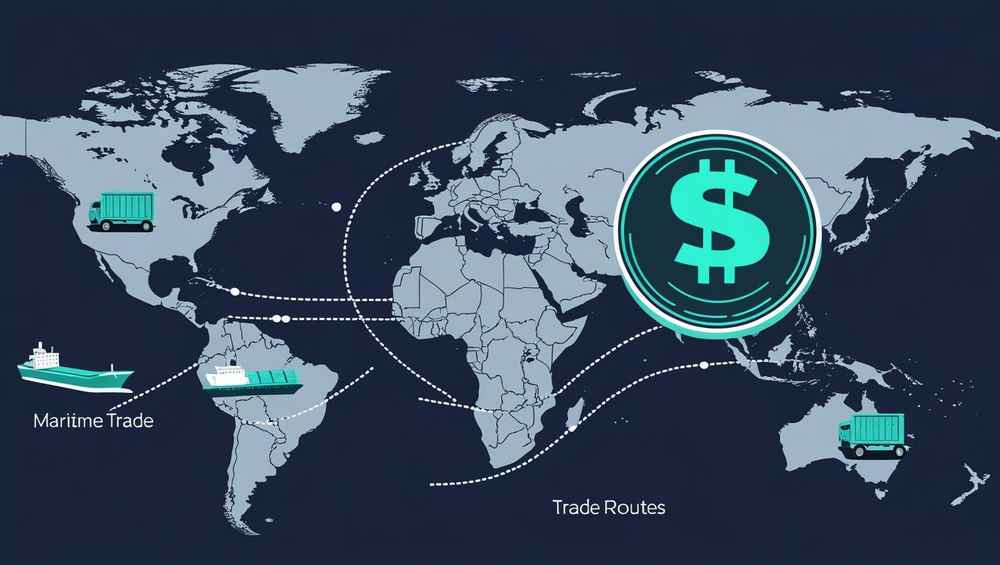
The difficulty is that China has been working in this area for years. Chinese firms and officials are deeply embedded in standards bodies and digital infrastructure projects, especially across the global South. Beijing has been patient and methodical, using long-term industrial and diplomatic tools to make sure its preferences are written into technical norms. The NSS correctly identifies standards as an arena of competition, but offers little detail on how Washington intends to catch up in the governance game, rather than assuming that superior technology will automatically translate into formal influence.
Energy as the Bedrock of AI Power
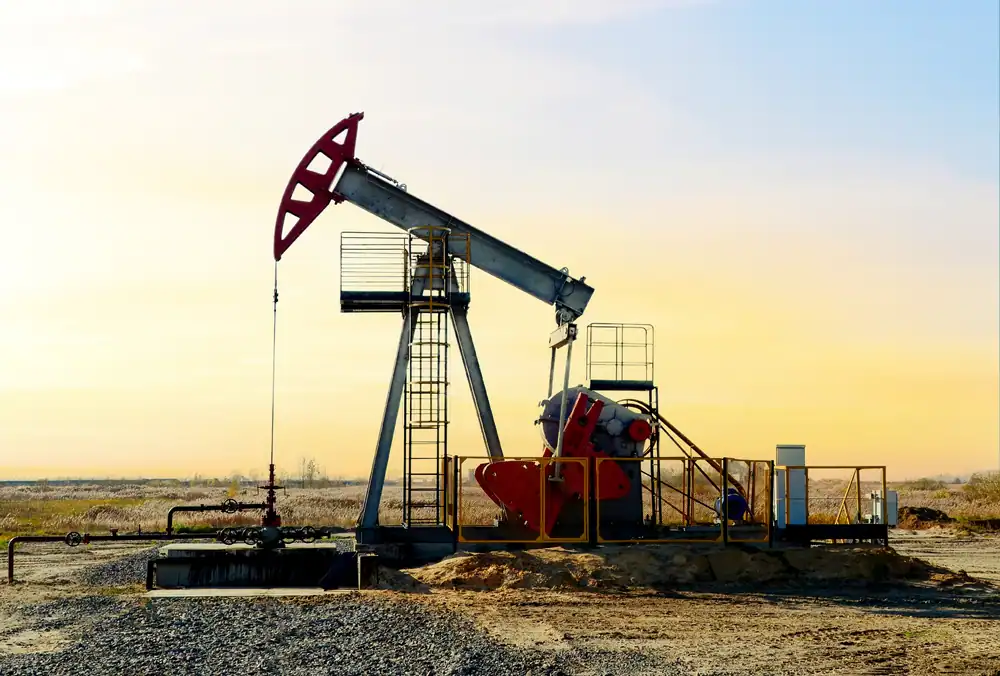
The document devotes a prominent section to “energy dominance”. Restoring U.S. strength in oil, gas, coal and nuclear power is presented not only as an economic objective, but as a way to sustain leadership in “cutting-edge technologies such as AI.” The rationale is straightforward: AI systems, especially large models, demand huge amounts of electricity and data-centre capacity. Without affordable and reliable power, there is no lasting AI edge.
There is truth in that link, but also a risk of over-simplification. The AI race is now constrained by power and infrastructure, yet it is also shaped by who controls chips, data, talent and governance. China is already investing heavily in energy and data-centre build-out, aiming to secure long-term capacity rather than relying on market forces alone. If the United States treats energy mainly as a domestic industrial input, rather than as one piece of a global AI stack that others are actively trying to dominate, it may end up with abundant power but insufficient strategic advantage.
The Middle East as Offshore Compute – and Contested Ground
In the Middle East, the NSS strikes a more optimistic note than earlier American strategies. It portrays the region as a future hub for nuclear energy, AI and defence technologies, and as a destination for large-scale investment rather than a permanent crisis zone. There is a clear suggestion that Gulf energy and capital can be married to American technology to create new nodes of AI-intensive industry.
This vision reflects real trends: Gulf states are pouring money into data centres, digital infrastructure and advanced manufacturing, and they are actively shopping for AI partners. But they are also hedging. China has become a significant builder of physical and digital infrastructure in many emerging markets, including parts of the Middle East. If Washington assumes that American technology will naturally anchor the region’s AI build-out, it may underestimate how far Beijing has already progressed and how pragmatic Gulf capitals can be when choosing partners.
Military AI Among Many “Emerging Technologies”
When the strategy turns to defence, AI appears again, this time in a familiar list of “emerging technologies” alongside quantum computing and autonomous systems. These are said to help “decide the future of military power,” but AI is not given a dedicated treatment as a system that could reshape command structures, logistics and decision-making.
That choice is striking. Militaries around the world, including China’s, increasingly talk about “intelligentised warfare” as a qualitatively new phase in conflict, not just another round of hardware upgrades. Experiments in AI-enabled targeting, wargaming and decision support are already underway. By folding AI into a broad shopping list of advanced capabilities, the NSS risks underplaying how disruptive it may be to the way wars are planned and fought, and how quickly adversaries might move to exploit that shift.
A Powerful Tool, Not Yet the Operating System
Read in full, the 2025 NSS is not an AI blueprint. There is no standalone AI doctrine, no systematic treatment of model governance and little discussion of the risks or opportunities associated with frontier systems. Instead, there is an implicit assumption that if the United States regains industrial strength, secures energy dominance, maintains technological leadership and holds its alliance network together, AI superiority will follow.
That may prove optimistic. China is clearly working to contest standards, expand its own AI-related infrastructure and integrate advanced systems into both its economy and its armed forces. The rivalry is no longer about whether AI matters, but about who can weave it most deeply into every instrument of national power. On that question, the NSS still treats AI primarily as a supporting asset. The strategic danger is that, over time, it becomes the operating system of the competition – and China moves faster to act on that insight.
Disclaimer: The views and opinions expressed in this article are those of the author and do not necessarily reflect the official policy or position of ProPakistani. The content is provided for informational purposes only and is not intended as professional advice. ProPakistani does not endorse any products, services, or opinions mentioned in the article.