In an era where Pakistan is racing toward a “Digital First” economy, a paradox sits quietly inside our smartphones. While we celebrate the arrival of 5G trials and the expansion of fiber optics, a small but significant hurdle remains: the cost of the eSIM. In most developed markets, switching to an eSIM is a seamless, often free, digital transition. In Pakistan, however, it has become an expensive luxury.
The future of connectivity is invisible, yet in Pakistan, the price tag is impossible to ignore.
eSIM vs. Physical SIM
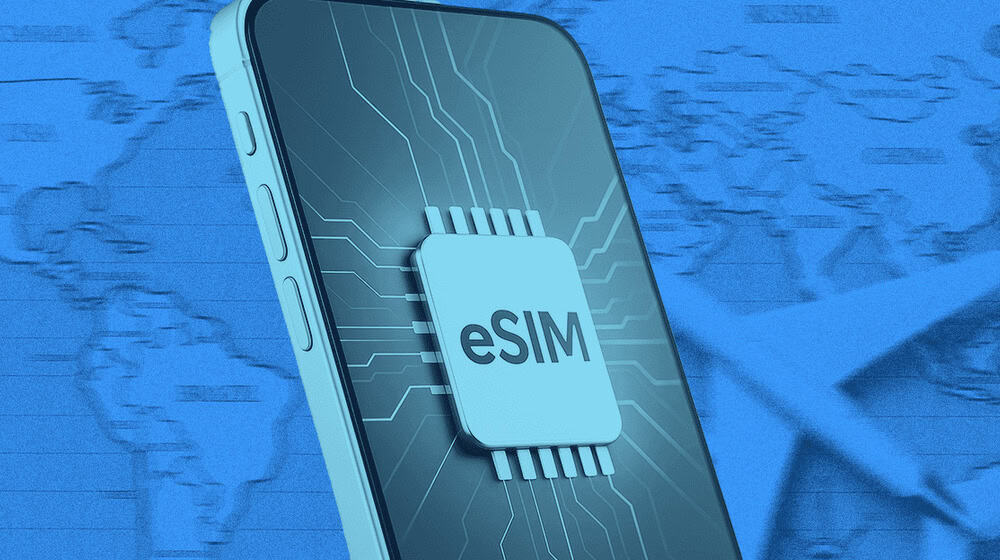
To understand why this matters, we first need to strip away the jargon. A Physical SIM is the tiny piece of plastic you’ve been poking into the side of your phone for decades. An eSIM (embedded SIM) is a small chip already soldered onto your phone’s motherboard.
As a common user, what does an eSIM mean for you?
- Activation: Instead of buying a plastic card, you scan a QR code provided by your operator.
- Flexibility: You can store multiple “profiles” (numbers) on one device and switch between them in settings without swapping cards.
- Durability: No more lost SIM ejector tools or damaged card slots.
- Similarities: Your phone number, your data plan, and your network coverage remain identical. Thus, the eSIM isn’t a “premium” network service; it is simply a modern way to deliver the same connectivity.
The Price Gap: A Pakistan Reality Check
In Pakistan, the cost of moving from plastic to digital feels less like a technological upgrade and more like a “convenience tax.” While a physical SIM replacement is often a nominal fee, the jump to eSIM is steep.
Typical SIM Pricing Landscape in Pakistan (Estimated Jan. 2026):
|
Service Type |
Estimated Cost (PKR) | Notes |
|---|---|---|
|
New Physical SIM |
Rs. 200 – 400 |
Often bundled with a starter balance. |
|
Physical SIM Replacement |
Rs. 100 – 250 |
For lost or damaged cards. |
|
eSIM Issuance (Existing User) |
Rs. 2,000 – 2,500 |
Standard fee for Jazz, Zong, and Ufone. |
| New eSIM (Fresh Number) | Up to Rs. 5,000 |
Varies by operator and number category. |
(Note: Prices are based on currently published operator charges and may vary by franchise or specific promotional offers.)
For the average consumer, paying 10 to 20 times more for a digital profile than a physical piece of plastic is a hard sell. This disparity creates a barrier that confines eSIM technology to a small elite, rather than the mass market.
The “Digital Convenience Tax”
High eSIM pricing isn’t just a blow to the wallet; it’s a drag on the digital economy. When technology is priced as a luxury, adoption stalls, and the benefits of that technology are never fully realized, three-fold implications follow:
Firstly, the true power of eSIM is the ability to switch providers easily. In a healthy digital market, a consumer could theoretically switch from Operator A to Operator B via an app in minutes. High activation fees “lock” users into their current setup, discouraging the very competition that drives better service and lower prices.
Secondly, for entrepreneurs and freelancers, having a business line and a personal line on one device is a productivity booster. By overpricing eSIMs, operators are effectively charging a “productivity tax” on small business owners who want to streamline their digital lives.
Thirdly, as global manufacturers move toward eSIM-only devices (like recent iPhone models in the US), Pakistan risks creating a “grey market” friction. If it costs Rs. 5,000 just to get a phone working on a local network, it disincentivizes the import and use of the latest, most secure hardware.
The Green Angle: Plastic Waste vs. Digital Bytes
Every physical SIM card comes with a “SIM jacket” (the large credit-card-sized plastic holder), a paper manual, and plastic packaging. Millions of these are produced, transported, and eventually discarded in Pakistan every year.
The eSIM eliminates:
- Manufacturing emissions from plastic and silicon card production.
- Logistics carbon footprint from shipping cards to thousands of retail points.
- Waste management issues related to non-biodegradable SIM jackets.
By keeping eSIM prices high, we are essentially subsidizing plastic waste. Lowering the barrier to entry for eSIM is one of the easiest “green wins” the telecom sector can achieve.
What’s in it for Policymakers?
For the Pakistan Telecommunication Authority (PTA) and the Ministry of IT, the eSIM is a tool for national progress.
- Inclusion: Digital-only onboarding (where allowed by biometric regulations) can reach remote areas without the need for physical franchises.
- Consumer Welfare: Reducing “friction costs” for technology is a core tenet of consumer protection.
- Security: Unlike physical SIMs, an eSIM cannot be easily removed by a thief to disable “Find My Phone” features, increasing device security for citizens.
What’s in it for Operators?
At first glance, high fees look like easy revenue. However, a long-term view would show that eSIMs are actually an operational goldmine.
- Zero Inventory Costs: No need to manufacture, store, or track physical plastic.
- Digital Distribution: Lowering “Customer Acquisition Cost” (CAC) by moving the process to an app or website.
- Customer Lifetime Value: Users with multiple profiles on a single device tend to stay connected longer and use more data.
- Future-Proofing: As the Internet of Things (IoT) grows, operators will need robust eSIM platforms to connect everything from smartwatches to cars.
A Path Forward
To unlock the digital economy, we don’t need radical shifts, just sensible adjustments.
- Price Parity: The cost of an eSIM should ideally match the cost of a physical SIM replacement. If a plastic card costs Rs. 200, a digital QR code should not cost Rs. 2,000.
- The “Free Re-Download” Window: Currently, some users are charged again if they reset their phone or switch devices. Operators should offer a 24-hour or 7-day window for free re-downloads of the eSIM profile.
- Digital-First Provisioning: Allow users to purchase and receive eSIM QR codes via secure banking apps or operator apps after remote biometric verification, where possible.
Conclusion
The high cost of eSIMs in Pakistan is a relic of “luxury positioning” for a technology that is now a global standard. As we move toward 2030, the digital economy cannot be built on expensive barriers. By normalizing eSIM pricing, Pakistan can reduce plastic waste, empower small businesses, and create a truly fluid telecommunications market.
It is time for the PTA and mobile operators to sit at the table and recognize the eSIM not as a premium add-on, but as the basic infrastructure of the modern world. Let’s stop taxing the future and start enabling it.
Disclaimer: The views and opinions expressed in this article are those of the author and do not necessarily reflect the official policy or position of ProPakistani. The content is provided for informational purposes only and is not intended as professional advice. ProPakistani does not endorse any products, services, or opinions mentioned in the article.