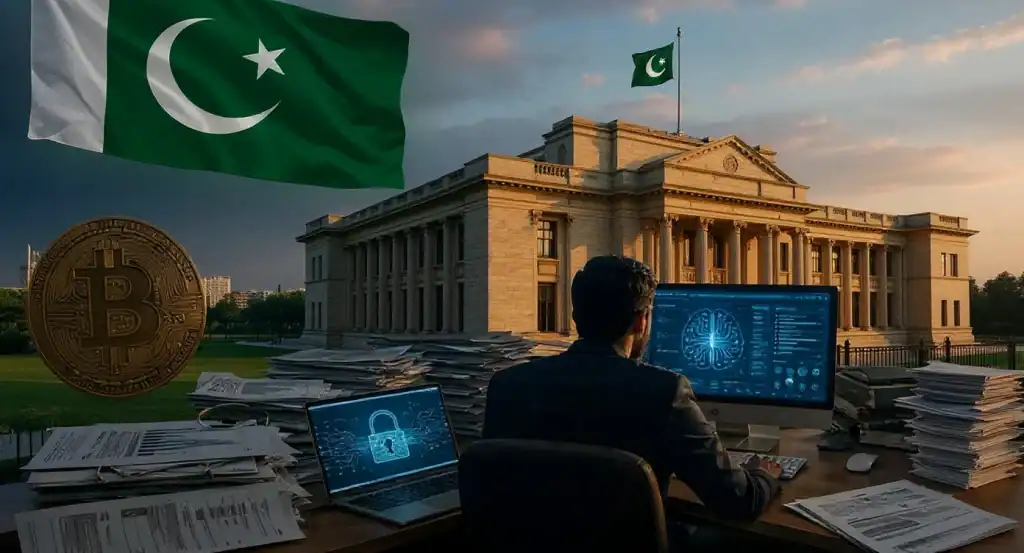
On April 14, the State Bank of Pakistan issued BPRD Circular Letter No. 10, allowing regulated banks to provide accounts to licensed virtual asset service providers (VASPs).
Over the past year, Pakistan introduced a regulatory framework for virtual assets. Key developments included the establishment of the Pakistan Virtual Assets Regulatory Authority (PVARA), passage of the Virtual Assets Act, issuance of No Objection Certificates (NOCs) to certain exchanges, creation of a regulatory sandbox for asset-referenced tokens, and a banking framework for licensed VASPs.
While the legal and regulatory framework has been established, implementation and enforcement systems are still being developed.
Existing Crypto Activity
Cryptocurrency activity in Pakistan existed prior to the introduction of the current regulatory framework. This included trading on international exchanges, peer-to-peer transfers, and blockchain-related business activity.
The Virtual Assets Act formalized regulatory oversight of an existing market rather than creating new demand for virtual assets.
The proposed Budget 2026-27 includes capital gains tax measures for crypto assets, indicating the government’s intention to regulate and tax the sector within the broader financial system.
Licensing and Regulatory Oversight
Under the current framework, entities conducting virtual asset activities in Pakistan are required to obtain licenses.
PVARA’s regulatory sandbox is accepting applications related to asset-referenced token issuance. The regulator has also stated that virtual asset services involving Pakistani users require prior authorization.
Applications are assessed across several areas, including:
- Technology infrastructure
- Cybersecurity controls
- Anti-money laundering compliance
- Financial projections
- Consumer protection measures
- Exit and contingency planning
The review process involves examination of documentation, verification of submitted information, and regulatory assessment.
Scaling Regulatory Processes
The current licensing review process relies largely on manual assessment by regulatory staff.
As the framework covers exchanges, custodians, broker-dealers, derivatives providers, and token issuers, application volumes may increase over time. Similar regulatory bodies in other jurisdictions have faced challenges related to processing delays, case backlogs, and consistency when application volumes rise.
Potential use of technology-assisted review systems has been discussed as one possible method of supporting regulatory processes. Such systems could help organize submitted documentation, identify information gaps, and present findings for human review. Regulatory decisions would continue to require human oversight.
Technology-assisted systems could also be applied to ongoing monitoring of licensed entities and compliance reporting requirements.
Regulatory Development Phase
Pakistan’s virtual assets framework remains in an implementation phase. Licensing procedures, sandbox operations, and enforcement mechanisms are still being developed.
Because these systems are not yet fully established, regulators have flexibility in determining how operational processes will function in practice.
Other jurisdictions, including Dubai, the European Union, Qatar, Saudi Arabia, Bahrain, and the United States, are also developing or expanding virtual asset regulatory frameworks.
Key Issues Going Forward
Pakistan has established:
- A legal framework for virtual assets
- A regulatory authority responsible for oversight
- Banking access for licensed virtual asset service providers
- Tax proposals covering crypto-related gains
The next stage will involve operational implementation, including licensing reviews, compliance monitoring, enforcement processes, and the ability to manage increasing application volumes.
The effectiveness of the framework will depend on how regulatory systems handle market growth, compliance requirements, and enforcement responsibilities over time.
Disclaimer: The views and opinions expressed in this article are those of the author and do not necessarily reflect the official policy or position of ProPakistani. The content is provided for informational purposes only and is not intended as professional advice. ProPakistani does not endorse any products, services, or opinions mentioned in the article.