The easing of tensions in the Gulf and the prospect of stability returning to Iran could create a significant economic opportunity for Pakistan. While immediate attention is focused on energy markets, shipping routes, and diplomatic developments, the medium-term benefits may prove far more substantial.
Pakistan’s geographic location, proximity to Iran, emerging infrastructure, growing industrial base, and strategic relationships with Gulf countries and China place it in a favourable position to benefit from regional reconstruction and economic integration.
Should Iran enter a major reconstruction phase, demand is likely to emerge for construction materials, engineering services, transportation, logistics support, industrial equipment, and skilled manpower.
Pakistan is uniquely positioned to supply many of these requirements due to its shared border with Iran, competitive labour force, excess capacity in cement and steel production, engineering expertise, and relatively short transportation routes. Increased economic activity could provide a meaningful boost to Pakistan’s western regions, particularly Balochistan, while strengthening bilateral trade between the two neighbouring countries.
Recent events have also highlighted the vulnerability of traditional energy and trade corridors in the Gulf. Even if Iranian ports return to normal operations in the near future, elevated insurance costs, security concerns, and temporary logistical disruptions could encourage the use of alternative routes.
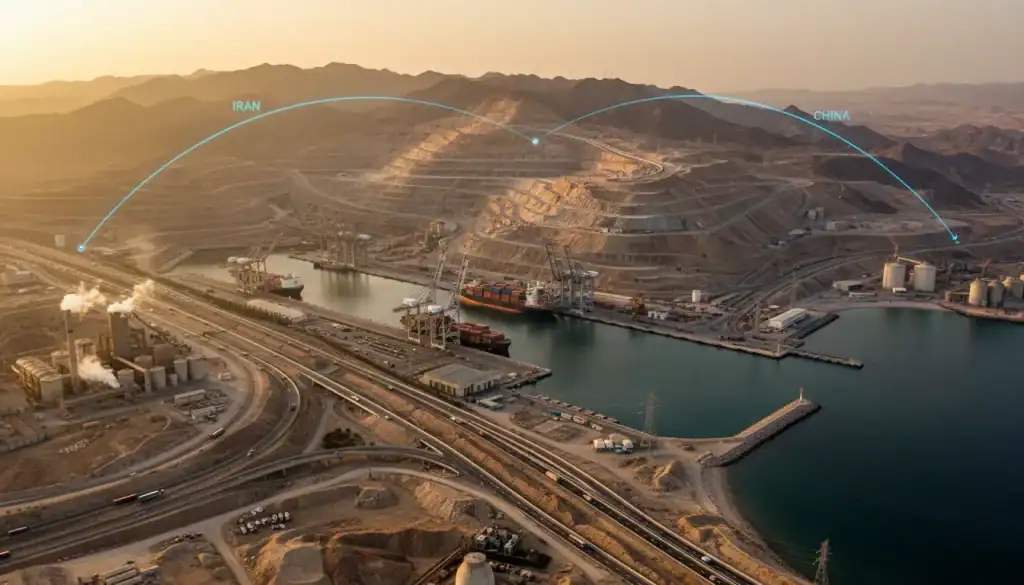
In this environment, Gwadar Port could emerge as a complementary logistics hub, offering warehousing, storage, transshipment, and transit facilities for selected cargo destined for Iran and the wider region. While Gwadar is unlikely to replace major Iranian ports such as Bandar Abbas, it could benefit from increased regional cargo flows and gain the commercial momentum required to accelerate its long-term development.
The strategic significance of western Pakistan extends beyond logistics. The successful development of the Reko Diq copper and gold project has the potential to transform Pakistan’s mining sector and unlock additional mineral resources across the Chagai region.
Large-scale mining projects require extensive supporting infrastructure, including roads, power supply, water systems, housing, engineering services, and export facilities. If accompanied by improved security and regional stability, Reko Diq could serve as an anchor investment that attracts further domestic and international capital into Balochistan.
Security remains a critical prerequisite for realizing these opportunities. Investors evaluating multi-billion-dollar projects in mining, logistics, manufacturing, and infrastructure require confidence in the long-term security of personnel, assets, and transportation corridors.
Continued efforts to improve stability in border regions and strengthen regional cooperation will therefore remain essential for unlocking Pakistan’s economic potential.
Beyond reconstruction and mining, Pakistan offers investment opportunities across a wide range of sectors, including agriculture, livestock, manufacturing, aviation, logistics, energy infrastructure, technology, and data centres. The country possesses a large domestic market, a young workforce, established industrial capacity, and a strategic location connecting the Gulf, Central Asia, China, and South Asia.
With appropriate policy continuity and investment facilitation, these sectors could attract significant long-term equity investment from Gulf sovereign funds, Chinese enterprises, and international strategic investors.
The broader strategic picture suggests that Pakistan may be entering a period in which regional stability, Gulf capital, Chinese technology, and domestic reforms could converge to create a more favourable investment environment than has existed in many years.
The objective should not be debt-financed growth but the mobilisation of substantial long-term equity investment capable of expanding productive capacity, increasing exports, generating employment, and strengthening the country’s external accounts.
Conclusion
The most significant economic dividend from a stable Gulf and a recovering Iran may not be a short-term reconstruction boom but the gradual emergence of an integrated regional economic corridor linking Pakistan, Iran, the Gulf, Central Asia, and China. Gwadar, Reko Diq, regional connectivity projects, and increased trade flows could collectively position Pakistan as a key commercial and logistics hub, provided security, infrastructure development, and investor confidence continue to improve.
Disclaimer: The views and opinions expressed in this article are those of the author and do not necessarily reflect the official policy or position of ProPakistani. The content is provided for informational purposes only and is not intended as professional advice. ProPakistani does not endorse any products, services, or opinions mentioned in the article.