This isn’t about taking sides. It’s about understanding how global power moves; slowly, strategically, and over decades. Trade routes and currency settlement systems are the real chessboard, and we’re now entering the endgame of a long play.
The world is shifting fast and beneath the noise, the real conflict is about control over how energy and global trade are settled and what they’re priced in. Most people are looking at the symptoms, wars, trade disputes, rising interest rates, digital currency debates, but the underlying system is being challenged on two fronts: transit routes and settlement systems.
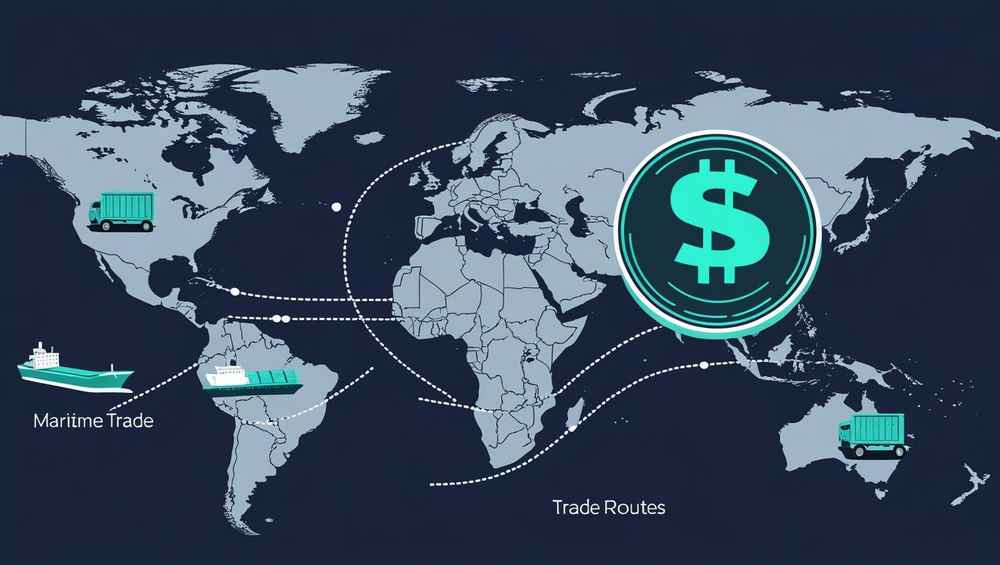
The US dollar’s dominance is built on energy and global trade being priced in USD, which drives demand for US treasuries and props up the entire American financial system. This demand also influences how interest rates are priced, making treasury demand a critical lever in US economic control. To defend that structure, the US and its allies have weaponized both maritime chokepoints and regional instability.
There are two main arteries that global trade and energy move through. The first is maritime trade routes, these are ocean-based shipping lanes that carry the majority of the world’s goods and oil. Key chokepoints include the Suez Canal, the Strait of Hormuz, the South China Sea, and the Straits of Malacca. Disruptions in any of these lanes cause ripple effects across global markets.
Right now, we’re seeing deliberate pressure applied across all of them. The Red Sea has become a flashpoint as the Houthis in Yemen continue to disrupt shipping, forcing reroutes and driving up insurance costs. The Suez Canal is directly impacted, slowing global trade and increasing friction. The South China Sea remains volatile with military posturing around Taiwan and disputed islands. The Straits of Malacca, one of the most vital routes in Asia, remain under constant strategic scrutiny. These maritime corridors are being destabilized to maintain control over the global flow of goods, energy, and trade, and by extension, preserve USD pricing dominance.
The second battlefield is overland trade and energy corridors. These are routes that move fuel, commodities, and goods via rail, pipelines, and highways across regions and borders. China, through its Belt and Road Initiative, has spent the last decade building out these overland links to bypass the seas. CPEC, for example, routes energy from Iran through Pakistan into China. At the same time, a parallel corridor is developing through Tajikistan and Turkmenistan — a rail and pipeline hedge to secure long-term supply.
This makes the India-Pakistan conflict far more than a border dispute. When India continues to push the “Pakistan-occupied Kashmir” narrative, it’s part of a broader play to create tension in strategic transit zones. The goal is to keep energy and trade from flowing smoothly across this corridor. If that happens, China’s leverage weakens.
The US-led Quad alliance, comprising the US, India, Japan, and Australia, is central to this containment strategy. It’s not just about military alignment. It’s about slowing China’s economic rise by restricting both its access to energy and its dominance over trade routes. The more turbulence you create around China’s supply corridors, the more you delay its ability to challenge the current global order.
Even if the world moves toward a new currency basket, maybe the IMF’s SDR , the goal is to ensure the shift happens on terms the West can control.
Meanwhile, a new threat has emerged in the form of blockchain-based settlement rails. After Russia was cut off from SWIFT, it started using Binance Chain for transactions. Others have quietly followed. The US response has been to back stablecoins like USDT and USDC to ensure that even if the pipes change, the water still flows in dollars.
The pattern is consistent. When countries try to settle energy and trade outside of the dollar, they don’t just face economic pressure, they face consequences. Iraq switched to euros in 2000. Iran followed from 2003 to 2007. Libya proposed a gold-backed dinar in 2009. Venezuela launched the Petro in 2018. Each time, there were sanctions, regime change, or open conflict.
Empires don’t move overnight. They play chess. These moves take decades to unfold, and what we’re seeing now is the next wave of consequences. This isn’t about choosing sides. It’s about understanding how power actually works, and how the rules are shifting.
So while headlines focus on tech, politics, or war, the real game is about the plumbing of global power, how energy and trade move, who controls the routes, and what currency flows through the pipes.
New systems are emerging and the players are shifting but the stakes remain the same. Control the routes. Control the money. Control the world.
Disclaimer: The views and opinions expressed in this article are those of the author and do not necessarily reflect the official policy or position of ProPakistani. The content is provided for informational purposes only and is not intended as professional advice. ProPakistani does not endorse any products, services, or opinions mentioned in the article.