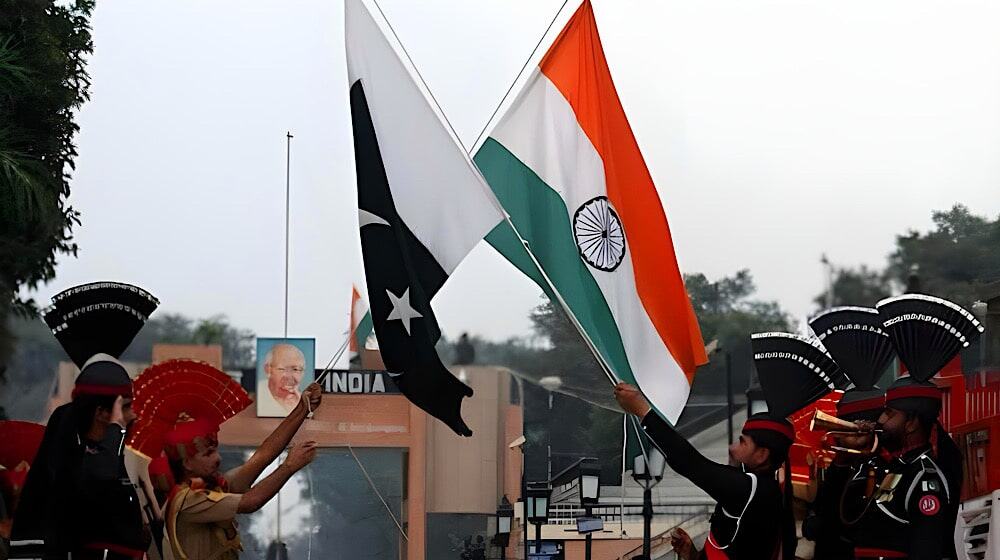
When India blamed Pakistan for the Pahalgam attack in April 2025, there was no surprise in how the world responded. Even though Pakistan formally demanded evidence, India provided none: not to Islamabad, nor to the rest of the international community. No dossier, no satellite imagery, no intercepted communications. Just a unilateral accusation, echoed through Indian media and amplified globally. Yet most Western capitals accepted it at face value.
The reflex was familiar: “Pakistan has a history of nurturing terrorists.” The repetition of this phrase across global platforms was deafening. What it revealed, more than anything, was that the Indian narrative had prevailed internationally. And Pakistan was, once again, caught holding the wrong end of the stick.
Even more telling was the response, or the lack of one, from the world’s most powerful countries. Among the P5, only China supported Pakistan diplomatically during the early days of escalating tensions with India. The rest — the US, UK, France, and Russia — remained silent. They urged “de-escalation,” but made no real attempt to pressure India to hold back. Worse, America’s Vice President JD Vance openly dismissed the conflict as “none of our business.” This statement, callous and detached, laid bare the strategic calculations at play. The world views India as a responsible democracy defending itself from a rogue neighbour. In the global imagination, that rogue neighbour is still Pakistan. When war seemed likely in May 2025, only then did the major powers intervene with some seriousness. By that point, India had already been given a free pass to launch “surgical strikes” against what it called terrorist sites in Pakistan.
This international perception did not emerge overnight. It has been built and reinforced partly because of Pakistan’s own history and mistakes. Former alliances with non-state actors in the 1980s and early 1990s, under the misguided strategy of seeking strategic depth, continue to haunt us. The world has not forgotten. Unfortunately, we have not done enough to convince them that we have changed.
If any doubt remained, Defence Minister Khawaja Asif’s recent remarks only solidified the narrative. His admission, “Yes, Pakistan does have a past when it comes to supporting non-state actors,” may have been intended as a gesture of transparency. However, during an escalating conflict, it sent the worst possible signal to global powers already inclined to accept India’s accusations.
Pakistan welcomed the eventual ceasefire and third-party mediation. We viewed it as a return to diplomacy and rationality. However, we failed to see that the very countries mediating peace had already accepted India’s version of events. We have done little to challenge that perception.
Let us be clear. Pakistan is no longer what it once was. The turning point came in 2014, after the tragic Peshawar school attack. Since then, our military and civilian institutions have made serious efforts to dismantle terrorist networks and counter extremism. There is no denying that progress has been made. However, we have not effectively communicated this change to the world.
We now stand at a critical juncture. If we do not take charge of our narrative, others will continue to define it for us. Pakistan will be cast in the role of the villain. Diplomatic statements and ceasefire agreements cannot undo the damage of decades of inconsistency unless they are supported by lasting reforms in how we address extremism, both internally and externally.
The reality is that Pakistan is not a terrorist state. It is a country that has suffered greatly from terrorism. Thousands of lives have been lost. Entire generations in conflict zones have been traumatized. Yet the world rarely sees this side of the story.
We must reclaim that story, not with propaganda, but with meaningful action. This includes reforms that are visible, credible, and lasting. It requires strategic communication that is consistent and honest. It demands a foreign policy that reflects a modern, reformed Pakistan, rather than one trapped in its past.
Only then will the world begin to believe what we already know: that Pakistan is not the source of the problem, but the ground on which the fight against it continues.
Disclaimer: The views and opinions expressed in this article are those of the author and do not necessarily reflect the official policy or position of ProPakistani. The content is provided for informational purposes only and is not intended as professional advice. ProPakistani does not endorse any products, services, or opinions mentioned in the article.