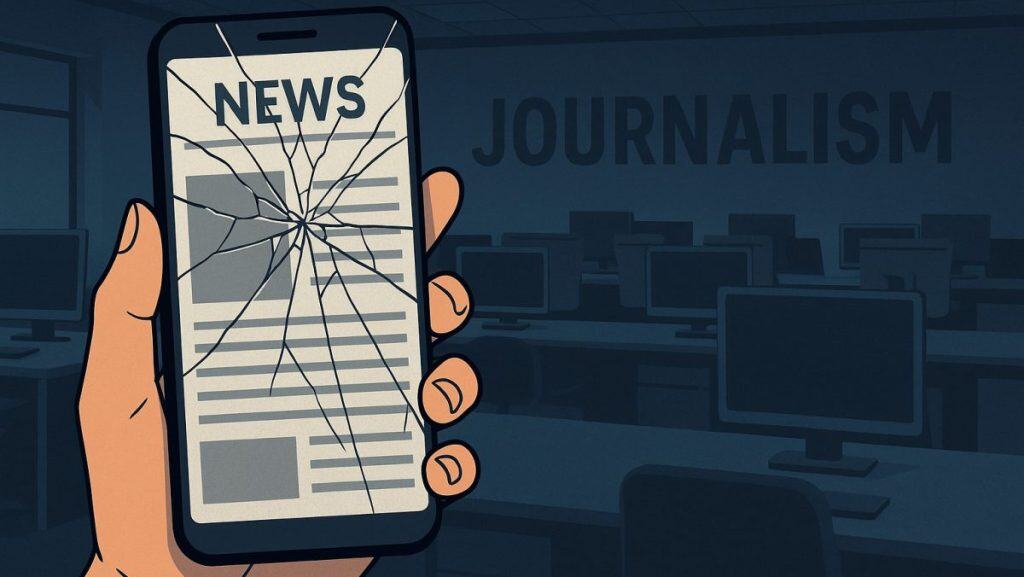
My partner, the founder of ProPakistani, and I have spent the past week locked in a surprisingly passionate debate: is the era of publishers and media outlets over? Is news, as we know it, actually dead?
Let’s walk through the battlefield.
AI is eating the middleman. We used to search for answers and click on articles. Now, we ask ChatGPT or Grok. That one skipped click might seem harmless, but for media outlets, it’s traffic lost, revenue gone, and another nail in the coffin.
Digital ad money isn’t coming our way. Brands still spend, sure. But now they’re going straight to Meta or running influencer campaigns. Digital budgets are growing, but publishers aren’t seeing a bigger slice of the pie.
News doesn’t break; it bleeds online first. X (formerly Twitter) gets there before anyone else. Scoops used to belong to journalists. Now, heads of state, athletes, and CEOs go directly to the world themselves. No filter. No delay. No newsroom needed.
Websites are out. Socials are in. From blogs to apps to now Instagram reels and TikTok scrolls, everything lives in the feed. No one’s rushing to download your app or type in your URL. The homepage is dead. The homepage is now the algorithm.
The pen has been replaced by the lens. We’ve shifted from written content to video-first everything. From explainers to mini documentaries, we’re in the middle of a format revolution. And many just can’t keep up.
Brands don’t build trust. People do. We’ve moved into the era of personality. The public trusts faces, not logos. The storyteller matters more than the publication they belong to.
Paywalls never really worked. Not globally. And certainly not here at home. People don’t want to pay to read the news unless they feel like they’re supporting a person, not a business.
So why am I still excited about the media’s future? Part delusion, part optimism. When the ground shifts beneath your feet, that’s usually when opportunity strikes. Or maybe I’m just wired this way.
No one wants a jack-of-all-trades anymore. We want specialists. Subject matter experts. People who go deep, not wide. That opens doors to audiences you never thought were worth chasing before.
Snappy explainers, AI-powered reels, daily news wraps, and even long-form podcasts — every video format has value now, and they’re multiplying.
A site is just a tool. What you really want are independent brands, niche verticals with their own identities. The era of mini media empires is just beginning.
We don’t need newsreaders. We need personalities. People who own their beat — tech, telecom, sports, and auto. We want to build a house with many rooms, each with its own storyteller.
AI is not the enemy. It can write drafts, clean grammar, generate graphics, build dashboards, track live rates, and create video snippets. It handles the boring parts so your team can focus on the creative.
Influencers aren’t the enemy either. Build with them, share revenue, amplify together. A creator network is a publisher’s greatest untapped asset.
Conferences, awards, and launches need to plug into digital, not just happen in banquet halls. Publishers can become the bridge between physical and digital relevance.
The lawsuit between OpenAI and the New York Times may reshape this entire space. If AI was trained on your content, shouldn’t you get a cut? Maybe AI tools will pay publishers someday, just like YouTube does.
Paywalls may have failed, but the community hasn’t. Platforms like Patreon show that audiences will pay creators. So why not publishers, especially if they start looking and acting more like people, not institutions?
Will Any of This Work?
Who knows. Some of it might. Some of it won’t. But the media industry isn’t dying, it’s just shape-shifting. The question isn’t whether media will survive. It’s what form it will take next. Maybe it becomes a nonprofit. Maybe it becomes personality-driven. Maybe it becomes a niche, like everything else.
So, is this our plan at ProPakistani? Let’s call it a blueprint. But like Mike Tyson once said, “Everyone has a plan until they get punched in the mouth.”
One thing I know for sure: storytelling isn’t going anywhere. Reporting, commentary, and analysis will live on.
The news isn’t dead. But the newspaper? That one might be.
Disclaimer: The views and opinions expressed in this article are those of the author and do not necessarily reflect the official policy or position of ProPakistani. The content is provided for informational purposes only and is not intended as professional advice. ProPakistani does not endorse any products, services, or opinions mentioned in the article.

Yes, the social media leads now but when it comes to detail, everybody has to visit the website to read more details.
Good riddance. The fact that you asked grok or get proved you deserve the loss.
When journos don’t ask questions by being the voice of the people.
They don’t deserve to earn . Your ad revenue or whatever excuse doesn’t matter since there is no quality in your journalism
Really interesting read! It’s clear that the media landscape is changing fast, and it’s not just about reporting news anymore, it’s about building trust and personality. This shift towards niche content and creators makes a lot of sense. At Vibrank Flex, we see firsthand how important storytelling and authenticity are for brands today. Excited to see how platforms and businesses adapt to keep up with these changes.
Totally get what you’re saying. The media world is definitely changing, but honestly, I think this shift is a huge opportunity. At Vibrank Flex, we’ve been leaning into the idea of niche content and making sure we’re speaking directly to the communities that matter most.
AI, social media, and personalized storytelling?
They’re game-changers for how we connect with our audience. People trust people, not logos and that’s something we’re building on every day.
Totally get what you’re saying. The media world is definitely changing, but honestly, I think this shift is a huge opportunity. At Vibrank Flex, we’ve been leaning into the idea of niche content and making sure we’re speaking directly to the communities that matter most.
AI, social media, and personalized storytelling?
They’re game-changers for how we connect with our audience. People trust people, not logos and that’s something we’re building on every day.