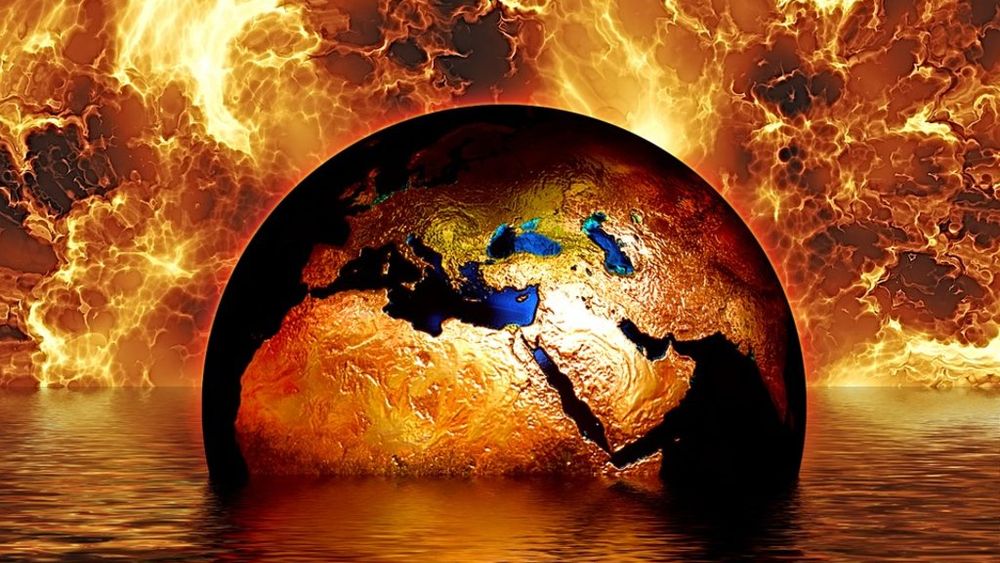
2017 was one of the hottest years in recorded history, according to a new study released by NOAA on the ‘state of the Climate’. The report is an alarming evidence of the fact that our planet is warming faster than at any point in history.
The Reports
So, how was the temperature in 2017? Let’s just say, not very good.
- Greenhouse gases in the atmosphere: record high
- Global surface temperature: near-record high
- Sea surface temperature: near-record high
- Global sea level: record high
Warm global temperatures in recent years have been a strong trend, 2014, 2015 and 2016 also witnessed record-high temperatures and were the hottest in recent history.
The past three years were “substantially warmer than the previous — kind of establishing a new neighborhood in terms of global temperature,” said Deke Arndt, a climatologist at NOAA and the lead editor of the report. “And 2017 reinforced that.”
ALSO READ
The Biggest Risks Facing Our World This Year and Beyond
Some Warning Signs
Countries such as Argentina, Uruguay, Spain, and Bulgaria recorded high annual temperatures while Mexico had a record high annual temperature for the fourth year in a row. NOAA’s report was based on contributions from 500 scientists in 60 countries. The report was released on Wednesday (August 1, 2018) on the website of the American Meteorological Society.
The findings show the effect of increased concentrations of Greenhouse gases on the earth’s atmosphere. It further stated that the Arctic continued to warm and the gathered data showed that the glaciers continued to diminish, with the average glacier losing 72 feet of its top since 1980.
The report shows a number of small shifts in our climate metrics – shifts that can drive extreme events like the heat waves, downpours, and wildfires.
“We’ve had something on the order of one degree [Celsius] or so of global warming,” says Radley Horton, a climate scientist at Columbia University’s Lamont-Doherty Earth Observatory, who wasn’t involved in the new report. “It doesn’t sound like much, but already it’s producing more frequent heat waves. We’ve had globally less than a foot of sea level rise in the last century. Again it doesn’t sound like much, but for certain regions, it’s already causing a fourfold increase in the frequency of coastal flooding.”
Judging by the change in climate in recent past, it is mandatory that the world leaders take notice of this potentially-catastrophic problem and work towards a solution. The report “highlights the urgency for us as a society to reduce greenhouse gas emissions,” says Horton, “and prepare our most vulnerable communities for some of these climate changes that we’re locked into.
Via: NPR