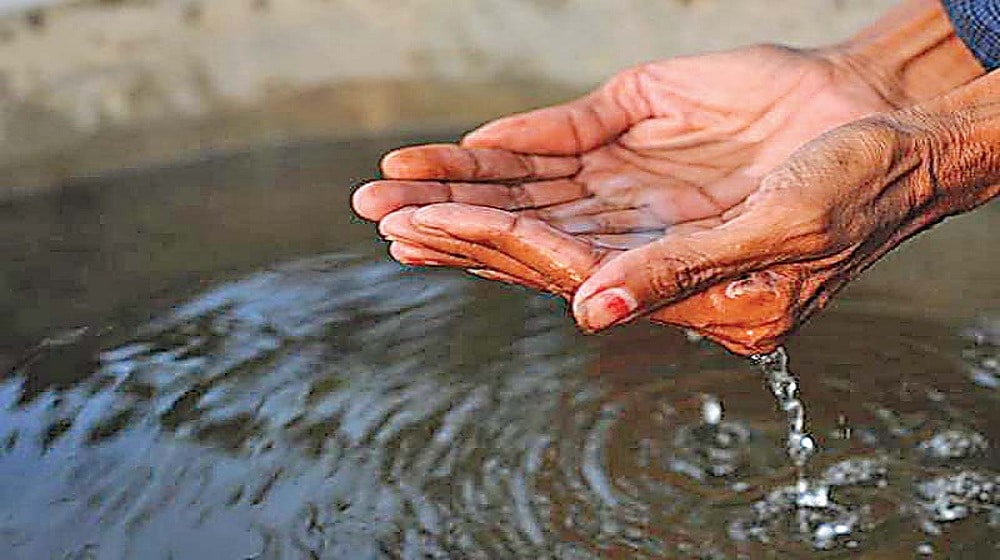
At least 20 major cities of Pakistan do not have safe drinking water for citizens, revealed a report of the federal government submitted to the National Assembly session on Monday.
The report was presented by the Federal Minister for Science and Technology, Shibli Faraz, in response to a question put forward by Mussarat Rafiq Mahesar of the Pakistan Peoples Party (PPP).
It revealed that the water quality of 20 out of 29 cities examined last month by the Pakistan Council of Research of Water Resources (PCRWR) was found to be unhealthy for human consumption.
ALSO READ
Chinese Scientists Develop Glass Harder Than Diamond
The PCRWR tests revealed that over 50 percent of underground water in most cities contains contaminants of arsenic (8%), nitrate (4%), fluoride (4%), and bacteria (39%).
In three cities, Mirpurkhas and Shaheed Benazirabad (Nawabshah) in Sindh and Gilgit, 100 percent of underground water has been declared as unsafe for drinking by the PCRWR. On the contrary, underground water obtained from nine sources each in Sialkot and Gujrat was found to be 100 percent safe for drinking purposes.
The cities with more than 50% of its underground water is contaminated include Multan (94%), Karachi (93%), Badin (92%), Sargodha (83%), Hyderabad (80%), Bahawalpur (76%), Muzaffarabad (70%), Sukkur (67%), Faisalabad (59%), Peshawar (58%), Tando Allah Yar (57%), Sheikhupura, Abbottabad, and Khuzdar (55%), Loralai (54%), Quetta (53%) and Gujranwala (50%).
ALSO READ
Hindu Temple in Rahim Yar Khan Restored and Handed Over to Hindu Community
When asked what steps the federal government had taken to provide safe drinking water to the citizens, the science and technology minister said that water was a provincial matter after the 18th Amendment.
“The job of my ministry was only to carry out tests of water through the PCRWR. The periodic water quality monitoring reports of the PCRWR are published and shared with the provincial and local governments for undertaking improvement measures at their end,” said the minister.
He also maintained that the governments of Khyber Pakhtunkhwa and Punjab had approved water policy and laws related to the improvement of water quality making it mandatory to check water once a year and urged the other provinces to do the same.
Stay Connected with ProPakistani
Get the latest news and stories wherever you prefer.
Add ProPakistani to Preferred Sources and see more of our stories in Google Search and Top Stories.












