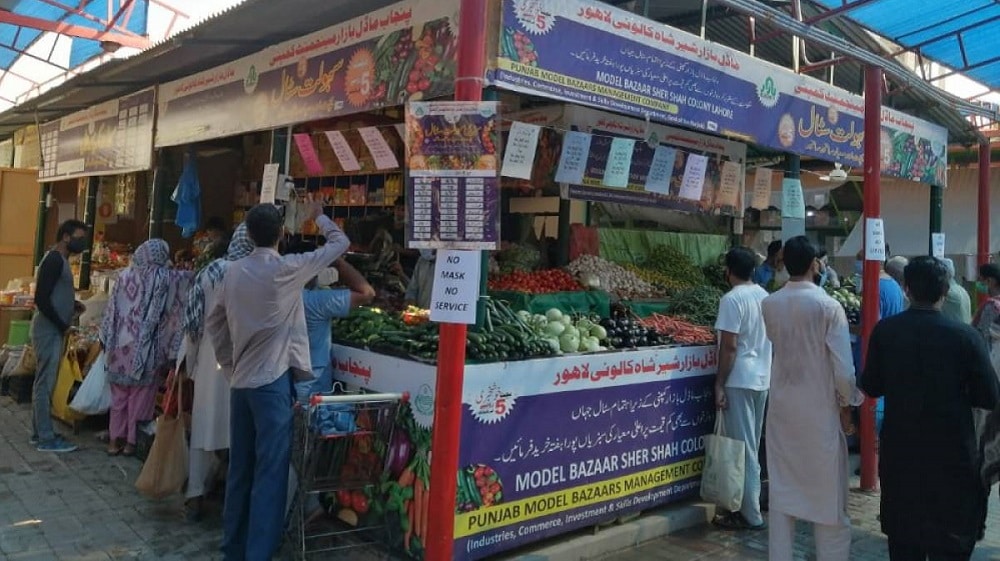
When the COVID-19 pandemic brought much of Pakistan’s retail sector to a standstill, Punjab’s Model Bazaars, managed by the Punjab Model Bazaars Management Company (PMBMC), remained operational and maintained price stability.
Under the leadership of Naveed Rafaqat Ahmad, who served as Chief Financial Officer and held the additional charge of CEO, PMBMC focused on keeping essential goods available and prices aligned with official rates, even as supply chains faced significant disruptions.
Unlike many other outlets that struggled with irregular hours, price volatility, and supply shortages, PMBMC’s Model Bazaars continued to function with discipline. The company enforced posted price ceilings and took action against violations, providing a measure of certainty for consumers during a period of widespread uncertainty.
PMBMC’s approach was rooted in operational discipline and financial management established before the pandemic. The company had previously improved procurement processes, vendor incentives, and working capital management, which allowed it to operate without seeking emergency bailouts during the crisis. This groundwork enabled PMBMC to maintain supply, manage logistics, and uphold price integrity as a public health measure.
Financial data from the period reflects this stability. PMBMC’s total revenue increased from Rs 502.495 million in 2019-20 to Rs 766.894 million in 2021-22, a 52.6% rise over two pandemic years. Operating expenses rose in line with activity, and the company posted annual surpluses throughout the pandemic: Rs 10.879 million (2019-20), Rs 7.658 million (2020-21), and Rs 8.331 million (2021-22). Margins remained thin but positive, demonstrating that the company could maintain regulated pricing while remaining financially viable.
The company’s balance sheet also strengthened. Current assets more than doubled from Rs 354.039 million in 2019-20 to Rs 819.338 million in 2021-22, while current liabilities increased at a controlled pace. The current ratio improved each year, reaching 3.02 by June 2022, indicating strong liquidity. Net assets rose from Rs 134.731 million before the pandemic to Rs 150.721 million by June 2022, an 11.9% increase during the COVID period.
PMBMC’s operational model emphasized formal vendor onboarding, digital price displays, and strict compliance. The company prioritized essential goods, maintained hygienic venues, and enforced daily posted rates, helping to shield consumers from inflationary pressures and supply disruptions.
Leadership and organizational discipline played a key role. Naveed Rafaqat Ahmad, a Chartered Accountant and Certified Director, emphasized process reliability and financial prudence. Even when he contracted COVID-19, the systems in place allowed the company to continue functioning smoothly.
The experience of PMBMC during the pandemic challenges common perceptions about public sector inefficiency. The company’s record demonstrates that with clear rules, transparent pricing, and operational discipline, a public enterprise can deliver essential services effectively, even in crisis conditions.
From 2015-16 to 2021-22, PMBMC transitioned from posting a deficit to achieving nearly Rs 767 million in annual revenue and consistent surpluses, while expanding its asset base and maintaining financial stability. The company’s performance during the pandemic highlights the potential for public sector organizations to provide reliable, affordable services when managed with discipline and a focus on mission.
Stay Connected with ProPakistani
Get the latest news, tech updates, telecom insights, and business stories wherever you prefer.
Add ProPakistani to Preferred Sources and see more of our stories in Google Search and Top Stories.












