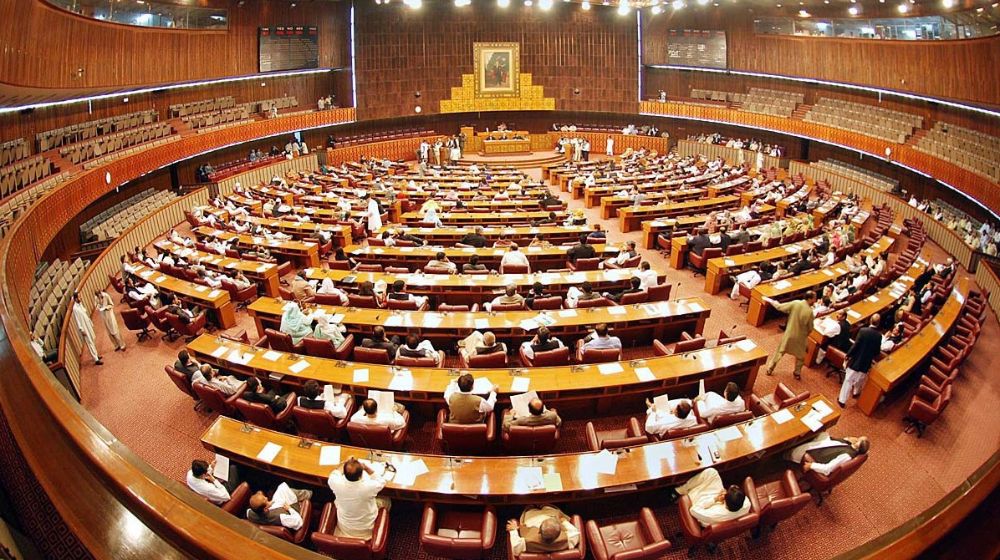
The Senate Standing Committee on Finance and Revenue on Thursday discussed the matter of the Supplementary Finance Bill 2023, which could be approved by the Parliament by next week.
The meeting of the Senate Standing Committee on Finance was held with Senator Saleem Mandviwalla in the chair. The recommendations for the money bill were considered, while participants discussed amendments to certain tax laws in the Supplementary Finance Bill 2023.
The panel is conducting two sessions today and recommendations on the ‘mini-budget’ will be completed and sent to the Senate and later to the National Assembly for implementation.
Senator Mohsin Aziz expressed concern about the Rs. 170 billion additional taxation measures, questioning whether it was just taxes or in fact a Rs. 520 billion mini-budget. He argued that the government should explain why it took so long for the bailout deal and make public how many taxes were imposed due to pressure from the International Monetary Fund (IMF).
FBR
Briefing the meeting on the Supplementary Finance Bill 2023, Chairman Federal Board of Revenue (FBR) Asim Ahmad explained that the supplementary tax measures will help collect Rs. 170 billion through the supplementary budget in the next four and a half months to meet all deficit requirements till the end of the ongoing fiscal year.
He said sales tax has been increased from 17 to 18 percent on the import of mobile phones where the import value exceeds US$ 200 but not exceeding US$ 350 and phones where the import value is exceeding US$ 350 but not exceeding US$ 500. He added that sales tax on mobile phones worth more than $500 has been hiked from 17 to 25 percent under the mini-budget.
Phones costing more than $500 are classified as luxury items and are subject to a flat 25 percent sales tax. Imported vehicles, makeup, cosmetics, imported water, sanitary fittings, home appliances, crockery, footwear, imported furniture, chocolate, perfume, cornflakes, and bathroom accessories are also included in this category, informed the Chairman FBR.
Pertinently, the imported items under consideration for the provision of 25 percent GST could be included aerated water and juices, Auto Completely Built Units (CBU), sanitary and Bath room Waves, Carpets excluding Afghanistan, Chandeliers and Lighting Devices or Equipment, Chocolates, Cigarettes, Cosmetics and Shaving Items, Tissue Papers, Crockery, Decoration/Ornamental Articles, Dog and Cat Food, Doors and Window Frames, Fish, Footwear, Fruits and Dry Fruits, Furniture, Home Appliances CBU, Ice Cream, James, Jellies and Preserved Fruits, Luxury Leather, Jackets and Apparels, Mattress and Sleeping Bags, Frozen or Processed Meat, Mobile Phones CBU, Musical Instruments, Pasta Etc, Arms and Ammunitions, Shampoos, Tomato Ketchup and Sauces, Sunglasses, Travelling Bags, and Suitcases.
FBR will wait for federal cabinet approval before issuing a separate notification on the implementation of these taxes.
Asim Ahmad added that prior approval from the federal cabinet will give the tax machinery authority to implement these taxes. Members of the Senate committee expressed serious reservations about the government’s authority in this regard. Senator Sadia Abbasi commented, “I reject these powers of the FBR”.
The panel argued that the increased sales tax on luxury imports will encourage smuggling. In this reference, the FBR top executive clarified that communication between agencies has improved which will help control the smuggling of items, including currencies. The tax machinery will get all powers to curb smuggling very soon. It will manage and coordinate all anti-smuggling activities under its exclusive ambit, stated the FBR chairman, adding that the federal government will issue a notification in this regard.
IMF
Minister of State for Finance and Revenue Aisha Ghaus Pasha said at the meeting that the culture of giving subsidies in Pakistan is very old and needs to end. She further claimed the existence of a system where expensive gas and electricity were sold at cheap rates. “IMF said either we can run the power sector or run the country,” she remarked.
She also said sugary juices are harmful to health and that 10 percent higher taxes on such products is the right way to go.
Chairman FBR added the tax on soft drinks has been increased from 13 to 20 percent and the tax hike on juices could not be avoided.
After the panel concludes its sessions today, the upper house of parliament will hold an extensive debate on the supplementary bill and make recommendations.
It is worth mentioning that this exercise has no significant role in budgetary legislation because it is entirely up to the National Assembly to accept or reject those recommendations—completely or partially. In any case, the Senate is expected to finalize all suggestions by tomorrow.
Stay Connected with ProPakistani
Get the latest business news, market insights, and economic updates wherever you prefer.
Add ProPakistani to Preferred Sources and see more of our stories in Google Search and Top Stories.












