
Residents of Abu Dhabi will soon find it easier to travel between neighborhoods without relying on cars — even in the heart of the city. A major urban transformation is underway, enabling seamless movement across the capital through walking paths, public transport, and e-scooter networks, while reducing dependence on private vehicles.
The UAE leadership has approved a Dh42 billion expansion of Abu Dhabi’s Liveability Strategy, an ambitious plan to enhance the overall quality of life across the emirate.
According to urban planners, the initiative will not only provide essential facilities such as parks, schools, and mosques, but also promote social well-being and stronger community ties. The city’s expanding connectivity means residents can easily access services in nearby districts — creating an open and integrated urban environment instead of isolated, gated communities.
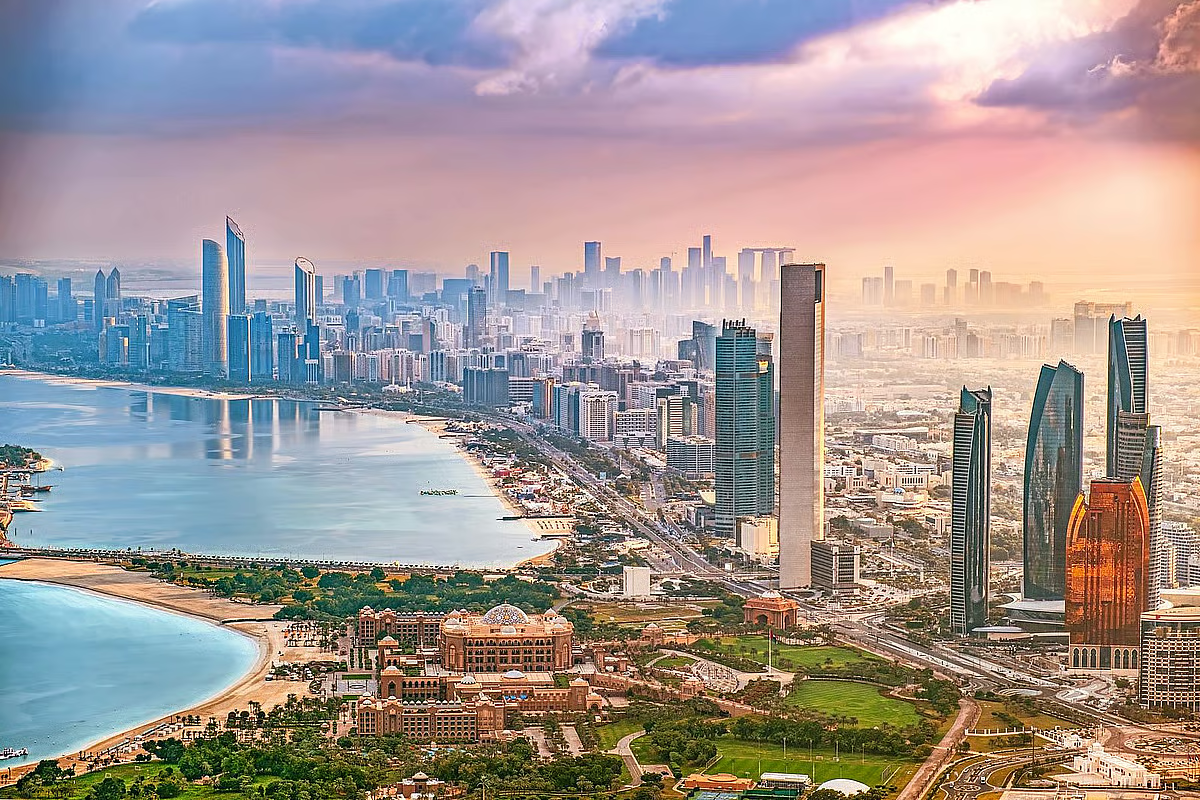
Expanding the Livability Strategy
During the first phase, neighborhood integration improved from 67% before 2023 to 81% by 2025.
More than 60 projects worth Dh12 billion have been identified as key contributors to this transformation. These include the development of over 200 parks and sports courts, 24 schools, 21 mosques, and 28 community majlises, along with 120 km of pedestrian walkways, 283 cycling tracks, 220 km of new street lighting, and 200 urban beautification projects.
The strategy also incorporates artificial intelligence technologies to enhance government efficiency and streamline community services.
Residents Already Seeing Change
Abu Dhabi resident Omar Bu Saeed, 36, said that these developments are already improving everyday life.
“These small parks serve as safe, local spaces for families and children. Dedicated walking and cycling paths help prevent accidents, and the new lighting not only enhances safety but also makes evening walks enjoyable,” he said.
Building Connected Communities
Yomna Garada, Associate Urban Planner at InSite (a KEO division), explained that integrated communities are designed to make daily essentials accessible within a 15-minute walking distance.
“When neighborhoods are well connected, residents can walk or cycle to schools, parks, and local shops, which builds stronger communities and promotes a healthier lifestyle,” she said.
Garada added that interconnected neighborhoods reduce commute times, cut carbon emissions, and promote sustainable mobility.
“By designing neighborhoods where daily needs are within reach, we are not just improving quality of life — we’re reducing congestion, promoting sustainability, and strengthening social ties,” she added.
Resident Ghbaisa Al Khyeli echoed similar sentiments, noting that the changes have made daily life simpler and healthier.
“Having parks, schools, and mosques nearby makes everything more convenient. Children have safe spaces to play, and parents save time on commutes. It’s a real improvement in both comfort and community spirit,” Al Khyeli said.
Impact on Mental and Physical Health
Dr. Shaju George, Psychiatrist at International Modern Hospital Dubai, highlighted the mental health benefits of green and open spaces.
“Natural environments such as parks and gardens lower stress levels, improve mood, and reduce anxiety,” he explained.
He added that exposure to greenery also enhances attention, boosts endorphins, and fosters social interaction by creating spaces for gatherings and community events.
“Well-lit streets and safe walking or cycling routes encourage daily physical activity, which improves cardiovascular health and builds a sense of belonging,” Dr. George said.
According to him, these projects support not just individual well-being but also contribute to building resilient, connected, and healthier communities.
Stay Connected with ProPakistani
Get the latest international news and global stories wherever you prefer.
Add ProPakistani to Preferred Sources and see more of our stories in Google Search and Top Stories.












