
Eliminating cervical cancer in Pakistan requires more than vaccination and screening, it demands innovation, collaboration, and policy support. The national symposium “From Awareness to Action: HPV & Cervical Cancer Elimination 2030” organized by Roche Diagnostics Pakistan in partnership with the Society of Obstetricians & Gynaecologists of Pakistan (SOGP) in Karachi, brought together policymakers, clinicians and international partners to accelerate the country’s cervical cancer elimination agenda.
Self-sampling has emerged as a critical tool to improve accessibility. By allowing women to collect their own samples in privacy, this method overcomes social stigma and logistical barriers. Pilot studies in Pakistan have shown promising results, demonstrating its potential to expand screening coverage and improve early detection.

Roche Diagnostics Pakistan is supporting these efforts with advanced HPV diagnostics, technical guidance, and self-collection solutions. Khurram Khalid, Country Manager, Roche Diagnostics Pakistan & Afghanistan, emphasized the company’s commitment: “Roche Diagnostics Pakistan is proud to support Pakistan’s fight against cervical cancer. This symposium was a critical step in uniting stakeholders and reinforcing our commitment to provide advanced HPV testing and screening solutions, empowering a future where every woman has access to life-saving early detection, prevention and timely care.”

Multi-stakeholder collaboration remains central to achieving elimination goals. Professor Dr. Halima Yasmeen, HOD, Gynae & Obst, Jinnah Postgraduate Medical Centre, highlighted the importance of partnerships:
“Such gatherings are crucial as multidisciplinary teams rally around one shared mission — eliminating cervical cancer from Pakistan. With Sindh achieving over 70% HPV vaccination uptake, thanks to strong political leadership and collaboration across partners and clinicians, we see what is possible. Screening remains central to our path toward elimination.”
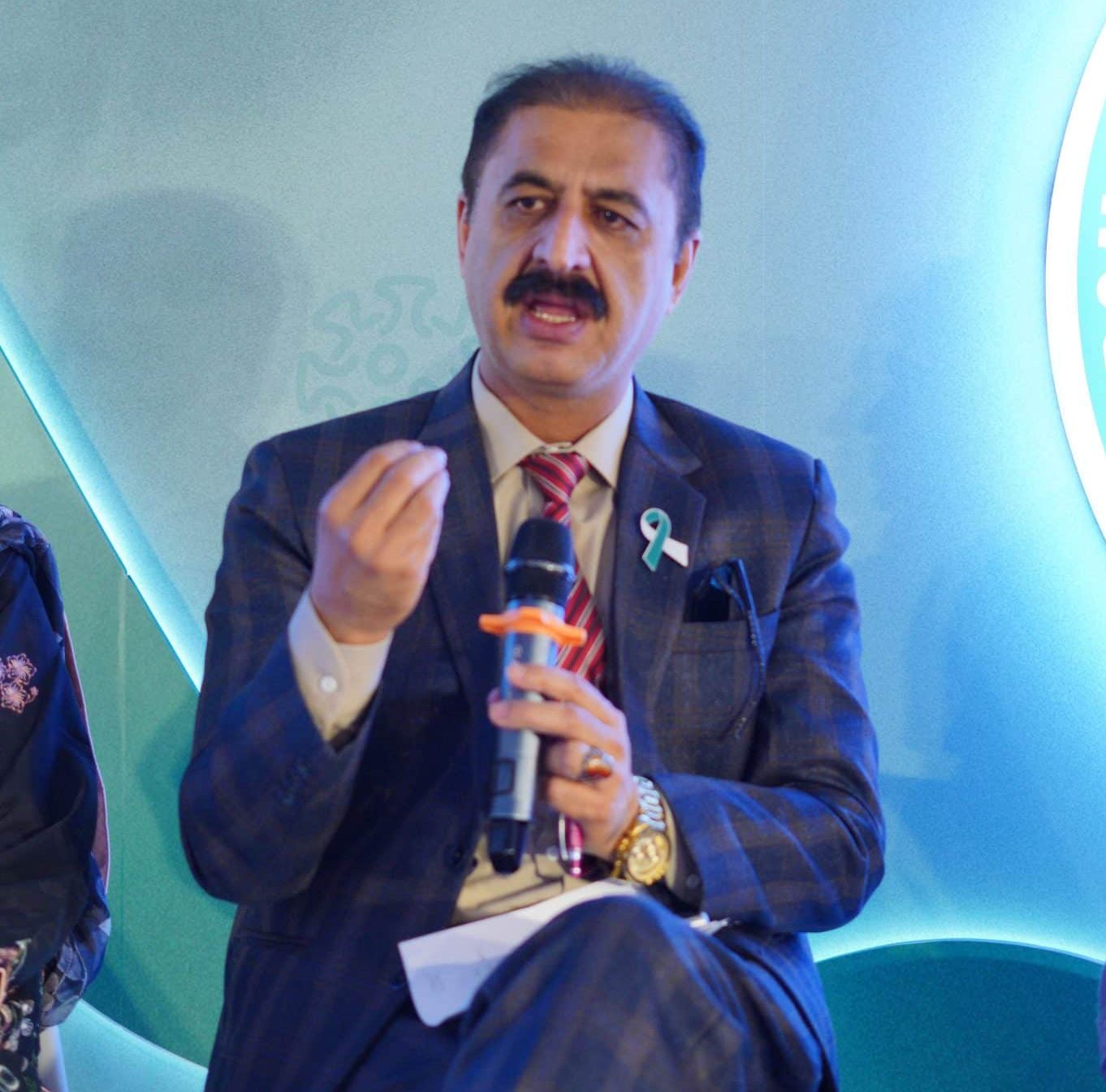
Professor Dr. Aman Ullah, HOD Paeds Unit, Civil Hospital, reminded stakeholders of the societal dimension of cervical cancer prevention: “Whether or not you give your daughters a dowry, give them something far more valuable — education, vaccination, and cancer prevention for a healthy future.”

Dr. Saeed Khan, Head of Molecular Pathology at Dow University of Health Sciences, emphasized the need to tackle misconceptions: “Studies show that HPV can be transmitted in ways beyond sexual transmission, pathways that are rarely discussed. Awareness campaigns should focus on education and prevention to reduce stigma and improve HPV vaccination and screening uptake.”
Elimination requires dual pillars: clinical excellence and strategic health system strengthening. Vaccines alone or screening alone cannot achieve elimination; the surrounding system must function, supported by financing, registries, and surveillance.

Dr. Muslima Ejaz, Department of Community Health Sciences, Aga Khan University explained: “Cervical cancer elimination requires a dual approach: clinical excellence and strategic health system strengthening. Vaccines alone or screening alone cannot achieve elimination — the surrounding system must function, supported by sustained financing, cancer registries, and surveillance.”

Dr. Tazeen Abbas, Secretary General SOGP and Program Moderator, reinforced the societal responsibility: “Preventing cervical cancer is not just a medical imperative, it is a societal responsibility. This symposium brings together every stakeholder needed to ensure women across Pakistan have access to early detection, timely treatment, and ultimately, a cancer-free future.”

The World Health Organization has set an ambitious goal: eliminate cervical cancer by 2030. With vaccination, screening, and early treatment, a world without cervical cancer is achievable. Roche’s integrated approach, combining diagnostics, pharmaceuticals and personalized healthcare, is helping Pakistan move toward this vision.
Through innovation, collaboration, and policy support, Pakistan is charting a path toward a cervical cancer-free future, transforming lives, communities, and the nation’s health trajectory.
Stay Connected with ProPakistani
Get the latest news and stories wherever you prefer.
Add ProPakistani to Preferred Sources and see more of our stories in Google Search and Top Stories.












