
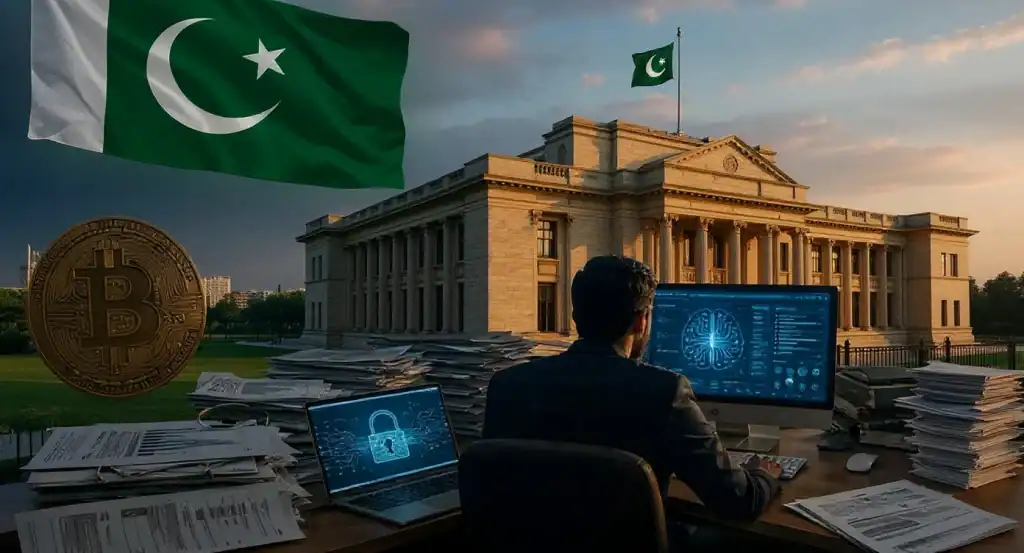
Pakistan recently witnessed a significant development in its financial landscape with the formation of the Pakistan Crypto Council (PCC). This move, led by Prime Minister Shehbaz Sharif and Finance Minister Muhammad Aurangzeb, aims to regulate and integrate blockchain technology and digital assets into the country’s financial system.
While the council’s creation has sparked optimism in many circles, its implications for Pakistan’s growing freelance economy remain complex and varied.
What is the Pakistan Crypto Council?
The Pakistan Crypto Council is a newly established body responsible for creating policies and overseeing the adoption of blockchain technology and digital currencies in Pakistan. According to the Ministry of Finance, the PCC will “play a central role in developing policies, encouraging innovation, and ensuring a secure and forward-thinking approach to crypto adoption.”
The five-member council is chaired by Finance Minister Muhammad Aurangzeb, with Bilal Bin Saqib, the chief advisor to the finance minister, serving as its CEO. The council also includes representatives from the State Bank of Pakistan (SBP), the Securities and Exchange Commission of Pakistan (SECP), the federal law secretary, and the federal IT secretary.
Why Now?
The timing of this move is worth paying attention to. The formation of the PCC follows a U.S. delegation’s recent meeting with Pakistan’s finance minister to discuss digital finance initiatives. Amendments to the SBP Act have also been proposed to legalize digital currencies, although these changes have faced delays due to political disagreements, particularly regarding dual nationality clauses for key positions in the SBP.
For years, Pakistan’s financial authorities have taken a cautious approach to cryptocurrencies. The SBP has repeatedly issued warnings against digital currencies like Bitcoin and Litecoin, citing risks of fraud, money laundering, and terrorism financing. Yet, the global shift towards digital finance has pushed Pakistan to reconsider its stance. “The world is moving rapidly toward digital finance, and Pakistan wants to be a leader in this space,” Aurangzeb said.
What Does This Mean for Freelancers?
Pakistan is home to one of the world’s largest freelance communities, with tens of thousands of freelancers providing services ranging from software development to digital marketing. For these freelancers, the PCC’s formation could signal a new era of faster, more secure payments — but only if executed properly.
Currently, Pakistani freelancers face numerous challenges when receiving payments from international clients. Traditional banking systems often impose high fees and lengthy processing times for cross-border transactions. Platforms like PayPal remain unavailable in Pakistan, forcing freelancers to rely on less convenient methods like wire transfers or intermediary services.
Cryptocurrency offers a promising alternative. Payments can be made instantly, bypassing banks and reducing transaction fees. Additionally, cryptocurrencies operate 24/7, unlike traditional banks with limited working hours. “With crypto, I could receive payments from clients abroad instantly without worrying about bank holidays or delays,” said Muhammad Ahmed, a Lahore-based freelance graphic designer.
Yet, there are valid concerns. The PCC’s structure has drawn criticism for its lack of technical expertise. As Dawn reported, “The absence of trained researchers and computer scientists from the PCC is another area of concern.” Without proper technological oversight, there’s a risk of poorly informed policy decisions.
How Will It Work?
The exact workings of the PCC and its regulatory framework remain unclear. The proposed amendments to the SBP Act would grant the central bank the authority to issue digital currency, potentially creating a state-backed digital currency rather than embracing decentralized cryptocurrencies like Bitcoin. This difference is key. A state-backed digital currency might streamline payments but wouldn’t offer the same decentralization and privacy benefits that appeal to freelancers.
Moreover, freelancers will need to manage regulatory hurdles. If strict Know Your Customer (KYC) and Anti-Money Laundering (AML) measures are implemented, signing up for crypto services could become as cumbersome as opening a traditional bank account.
Who Benefits?
In theory, freelancers stand to gain the most from a well-regulated crypto environment. Fast, low-cost transactions could make Pakistani freelancers more competitive on global platforms. “Clients often hesitate to hire Pakistani freelancers due to payment complications,” said Ayesha Khan, a content writer from Karachi. “If crypto makes payments smoother, it could open new doors for us.”
Yet, skepticism lingers. Critics argue that the government’s sudden interest in digital finance may be more about optics than genuine reform. “The government needs to prove it’s not just hopping onto the crypto bandwagon for headlines,” the Dawn editorial cautioned. Without proper infrastructure and education, freelancers could find themselves navigating a new financial system with little support.
Why Should Freelancers Care?
For freelancers, the stakes are high. Adopting crypto payments could reduce reliance on expensive intermediaries and offer greater financial independence. Yet, poor regulation could create new barriers. If the government imposes heavy taxation or restrictive policies, freelancers might find themselves worse off than before.
“This could be a breakthrough or just another layer of bureaucracy,” warned Ahmed. “It all depends on how the PCC operates.”
What’s Next?
As the PCC begins its work, freelancers should stay informed and involved. Advocacy groups and freelancer communities must push for representation in policy discussions to ensure their concerns are addressed. Additionally, freelancers should learn about cryptocurrencies and digital finance to keep up with these changes effectively.
Pakistan’s freelance economy holds immense potential, and the PCC could play a key role in unlocking it. Whether this council becomes a driving force for growth or another bureaucratic obstacle will depend on the policies it crafts and the expertise it brings in. For now, Pakistan’s freelancers watch with cautious optimism — hopeful for a more connected, efficient future, yet wary of the path ahead.
Disclaimer: The views and opinions expressed in this article are those of the author and do not necessarily reflect the official policy or position of ProPakistani. The content is provided for informational purposes only and is not intended as professional advice. ProPakistani does not endorse any products, services, or opinions mentioned in the article.



we are interested to open company in Pakistan as a Crypto Exchange. will you please guide us how we can proceed.