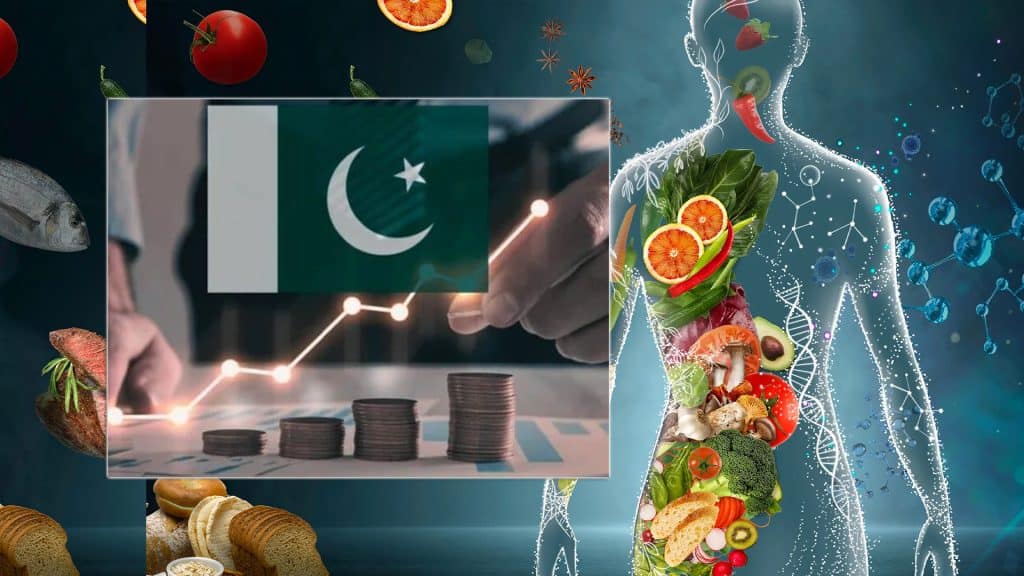
As Pakistan prepares its next federal budget, the national conversation is once again dominated by familiar themes: fiscal deficits, debt servicing, energy prices, IMF negotiations, taxation, and infrastructure spending. These are undeniably important. But amid all these debates, one of the country’s most critical investments continues to receive only marginal attention — nutrition.
This is a serious mistake.
Nutrition is not a peripheral social sector issue. It is one of the smartest economic investments Pakistan can make if it genuinely wants sustainable growth, stronger human capital, lower healthcare costs, and a more productive workforce.
At a time when Pakistan is searching for pathways toward economic stability and long-term development, investing in nutrition may offer one of the highest returns available to policymakers.
The evidence is overwhelming. According to the National Nutrition Survey (NNS) 2018, nearly 40% of Pakistani children under five are stunted due to chronic undernutrition. Around 18% suffer from wasting, while over half of children and adolescent girls are anaemic. These are not just health indicators; they are indicators of future economic performance.
A malnourished child is more likely to struggle in school, face learning difficulties, suffer frequent illness, and eventually earn less as an adult. When millions of children experience these disadvantages simultaneously, the impact extends far beyond individual families. It weakens national productivity, reduces economic competitiveness, and places enormous pressure on healthcare and social protection systems.
Pakistan is effectively losing a significant portion of its future workforce before those children even reach adulthood.
Global research consistently shows that nutrition investments generate exceptionally high economic returns. The World Bank estimates that every dollar invested in proven nutrition interventions can generate up to $23 in economic returns through improved productivity, reduced healthcare costs, and stronger human capital outcomes. Nutrition International’s Cost of Inaction analysis estimates that Pakistan loses billions of dollars annually due to undernutrition and micronutrient deficiencies.
No serious economic reform agenda can ignore losses of this scale.
Yet despite this evidence, nutrition remains chronically underfunded in Pakistan’s budgetary planning. Nutrition-specific allocations remain limited, while nutrition-sensitive investments across agriculture, education, water and sanitation, climate resilience, and social protection are rarely tracked systematically.
Pakistan does not suffer from a shortage of strategies or commitments. Over the past decade, the country has developed several important frameworks, including the Pakistan Multisectoral Nutrition Strategy, National Nutrition Action Plan, Maternal Nutrition Strategy, and adolescent nutrition initiatives. Provincial food fortification legislation has also been introduced in several regions.
But policies alone do not change lives. Budgets do.
Without sustained financing, implementation mechanisms, and institutional accountability, even the best strategies remain documents on paper. This is where the upcoming federal and provincial budgets become critically important.
The government now has an opportunity to reposition nutrition not as welfare spending, but as an investment in economic resilience and national development.
This requires a shift in mindset at the Ministry of Finance and in planning institutions. Nutrition should no longer be viewed solely through the lens of health. It must be treated as a cross-cutting economic issue linked directly to education outcomes, labour productivity, climate resilience, food systems, and poverty reduction.
Pakistan’s current economic realities make this even more urgent. Rising inflation has dramatically reduced household purchasing power, pushing millions toward cheaper and less nutritious diets. Climate-related disasters continue to disrupt food systems and public services. The 2022 floods exposed how quickly vulnerable communities can lose access to food, healthcare, and nutrition services.
The result is a compounding crisis in which poverty, food insecurity, climate shocks, and malnutrition reinforce one another.
Against this backdrop, nutrition investment becomes even more strategic. School feeding programmes, maternal nutrition support, food fortification, breastfeeding promotion, micronutrient supplementation, and nutrition-sensitive social protection are not simply health interventions — they are economic stabilizers that protect future human capital during times of crisis.
The upcoming budget presents several practical opportunities.
First, the federal and provincial governments should establish clearer nutrition budget lines and introduce nutrition-tagging mechanisms within the PSDP and Annual Development Plans. Currently, nutrition-related spending remains scattered across multiple sectors, making tracking and accountability extremely difficult.
Second, nutrition-sensitive investments should be integrated into climate adaptation, agriculture, WASH, and social protection programmes. This would allow Pakistan to better align nutrition financing with broader development and climate resilience agendas.
Third, coordination mechanisms such as the Pakistan National Nutrition Coordination Council and provincial nutrition platforms need stronger institutional support and regular financing.
Fourth, Pakistan should more actively leverage international financing opportunities. Institutions such as the World Bank, Asian Development Bank, Islamic Development Bank, and emerging global nutrition financing platforms increasingly recognize nutrition as central to sustainable development and resilience-building. Pakistan has a strong case for scaling up investment partnerships in this area.
Most importantly, parliamentarians and policymakers must recognize that nutrition is fundamentally about the kind of economy and society Pakistan wants to build over the next two decades.
Countries do not achieve demographic dividends through population growth alone. They achieve them by investing in healthy, educated, and productive citizens. Pakistan’s young population can either become a powerful economic asset or an enormous missed opportunity. That outcome will depend heavily on whether the country invests in human capital today.
The upcoming budget should therefore not be judged only by fiscal balancing or revenue targets. It should also be judged by whether it protects the country’s future workforce and strengthens long-term resilience.
Because ultimately, nutrition is not charity. It is nation-building.
And no country can build a strong economy on a weak nutritional foundation.
Disclaimer: The views and opinions expressed in this article are those of the author and do not necessarily reflect the official policy or position of ProPakistani. The content is provided for informational purposes only and is not intended as professional advice. ProPakistani does not endorse any products, services, or opinions mentioned in the article.