Charting the Path Toward Economic Dividends and Regional Leadership
In geopolitics, there is a fundamental truth: there is no such thing as a free lunch. For Pakistan, this adage has never been more relevant. As the nation approaches its 80th anniversary, it finds itself at a historic crossroads. Looking ahead to its centennial, Pakistan has a unique, time-sensitive opportunity to leverage its geographic and diplomatic position to redefine its future.
By positioning itself as a strategic intermediary between key regional and global powers, including the United States and Iran, and through the concerted efforts of both its political and military leadership in navigating the complexities of the Middle East, Pakistan is emerging as a more central and influential player in regional geopolitics.
Amid the current global crisis, a number of opportunities are unfolding that may lead to a reset of global alliances, a realignment of international trade systems, and a reassessment of international banking and compliance frameworks.
At this critical juncture, Pakistan’s leadership has played a pivotal role in positioning the country at a strategically decisive point. Drawing on extensive experience in both domestic and global politics, the current leadership has demonstrated notable performance during these challenging times. This positioning could enable Pakistan to capitalize on emerging opportunities and derive long-term economic and geopolitical benefits in the years ahead.
A Diplomatic Renaissance — “Truly on the Same Page”
Successful mediation on the global stage would do more than elevate Pakistan’s diplomatic standing; it would solidify its status as the preeminent strategic pivot in South and Central Asia. The current geopolitical climate is shifting in Pakistan’s favor. Both political and military leadership are navigating this landscape with calculated precision, earning recognition from international observers for their measured approach—truly “on the same page.”
This could be the moment for a fundamental reset of national priorities. By defining clear strategic directions today, Pakistan can catalyze a sharp and sustainable economic turnaround. While such an outlook may appear optimistic given the hardships of the past eight decades, the alignment of global interests presents a “golden opportunity” for Pakistan to leave an indelible mark on the global stage.
It is a vision that feels like a dream on the horizon, raising the question: is it finally within reach, or simply too good to be true?
Geopolitical Realignment as a Catalyst for Economic Transformation
The successful navigation of these geopolitical shifts could unlock a series of transformative economic drivers for the nation. As a central regional negotiator, Pakistan is well positioned to secure essential exemptions for energy imports, particularly from Iran and potentially from Russia.
This path toward energy sovereignty would simultaneously open vital export corridors for Pakistani goods and services, including cement, steel, and agricultural products, into Iranian and broader regional markets. At the same time, increased availability of economic goods from Iran could significantly reduce Pakistan’s national import bill.
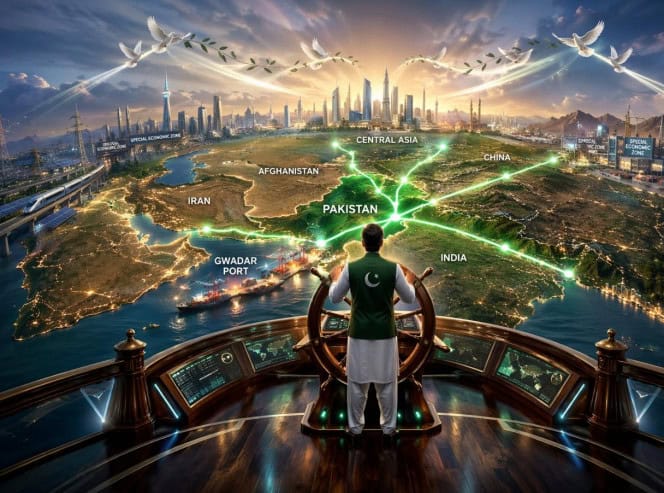
Complementing this strategy, the operationalization of Gwadar as a primary trade gateway would integrate regional economies, generating sustained foreign exchange through transit fees and logistics services while opening lucrative trade corridors to Central Asian states.
Furthermore, these cumulative diplomatic successes could support appreciation of the Pakistani rupee (PKR), contributing to lower inflation and reduced energy overheads for domestic industries. Such macroeconomic stability is a vital prerequisite for increased foreign direct investment (FDI) in large-scale business ventures, real estate, the Pakistan Stock Exchange (PSX), and other high-growth sectors.
This economic stabilization could also be reinforced by incremental financial flows from traditional partners such as Saudi Arabia, Qatar, and potentially Iran and other Gulf Cooperation Council (GCC) states.
By fostering a stabilized regional environment, Pakistan can transition from being primarily a recipient of aid to becoming a provider of high-value strategic services, including specialized security expertise and defense cooperation.
The creation of a “Regional Shield” through formalized and specialized trade arrangements could bring together key regional and global players (including India) to serve as a buffer against global volatility while generating long-term economic dividends.
Such stability would provide the foundation for a technology-led transformation. With reduced energy costs, Pakistan could advance energy-intensive sectors such as blockchain infrastructure, data centers, and AI-driven industries, fostering a modern economy that moves beyond traditional manufacturing.
Finally, by leveraging the untapped capacity of major urban centers like Special Economic Zones (SEZs) and initiatives under the Special Technology Zone Authority (STZA), which offer strategic tax incentives, Pakistan can modernize national infrastructure and attract high-value global participants across finance, education, agriculture, and technology.
The Roadmap to Sovereignty
This strategic pivot offers more than temporary relief; it presents a roadmap toward long-term economic sovereignty. By aligning diplomatic initiatives with concrete economic objectives, Pakistan can transform its identity from a frontier market into a global strategic hub. The window of opportunity is open; the time to act is now.
While the government may not yet be fully prepared for a transformation of this scale, the gap can be bridged through decisive policy reforms and the strategic engagement of international expertise to modernize institutional capacity. Such measures would enable public sector institutions to effectively capitalize on emerging opportunities in the near term.
In moments of uncertainty and crisis, opportunities are not merely discovered; they are created. With the right intent and execution, what currently appears to be an economic turnaround dream can be translated into a tangible and achievable reality.
Disclaimer: The views and opinions expressed in this article are those of the author and do not necessarily reflect the official policy or position of ProPakistani. The content is provided for informational purposes only and is not intended as professional advice. ProPakistani does not endorse any products, services, or opinions mentioned in the article.