As Pakistan reassesses its long-term energy security following repeated geopolitical disruptions in the Gulf region, one area increasingly attracting attention is deep-sea oil handling infrastructure — particularly Single Point Mooring (SPM) systems.
The recent Strait of Hormuz tensions once again exposed Pakistan’s heavy dependence on vulnerable import routes, limited storage buffers, and constrained port handling capacity. In that context, the country’s only operational offshore crude oil SPM facility, developed by Cnergyico near Hub, Balochistan, has assumed growing strategic significance far beyond its original commercial purpose.
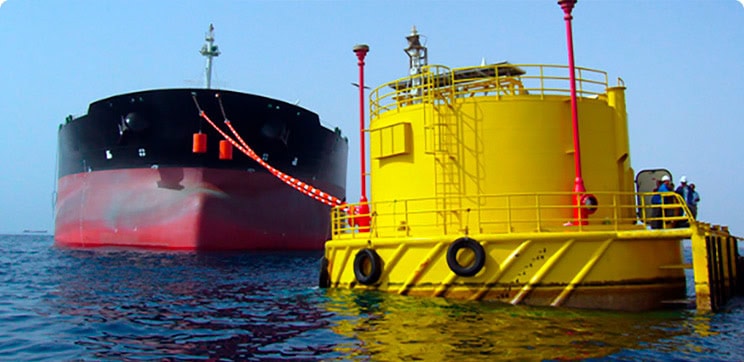
An SPM is essentially a floating offshore terminal that allows large oil tankers to moor in deep waters and transfer crude oil through subsea pipelines directly to onshore storage tanks or refineries. Unlike traditional ports, which are constrained by shallow draft limitations, channel congestion, and berth restrictions, SPMs enable the handling of much larger crude carriers in open-sea conditions.
Globally, they are widely used by major energy-importing and energy-exporting countries because they significantly improve logistics efficiency, lower freight costs, and provide operational flexibility.
Pakistan’s conventional oil import infrastructure around Karachi Port and Port Qasim was developed decades ago and primarily caters to smaller vessels. Due to draft limitations and harbor constraints, conventional terminals generally handle vessels in the range of approximately 50,000 DWT comfortably, while handling larger vessels often requires partial loading, lighterage operations, or operational restrictions. These limitations increase freight costs, extend turnaround times, and reduce overall supply chain efficiency.
In contrast, Cnergyico’s offshore SPM near Hub was specifically designed to handle substantially larger crude carriers in deeper waters. The existing system can handle tankers of around 100,000 DWT, while its expanded design potential allows accommodation of VLCC-class vessels of up to nearly 250,000 DWT.
This difference is strategically and economically significant. Larger vessels materially reduce shipping cost per barrel, improve economies of scale, and allow refiners to access a wider global crude market more competitively.
The most important advantage of an SPM, therefore, lies not merely in operational flexibility but in import economics itself. Freight economics improve substantially when countries can receive larger cargoes because transportation cost per barrel declines significantly. For a heavily energy-import-dependent country like Pakistan, even modest freight savings per barrel can translate into meaningful foreign exchange savings over time.
Cnergyico’s recent imports of multiple US crude cargoes provide a practical example of these advantages. The company successfully imported sizeable crude shipments from the United States through its offshore infrastructure, demonstrating Pakistan’s ability to diversify crude sourcing beyond traditional Gulf suppliers. Such flexibility becomes increasingly important during periods of regional instability or market volatility.
Beyond direct refinery economics, these imports also carry broader macroeconomic and strategic implications. Increased energy imports from the United States contribute positively toward balancing Pakistan’s bilateral trade relationship with the US, an issue that periodically features in broader economic and trade discussions between the two countries.
Diversified sourcing also reduces overdependence on any single region while improving negotiating flexibility in crude procurement. Cnergyico’s offshore SPM partially changes Pakistan’s traditional oil logistics equation. Located around 15 kilometers offshore near Hub in relatively deep waters, the facility is connected through offshore and onshore pipelines directly to refinery and storage infrastructure.
This configuration reduces vessel waiting time, lowers congestion risks, and minimizes operational bottlenecks associated with traditional harbor-based unloading systems.
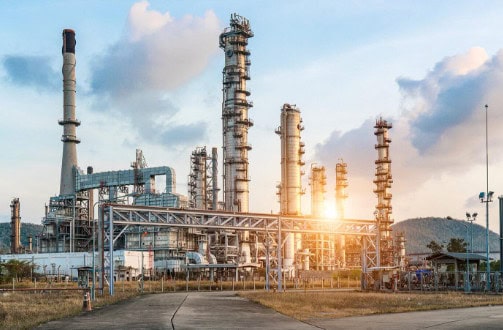
Beyond freight economics, SPM infrastructure has considerable strategic value. Pakistan currently possesses very limited redundancy in deep-sea liquid bulk handling capability. In practical terms, Cnergyico’s facility remains the country’s only meaningful offshore crude import platform capable of supporting large-scale future expansion.
The infrastructure therefore carries strategic national importance, even though it was originally developed as a private-sector commercial asset.
The full potential of such infrastructure, however, extends well beyond servicing a single refinery. Globally, many SPM systems eventually evolve into integrated energy logistics hubs connected with storage terminals, pipeline networks, petrochemical zones, and strategic petroleum reserves. Pakistan could theoretically move in a similar direction if supportive policies and infrastructure integration are pursued over time.
One important question increasingly being discussed is whether offshore crude infrastructure like the Cnergyico SPM can eventually support broader national usage rather than remain a largely captive facility. T
Technically, this is entirely feasible. Additional pipelines, storage facilities, and coastal distribution systems could eventually allow crude or petroleum products imported through offshore terminals to be distributed onward to multiple consumers, storage depots, or refining facilities. Internationally, many major offshore energy terminals operate under shared-access models serving multiple industrial users.
The Hub coastal belt offers several natural advantages for such long-term expansion. Compared to Karachi harbor, the region provides relatively deeper waters, lower congestion, larger available land corridors, and significant room for future industrial development. Over time, the area could potentially evolve into a broader integrated energy corridor comprising:
- Offshore SPM systems
- Large strategic storage facilities
- Refinery and petrochemical clusters
- Pipeline interconnections
- Bonded commercial storage
- Future strategic petroleum reserves
The growing interest of other energy-sector players in marine oil infrastructure also reflects this broader realization.
As Pakistan’s energy demand grows and refinery modernization proceeds, reliance solely on conventional port infrastructure may become increasingly unsustainable. Additional deep-sea unloading systems, storage terminals, and pipeline integration may ultimately become essential components of the country’s future energy architecture.
Importantly, SPM infrastructure should not be viewed merely as a commercial refinery asset. In modern energy systems, such facilities form part of broader national resilience frameworks.
During periods of geopolitical disruption, wartime stress, shipping delays, or port congestion, deep-sea offshore handling capability provides critical operational flexibility and strategic redundancy.
Pakistan’s recent experience has demonstrated that energy security is no longer simply about securing supply contracts. It increasingly depends on logistics resilience, storage depth, maritime infrastructure, and the ability to efficiently handle large-scale imports under stressed conditions.
In that evolving framework, offshore SPM infrastructure — particularly the existing Cnergyico facility — may represent one of the most strategically valuable yet underappreciated components of Pakistan’s future energy security architecture.
Disclaimer: The views and opinions expressed in this article are those of the author and do not necessarily reflect the official policy or position of ProPakistani. The content is provided for informational purposes only and is not intended as professional advice. ProPakistani does not endorse any products, services, or opinions mentioned in the article.