The bank of the Indus River, which has seen the rise and the fall of many civilizations over thousands of years, is also home to some of the oldest cultural sites.
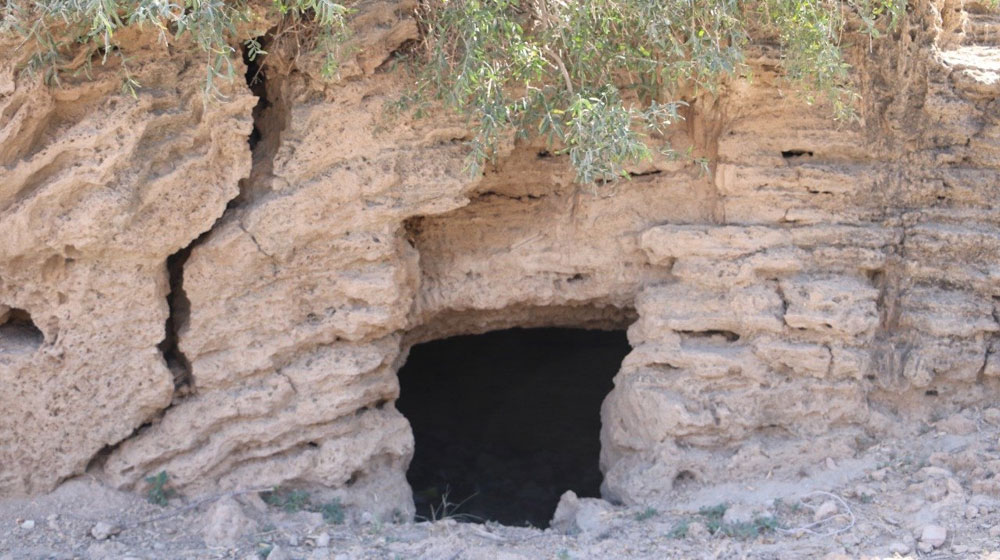
The ancient Kai Valley, about 35 kilometers from the Sehwan city of Dadu district, is one such historical landmark. The valley houses seven caves, the Kai Caves, locally called “Satt Ghariyoon,” in Kirthar Mountain Range at the south of the city. The caves, according to some archeologists, date back to the Bronze Age.
The site, once treated as one of the great archeological sites, has long been forgotten. The caves that may have hosted the humans of bronze ages once now serve as a shelter for stray animals and a garbage dump for villagers.
According to locals, their three generations have seen these caves in the same dilapidated condition.
“During the floods of 2010, some people took shelter and lived here for a few days. Now, locals have put animal fodder inside the caves and started using them like storage houses,” said Ali Akbar Noohani, the resident of a nearby village.
Since there has not been enough study on the ancient valley, archeologists have contrasting statements about its history. Some archeologists believe that the caves are prehistoric, while others call them the caves of Chalcolithic or Copper Age.
Other Historical Sites in The Area
Besides these caves, Sehwan is surrounded by several sites that could be established as tourism destinations due to their religious and historical significance.
These include ‘Panj Tan jo Bag’ or the ‘Place of the Five Purified Ones,’ referring to the mythical presence of Prophet Muhammad’s closet of kin; at some point in time, including daughter, Hazrat Fatemah (R.A.), son in law, Hazrat Ali (R.A.), and grandchildren, Hazrat Hasan (R.A.) and Hazrat Husain (R.A.).
Furthermore, there is a watermill on the centuries-old spring, the Zoroastrian Tower of Silence, and remains of the Buddha era.
A lot has been heard about Lakhmir-Ji-Maari, a mound of the cruel king who according to some myths had been fossilized by Hazrat Ali (R.A) during his visit to the area.
Expert Opinion
Aziz Kingrani, a writer and historian who has great authority on archeology, heritage, and historical sites, said:
It’s said to be an ancient route that leads to Hindu temple Hinglaj Mata that falls in Lasbella District of Balochistan. This is an ancient route used by Jogis and mystics.
According to him, many archeologists during the British era found Chalcolithic pottery and other relics from the site.
“NG Majumdar was an archeologist in the British government and discovered around 62 Indus Valley Civilization sites and also visited the Kai Area and its neighboring Lakhmir-Ji-Maari,” he said.
Kingrani also believes that the Kai Caves are not natural but manmade as they are situated on a small rock of the mountain and are not as deep as natural caves.
He, however, called on the government to take measures to preserve these ancient historical sites “that represent thousands of years of human settlement.”
Via: Express Tribune
Stay Connected with ProPakistani
Get the latest news and stories wherever you prefer.
Add ProPakistani to Preferred Sources and see more of our stories in Google Search and Top Stories.












