The deceleration in trade is due to bottlenecks in activity, and restrictions to imports especially of machinery and spare parts are a challenge for exporters in Pakistan, according to World Bank Senior Economist, Gonzalo Verela.
Pakistan’s July-September disaggregated trade data shows deceleration in both exports and imports, with exports of telecom and business sectors taking the biggest hits so far, Varela argued in response to the rising uncertainty of matters concerning the country’s overall trade.
https://twitter.com/gonwei/status/1585480378055331840
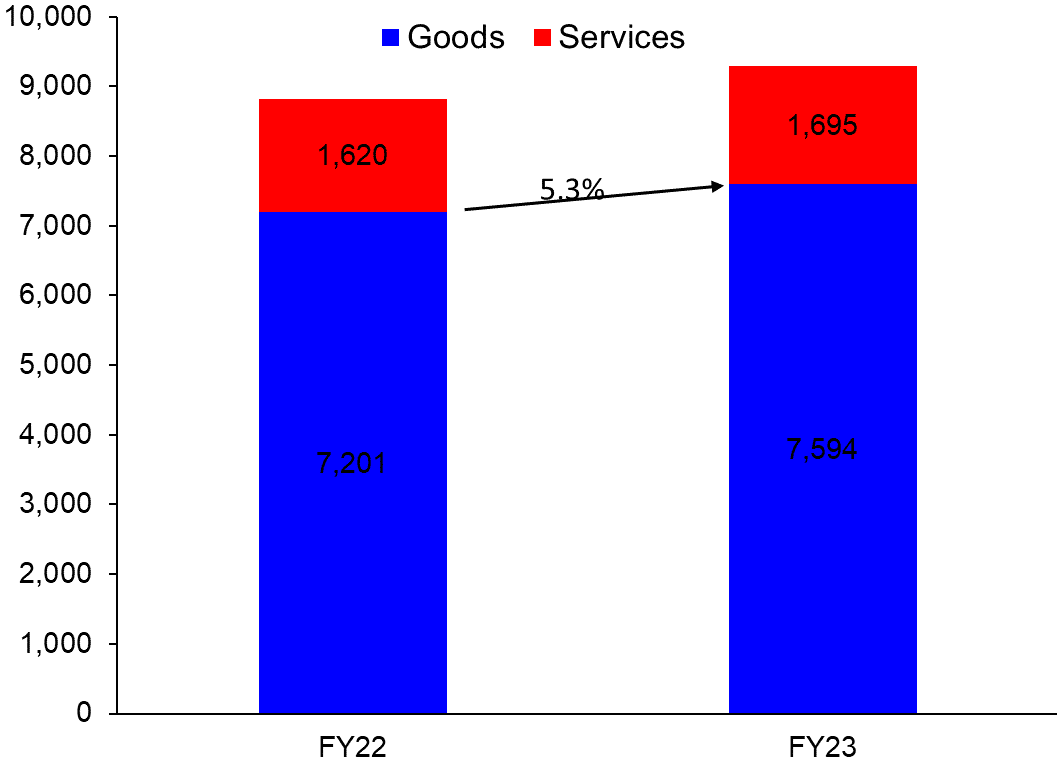
Discussing Pakistan’s trade numbers in a series of tweets, the trade and macroeconomic researcher began by highlighting that overall exports grew in Q1 FY23 but services struggled. “Exports grew in Jul-Sep 23 versus Jul-Sep 22 by 5.3%. Slightly faster growth in goods than in services. ” Varela noted.
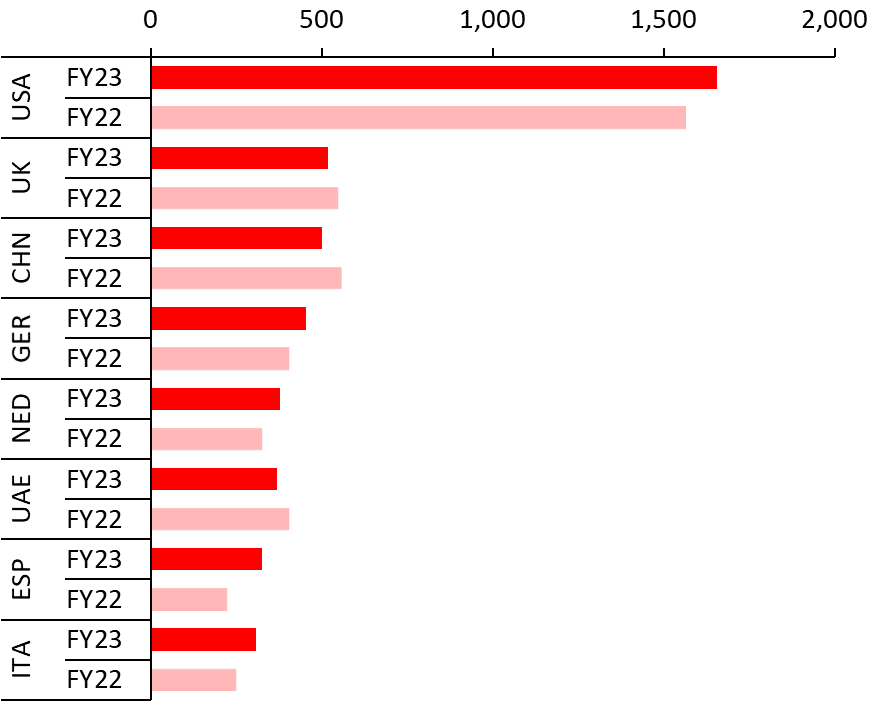
According to the WB economist, exports expanded in general apart from contractions of shipments to China, the United Kingdom, and the United Arab Emirates.
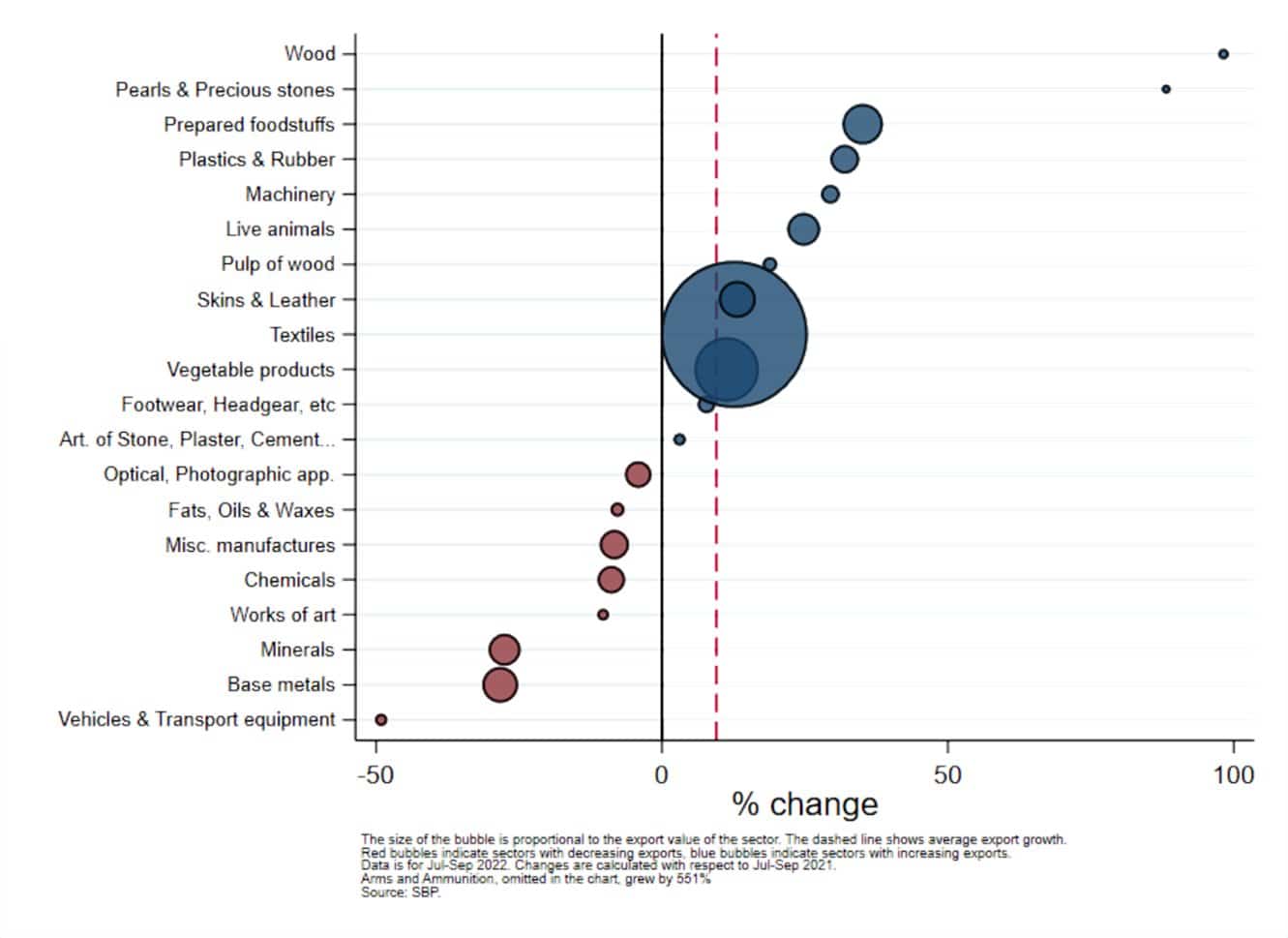
Varela went on to say that textile exports, in particular, were still growing, but at much slower rates. Exports of base metals, chemicals, and minerals were also reduced, according to the data segmentation.
The data on month-to-month growth shows the export deceleration more clearly, and this is where the estimates become clearer.

Varela pointed out the concerning decline in exports of knowledge-intensive services, mainly Telecom and Other business in particular.
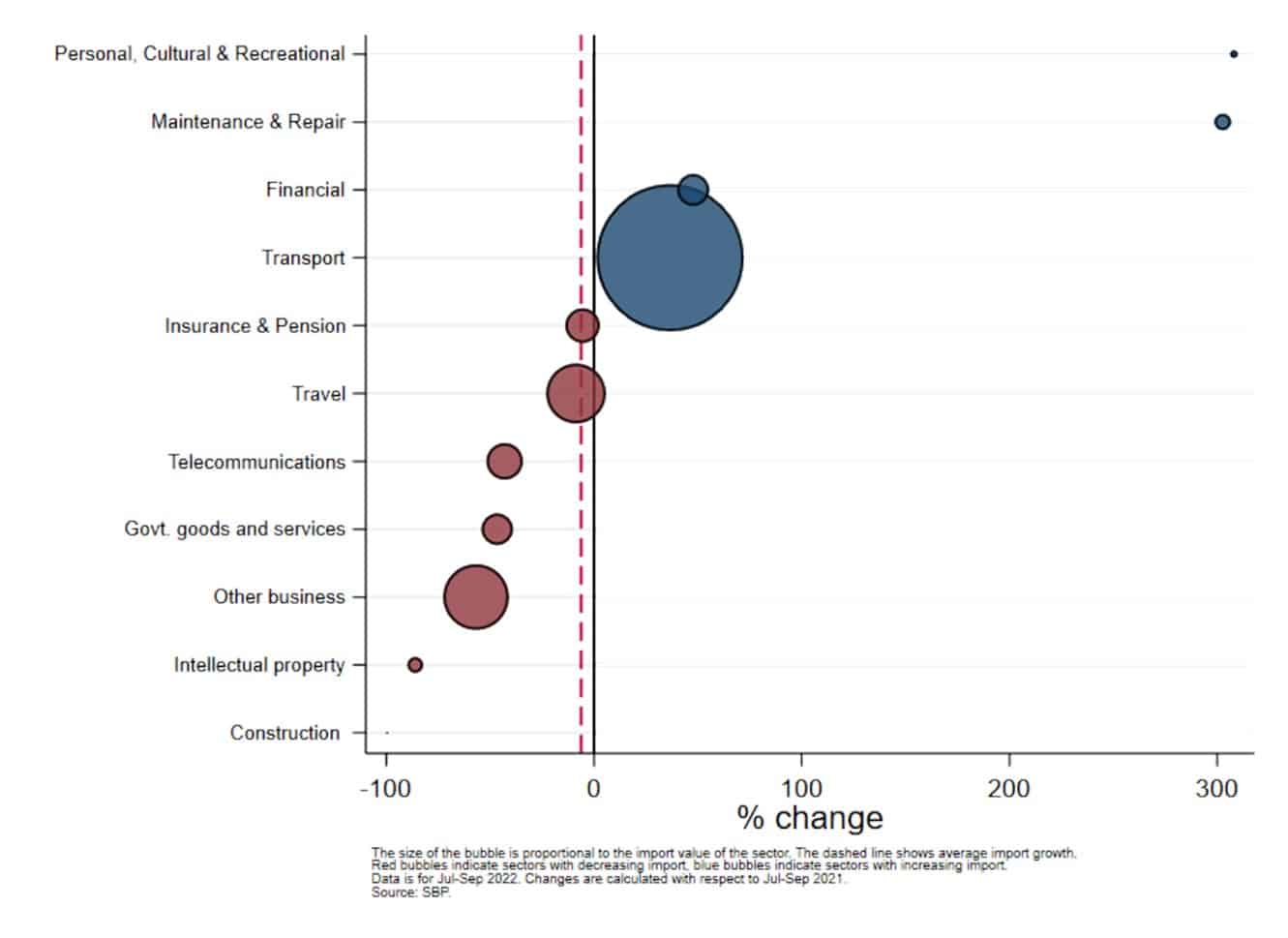
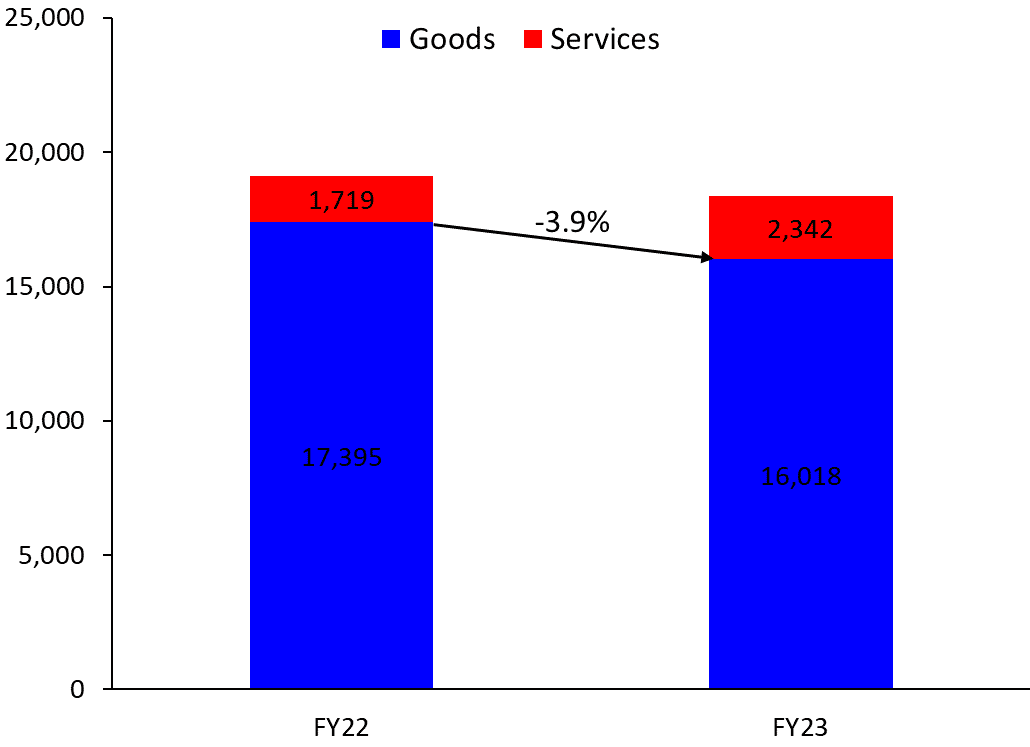
The other side of trade shows that imports have fallen by 3.9 percent in the quarter that ended on September 30, with services imports expanding by over 36 percent as compared to the same period last year.
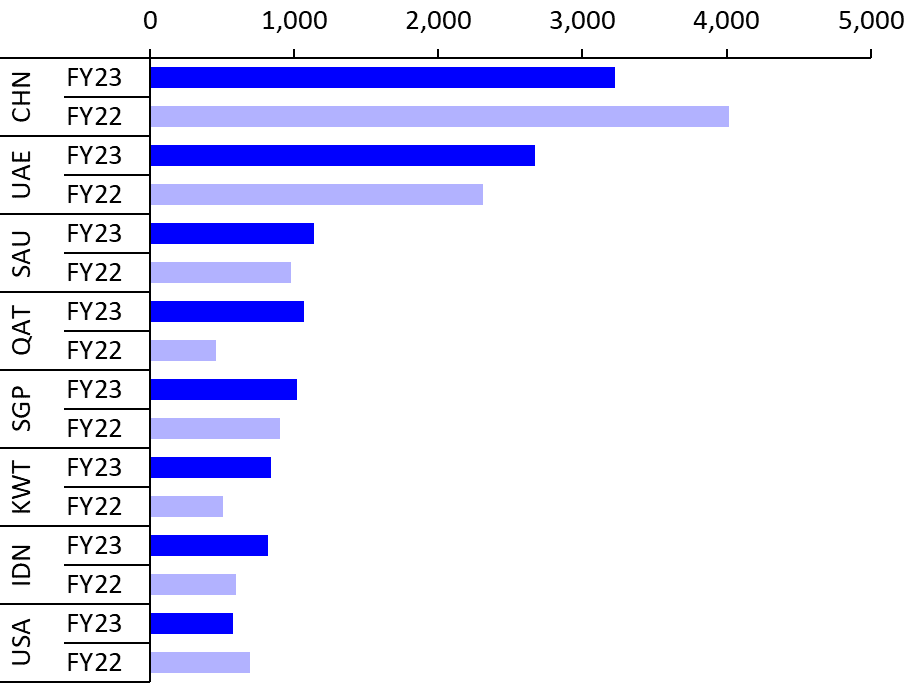
Further research shows that imports from mainly China and the US have taken a hit, but remained rangebound from other markets.
According to the Pakistan Bureau of Statistics (PBS), machinery imports witnessed 37.89 percent negative growth in Q1 and stood at $1.769 billion compared to $2.848 billion in 1QFY22. The WB researcher confirmed the contraction:
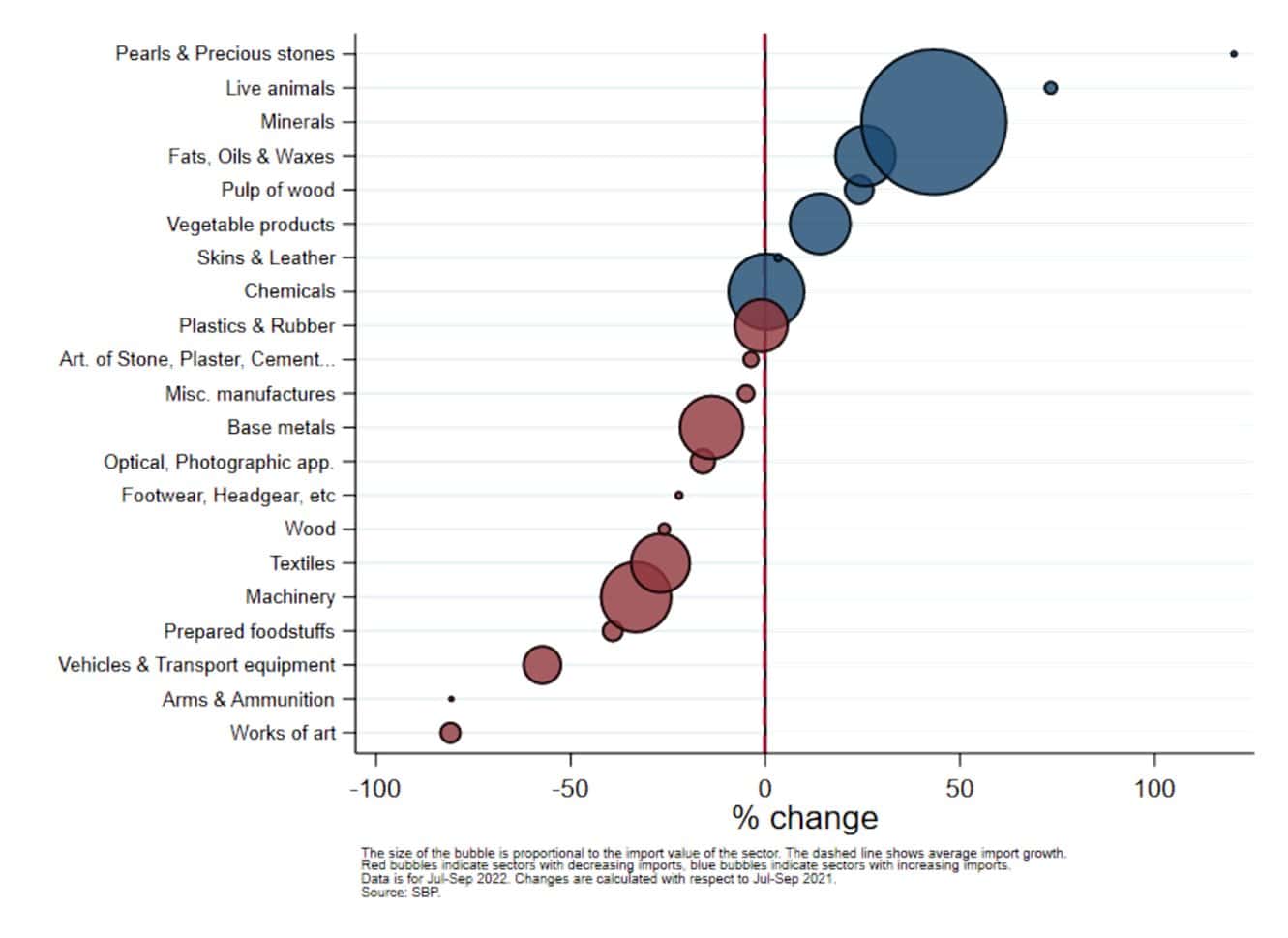
The monthly breakdown of data for the most commonly imported materials further cements the observation:
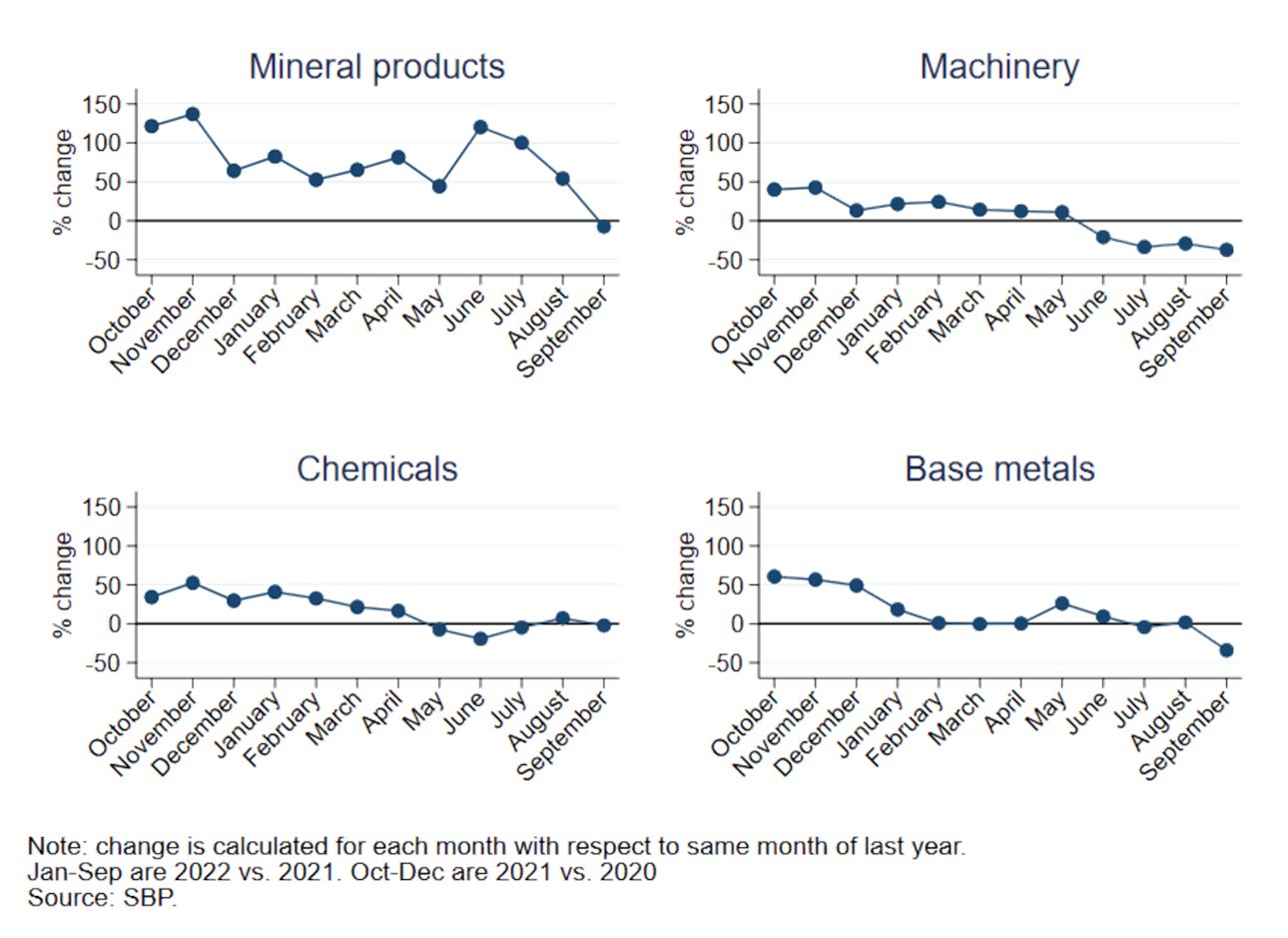
In his final remarks for Pakistan, Varela acknowledged that deceleration in trade is most commonly associated with the deceleration in activity as the graphs show.
While those watching the economy claim that something much deeper is to blame for the drop in trade growth, the researcher concluded that actions such as restrictions on imports, particularly of machinery and spare parts, are the main challenge for exporters at the moment.
Stay Connected with ProPakistani
Get the latest business news, market insights, and economic updates wherever you prefer.
Add ProPakistani to Preferred Sources and see more of our stories in Google Search and Top Stories.












