Pakistan’s defence export pipeline could emerge as one of the most powerful economic drivers between 2026 and 2030, with tracked and potential defence deals already running into double-digit billions of dollars, according to a report by KASB Securities.
According to the report, following the success of Operation Bunyan e Marsous, Pakistan has seen a significant improvement in its diplomatic standing, translating into geostrategic defence engagements and export-driven defence agreements.
The report states that total value of defence deals already tracked is around $13 billion, which could materially impact Pakistan’s external economic indicators. If realised, these orders could result in an 82 percent jump in foreign exchange reserves and support the $60 billion export target under Uraan Pakistan by 2029.
What You Should Know
The report notes that there is further upside potential beyond current estimates as deal structures and negotiations continue to evolve. Defence Minister Khawaja Asif’s statement that Pakistan’s aircraft have been tested and are attracting large international orders is cited as reinforcing this outlook.
According to KASB Securities, Pakistan’s defence exports span a broad product range, including fighter aircraft, naval vessels, armoured vehicles, unmanned systems, and precision guided munitions, primarily targeting Asia, Africa, and the Middle East.
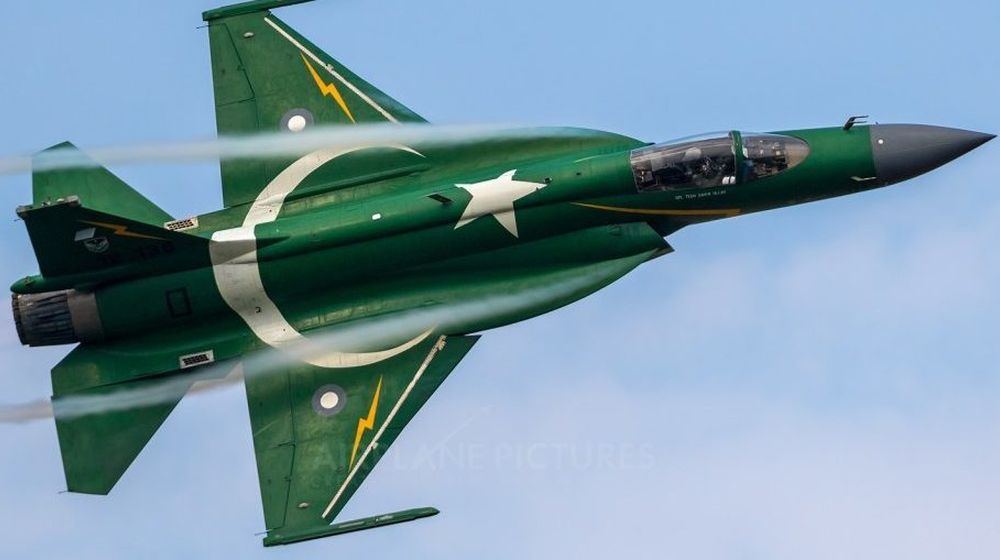
The report highlights that JF 17 Thunder, a 4.5 generation fighter jet, is attracting the strongest interest. Countries such as Iran, Sri Lanka, Zimbabwe, Algeria, Ethiopia, Argentina, and Uzbekistan have reportedly expressed interest over time.
The report identifies Pakistan Aeronautical Complex, Pakistan Ordnance Factories, Heavy Industries Taxila, and Karachi Shipyard and Engineering Works as the key institutions expected to execute these exports.
Current operators of JF 17 aircraft include Myanmar, which became the first international buyer operating Block II variants, Nigeria, which inducted the aircraft in 2021 for counterinsurgency operations, and Azerbaijan, a major operator that unveiled a $1.6 billion defence deal during late 2024 and 2025.
According to the report, active negotiations during 2025 and 2026 include Saudi Arabia, where talks are underway to convert financial support into a JF-17 fighter jet deal with a possible value of around $6 billion. Libya is negotiating a package covering JF 17 jets, Super Mushshak trainers, tanks, naval vessels, and other equipment valued at approximately $4 billion.
Azerbaijan is in talks for additional JF 17 Block III aircraft and training logistics worth around $1.6 billion, while Sudan is discussing a package involving weapons supply, K 8 light attack aircraft, drones, and air defence valued at around $1.5 billion. Bangladesh is also noted as a potential buyer of JF 17 and Super Mushshak aircraft, with value yet to be determined.
Biggest Deal Yet
The report further states that Pakistan-Saudi defence cooperation has deepened following the Strategic Mutual Defence Agreement signed in September 2025, transforming decades of informal cooperation into a binding security commitment. This agreement includes intelligence sharing, joint military exercises, defence production, capacity building, and technology transfer.
The agreement enhances Pakistan’s strategic leverage while opening avenues for Saudi investment and positions Pakistan within broader Gulf and Middle East security dynamics.
Turkey has expressed interest in joining as a third partner, while Jordan has shown intent to deepen military cooperation following high-level engagements in late 2025.
According to the report, if current defence export projections materialise, total defence exports could represent 3.7 percent of GDP, marking a significant structural shift in Pakistan’s export base toward high-value manufacturing and strategic industries.
The report concludes that defence exports represent a rare convergence of foreign policy, industrial capability, and macroeconomic opportunity, with execution and geopolitical stability remaining the key variables going forward.
Stay Connected with ProPakistani
Get the latest business news, market insights, and economic updates wherever you prefer.
Add ProPakistani to Preferred Sources and see more of our stories in Google Search and Top Stories.