




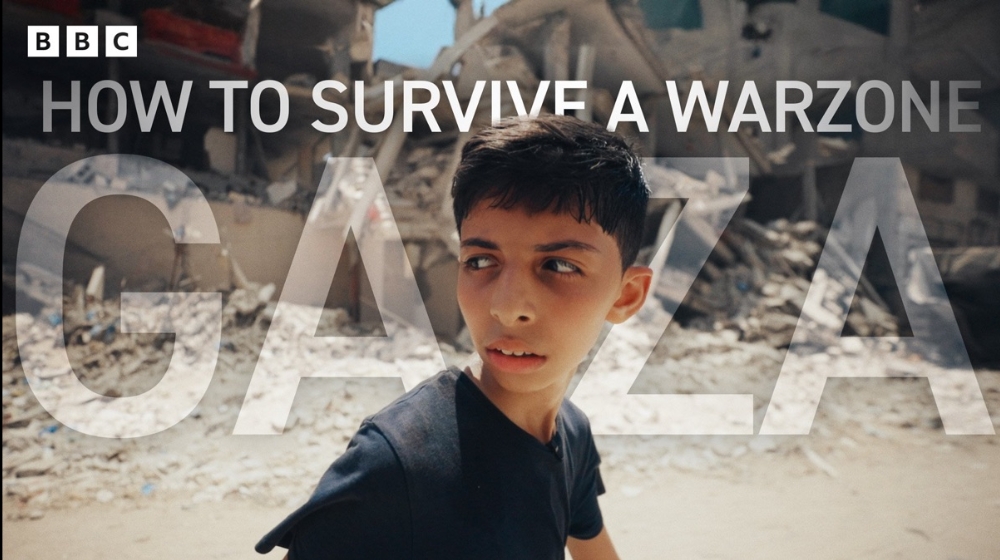
The BBC is facing intense backlash for its decision to remove the documentary Gaza: How to Survive a Warzone from its streaming platform, BBC iPlayer.
The move has sparked accusations of censorship, with 735 actors, directors, and journalists signing an open letter urging the broadcaster to reverse its decision.
The letter, published by Artists for Palestine UK, is addressed to BBC Chair Samir Shah, Director General Tim Davie, and content chief Charlotte Moore. It accuses the BBC of engaging in “censorship on Palestine” and undermining journalistic integrity.
The open letter has attracted support from prominent figures in the entertainment industry, including Riz Ahmed, Indira Varma, Gary Lineker, Ken Loach, and Ronan Bennett. Other notable signatories include Miriam Margolyes, Ruth Negga, Juliet Stevenson, India Amarteifio, and Khalid Abdalla.
These high-profile voices have joined forces to condemn the BBC’s actions, calling the removal of the documentary a dangerous precedent that silences Palestinian narratives.
The documentary, which aired on BBC Two on February 17, follows 14-year-old Abdullah Al-Yazouri as he chronicles his life in Gaza. However, the BBC pulled the film from its streaming service after discovering that Abdullah’s father, Dr. Ayman Al-Yazouri, is the deputy minister of agriculture in Gaza.
The BBC claimed that the film’s producers failed to disclose this information, suggesting that the father’s role could be linked to governance in Gaza. Critics, however, argue that this reasoning is flawed and discriminatory.
The open letter states: “Conflating such governance roles in Gaza with terrorism is both factually incorrect and dehumanizing. This broad-brush rhetoric assumes that Palestinians holding administrative roles are inherently complicit in violence — a racist trope that denies individuals their humanity and right to share their lived experiences.”
The letter raises serious concerns about the ethical implications of the BBC’s decision. It describes the documentary as “an essential piece of journalism” that amplifies the voices of Palestinian children living in unimaginable circumstances.
Critics argue that the removal of the film signals that Palestinian stories are only acceptable if they meet arbitrary “purity tests.” The letter accuses the BBC of failing its duty of care to the documentary’s young contributors, particularly Abdullah.
“Weaponising family associations to discredit a child’s testimony is both unethical and dangerous,” the letter states, adding that the move violates the BBC’s International Safeguarding Policy, which prioritizes the safety, privacy, and dignity of minors.
The letter also warns that the BBC’s actions could have a chilling effect on future reporting from conflict zones. “If every documentary made in conflict zones were subjected to this level of politicized scrutiny regarding contributors, filmmaking in these areas would become virtually impossible.”
The letter concludes with a strong call for the BBC to restore the documentary to its platform. It argues that removing the film erases Palestinian suffering and discourages independent journalism.
“Silencing a child’s firsthand account of survival in Gaza, where over 13,000 children have been killed since October 2023, is not about compliance but about erasing Palestinian suffering,” the letter states.