




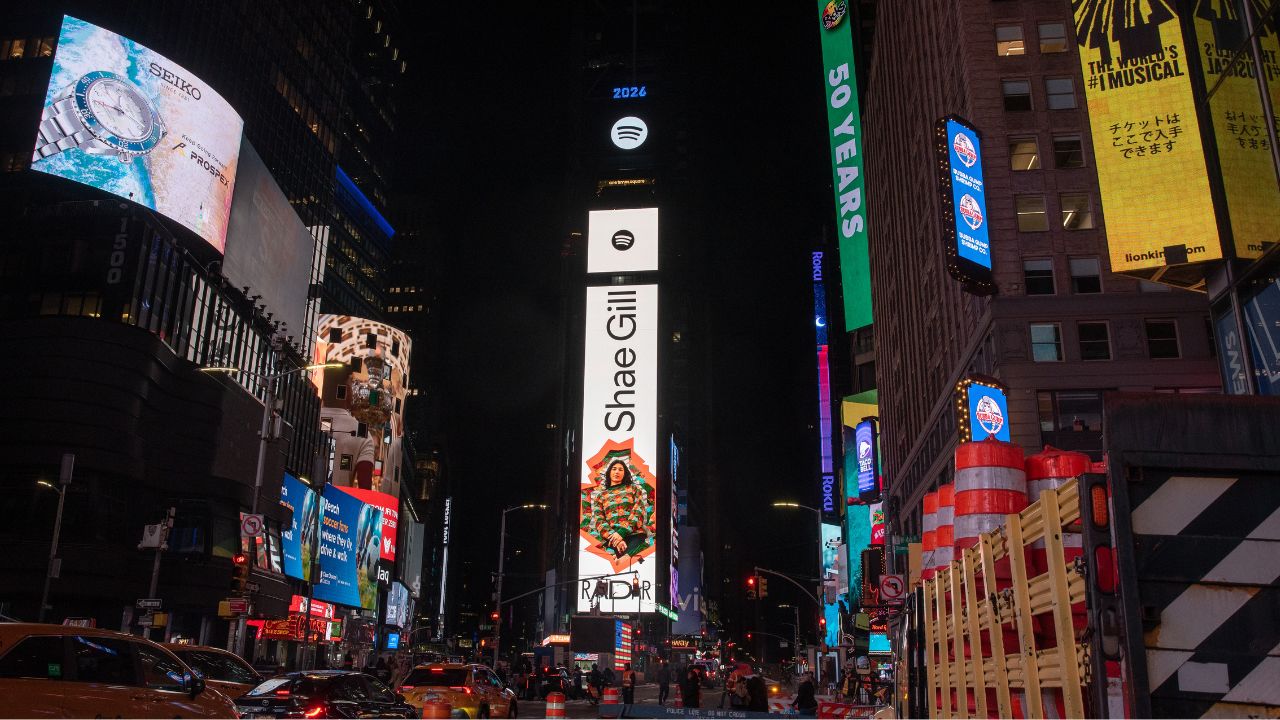
In its latest RADAR Pakistan feature, Spotify brings Shae Gill into focus with an intimate interview that goes beyond the music. From her unplanned entry into the industry to the personal and creative growth that followed, the conversation captures the essence of an artist learning to trust her voice while staying true to herself.
-
What moments or experiences have shaped you the most as an artist so far?
I think the biggest thing that has shaped me as an artist is how unexpectedly this journey unfolded for me. I didn’t enter music with a very calculated plan — it began from a place of feeling, curiosity, and a real love for singing. So when life suddenly opened doors for me, it pushed me to grow very quickly, both personally and creatively.
A lot of moments have shaped me, but the ones that stay with me the most are the quiet ones — recording something that feels honest, discovering new parts of my voice, or realizing that a song I sang made someone feel seen. Those moments remind me why I do this. At the same time, stepping into bigger spaces and being heard by more people has taught me resilience, trust, and the importance of staying connected to who I am beneath everything else.
-
Over the past year, what has been the biggest personal or artistic lesson that shaped you as a musician?
Over the past year, the biggest lesson for me has been to trust my own instincts more. As an artist, there’s always noise around you — expectations, opinions, pressure, pace — and it can become easy to disconnect from your inner voice. I’ve learned that growth doesn’t always come from doing more; sometimes it comes from slowing down and listening more deeply to yourself.
Artistically, I’ve understood that vulnerability is a strength. The more honest I am in what I sing and how I express myself, the more naturally people connect with it. I think I’m learning to be less afraid of softness, less afraid of silence, and more willing to let my music speak from a real place.
-
Pakistani music is going through an exciting shift right now. Where do you see your sound within this new generation of artists?
It’s a really exciting time for Pakistani music because there’s so much openness now — artists are experimenting, blending influences, and telling stories in ways that feel fresh but still rooted. I think my sound lives somewhere in that balance. It’s emotional, melodic, and gentle in some ways, but it also carries depth and intention.
I’ve always been drawn to music that feels intimate — music that doesn’t need to be loud to leave an impact. So within this new generation, I see myself as someone who wants to bring softness, sincerity, and emotional honesty into the conversation. I think there’s space now for different kinds of voices and different energies, and that makes this moment really special.
-
Fans often describe your voice as calming yet powerful. How do you want listeners to feel after hearing a Shae Gill song?
That description means a lot to me because if my voice can make someone pause, breathe, feel, or reflect, then I feel like the song has done something meaningful.
More than anything, I want listeners to feel understood. Whether it’s comfort, longing, peace, heartbreak, or hope, I want the emotion to feel real enough that they can place their own story inside it. Sometimes we don’t always have the words for what we feel, and music can hold those emotions for us. If someone finishes one of my songs feeling a little less alone, that means everything to me.
-
How do you stay authentic while navigating growing visibility and expectations as an artist?
I think authenticity is something you keep choosing again and again. Visibility can be beautiful, but it can also make you feel like you have to constantly perform a version of yourself. For me, staying authentic means staying close to the reasons I started in the first place. It means checking in with myself, protecting my peace, and making sure my choices still feel true to who I am.
I also think authenticity shows in the little things — in what you say yes to, what you say no to, how you carry yourself, and how honestly you create. I’m still learning, of course, but I try not to let outside expectations become louder than my own voice.
-
Being selected for Spotify’s RADAR program is a major milestone for artists. What does this recognition mean to you at this stage of your career?
It means a lot to me because it feels like both encouragement and responsibility. To be recognized by a platform like Spotify through RADAR Pakistan feels very affirming, especially at a stage where I’m still evolving, still discovering, and still building. It tells me that there is belief in my voice, my journey, and what I still have to offer.
What makes it even more meaningful is that programs like RADAR create real visibility for artists and help connect our music to wider audiences. For any artist, that kind of support can be incredibly important. So for me, this recognition is not just a milestone — it feels like an invitation to step into the next chapter with more confidence and clarity.
-
What was your first reaction when you found out you were selected as Spotify RADAR Pakistan’s featured artist for 2026?
It felt great to see Pakistani artists continuing to receive recognition on global platforms. Spotify has played a huge role in how audiences discover music today, so initiatives like this are always meaningful for the ecosystem.
Personally, I saw it as a positive step in continuing to expand my audience and sharing the music with more listeners around the world.
As artists, we spend so much time in the process — writing, recording, experimenting, doubting, growing — so when something like this happens, it feels really special. It felt like a beautiful reminder that people are listening, that the work is reaching hearts, and that this journey is continuing to unfold in meaningful ways.
-
What parts of your artistic journey are you most excited for audiences to see through RADAR?
I’m most excited for people to see the human side of the journey — not just the songs, but the thought, feeling, and inner world behind them. I think sometimes people only see the final version of an artist, but there’s so much that exists underneath that: the uncertainty, the growth, the self-discovery, the small moments that shape the bigger picture.
Through RADAR, I would love for audiences to connect with me in a more personal way and understand what inspires me, what grounds me, and how I’m continuing to evolve. If they come away seeing not just a singer, but a person and an artist in progress, that would be really meaningful to me.
-
Which of your songs feels like home to you, and why?
I think the songs that feel most like home are always the ones where I hear the most honesty in myself. A song feels like home when it carries something unfiltered — something emotionally true.
If I had to describe it, “home” in music for me is less about one fixed sound and more about a feeling: softness, sincerity, vulnerability, and stillness. The songs that let me exist without forcing anything, the ones that feel natural in my voice and honest in emotion, are the ones I return to most deeply. Those are the songs that remind me who I am.