




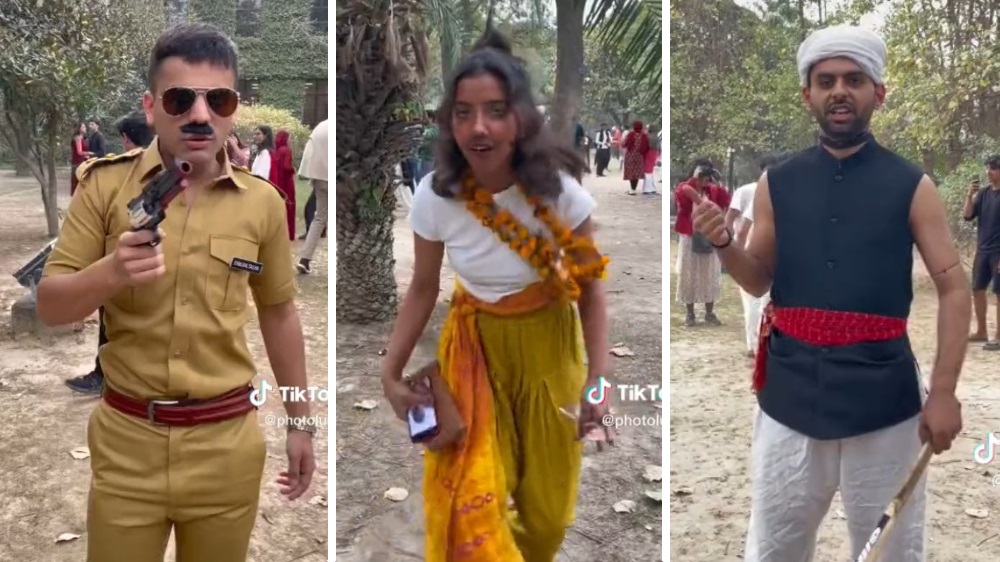
Lahore University of Management Sciences (LUMS) is facing severe criticism from the Pakistani awaam after the university organized a Bollywood-themed day.
A video clip of LUMS students dressed up as popular Bollywood characters is making round all over the internet. The students are seen quoting iconic lines from their favorite films.
The event was intended to promote cultural exchange and understanding, but many Pakistanis saw it as a promotion of Indian culture and an insult to their own.
Pakistanis took to social media to express their disappointment and anger. The online criticism was intense, with many accusing the students of being unpatriotic and promoting Indian culture over Pakistani culture.
One Twitter user wrote, “I am disappointed to see LUMS promoting Indian culture on Pakistani soil. As a Pakistani, I find this insulting and disrespectful to our nation and our culture.”
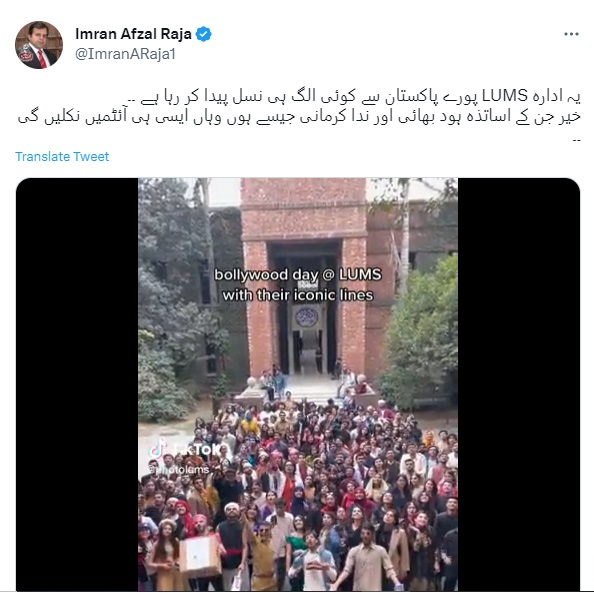
Another user tweeted, “Bollywood is not a part of our culture, and it is not acceptable for LUMS to promote it. Pakistani universities should be promoting our own culture and heritage.”
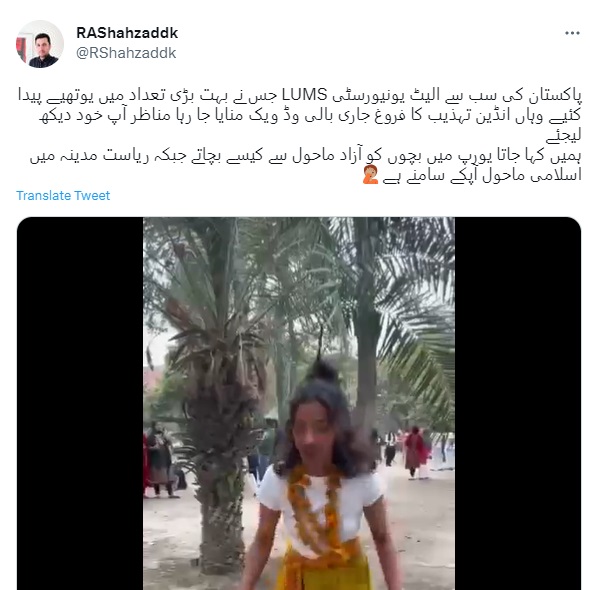
Some argue that the event is not as harmful as people are making it to be.
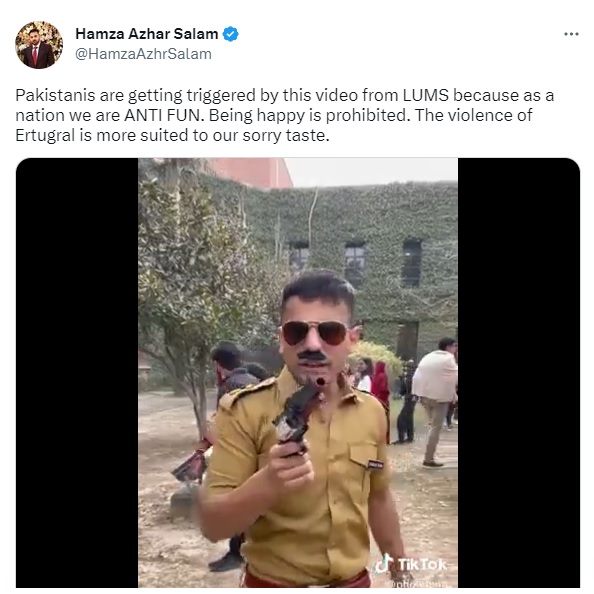
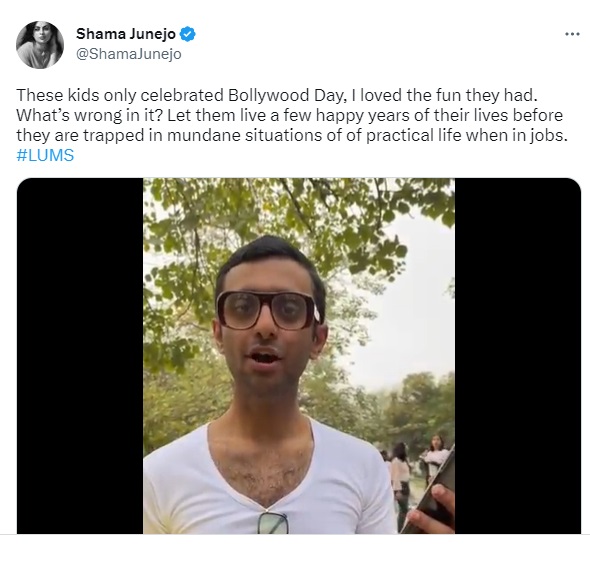
The incident has sparked a debate about the role of universities in promoting cultural exchange and whether events like “Bollywood Day” are appropriate in a country like Pakistan. Many people feel that the university should focus on promoting Pakistani culture and traditions rather than those of other countries.
The university has not yet released an official statement regarding the incident, but many Pakistanis are calling for an apology from LUMS and for the students involved to be held accountable.
The controversy has highlighted the ongoing tensions between Pakistan and India and the challenges of promoting cross-cultural understanding in a region where historical and political factors continue to shape attitudes and beliefs.
This incident also raises concerns about the impact of cultural globalization on local cultures, particularly in countries like Pakistan where cultural identity is strongly tied to national identity.
While many people appreciate the exchange of ideas and cultural practices, others are worried that such exchanges may lead to the erosion of traditional cultural values and practices.