




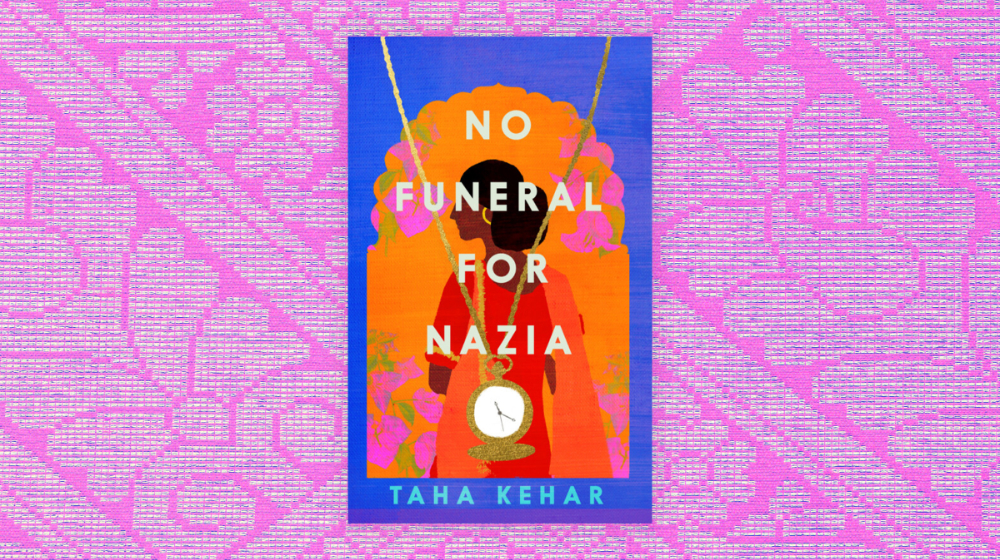
Taha Kehar’s No Funeral for Nazia is a deeply introspective novel that examines how we are shaped by those around us, how our perceptions of others often fail to capture the full picture, and how society plays a major role in molding these dynamics.
Set in Karachi, the book weaves an intricate tale of relationships, secrets, and the lasting impact of personal and societal influences.
The story begins with the death of Nazia Sami, a renowned writer whose unconventional final wish for her sister, Naureen, was for a gathering to celebrate her life with a select group of individuals instead of a traditional funeral.
Through the perspectives and recollections of these chosen characters, the narrative untangles a spiderweb of relationships, slowly revealing how each character was connected to Nazia and how these connections shaped their lives.

Kehar masterfully evokes a sense of drama akin to desi serials, with an added layer of mystery that keeps readers engaged. The narrative jumps between different points of view within chapters, occasionally accompanied by introspective monologues, but Kehar’s fluid writing ensures it remains easy to track who’s who.
This structure not only keeps the reader intrigued but also emphasizes the fragmented nature of memory and relationships.
The characters are richly complex, each flawed in their own way, and the story takes readers through a spectrum of emotions as more about their histories with Nazia is unveiled. While some characters elicit empathy, others provoke frustration, showcasing Kehar’s ability to craft multidimensional personalities.
Set against the turbulent backdrop of Karachi, the novel offers significant political commentary. This backdrop doesn’t merely serve as a setting but provides context and commentary on how societal and political dynamics deeply affect communities and individual lives, adding depth to the narrative.
The ending, while abrupt, feels fitting in retrospect. Despite piecing together Nazia’s life through the fragments of others’ memories, there remains an air of ambiguity and incompleteness. It leaves readers with a lingering sense of remorse, highlighting how even the most celebrated individuals can remain unknowable in the end.
I would give the book 4.5 stars as it challenges the reader to rethink how they perceive others and confronts the reality of how much — or how little — we truly know about the people who shape our lives. It’s a compelling exploration of relationships, memory, and societal expectations.