




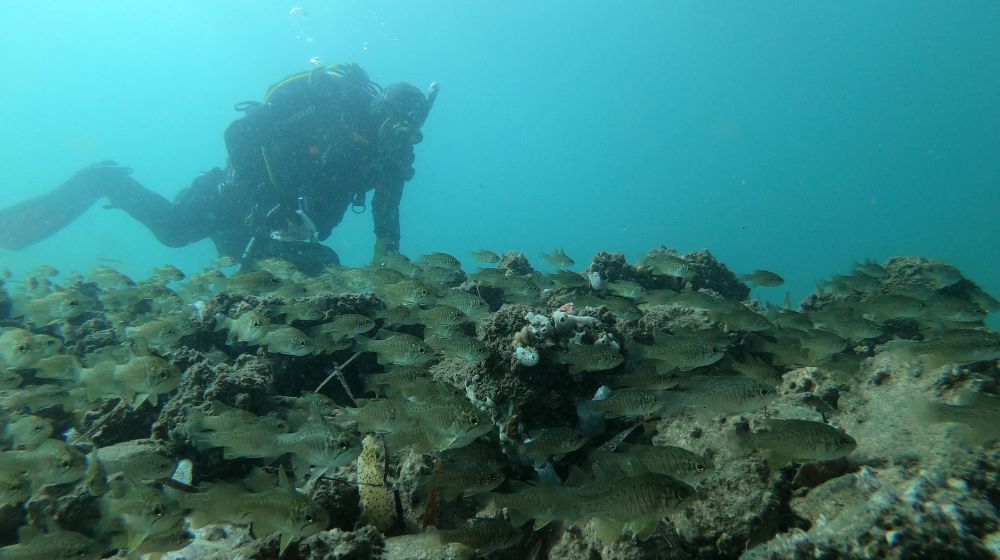
Just like the groundbreaking study on the origins of the whale, Australian researchers have uncovered extensive, previously undocumented tropical oyster reefs thriving across northern Australia.
This discovery, led by Griffith University, marks the first comprehensive mapping of these reefs, which stretch from Queensland’s Gladstone region to the Gulf of Carpentaria and Western Australia. Some of these reefs are so large—spanning over five hectares—that they can even be seen from space using satellite imagery.
Oyster reefs are often described as the “kidneys of the sea” for their remarkable ability to filter water, provide shelter for marine life, and protect coastlines from erosion. These unique marine habitats, made up of living oysters and their shells, are vital for healthy coastal ecosystems.
Unfortunately, in many parts of the world—including southern Australia—over 99 percent of these reefs have vanished, leaving them functionally extinct in those regions.
For years, scientists believed that oyster reefs were mostly found in temperate waters. This assumption shaped conservation efforts and scientific research, often overlooking the possibility of their presence in tropical regions. However, recent research has dramatically changed this understanding.
The research team, using advanced DNA tools, identified the main reef-building species as “Saccostrea Lineage B,” a close relative of the well-known Sydney rock oyster. This species remains scientifically unnamed and was only recently reported in Queensland during a 2024 biodiversity survey. Since June 2024, more than 60 new reef sites have been located, thanks to a collaborative effort involving satellite technology and citizen scientists.
This discovery challenges long-held beliefs about where oyster reefs can thrive and highlights the urgent need to include these tropical reefs in conservation and restoration efforts. As research lead Marina Richardson from Griffith University points out, understanding the location, number, and function of these reefs is crucial to ensuring they are not left behind in global restoration movements.