




While the Brits are busy preparing a steak fillet in a lab, Australian scientists at Cortical Labs have introduced what it claims to be the world’s first code-deployable biological computer, blending human brain cells with traditional silicon-based computing.
Dubbed CL1, the system was unveiled at the Mobile World Congress in Barcelona and is being hailed as a potential game-changer for artificial intelligence (AI) and machine learning.
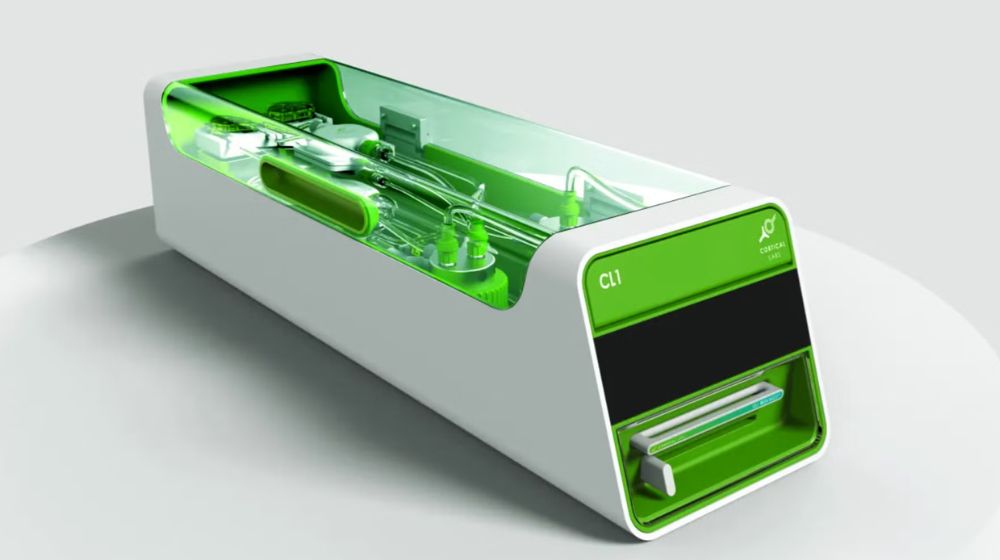
The CL1 is no ordinary gadget. It’s a silicon chip with lab-grown human neurons cultivated on its surface. These neurons respond to electrical signals, form networks, and process information like a mini biological brain.
The system even allows two-way communication: electrical impulses stimulate the neurons, and their responses are recorded and analyzed. To keep these tiny brain cells alive and kicking, the CL1 comes with a life-support system that regulates temperature, gas exchange, and other essentials.
But here’s the kicker: the CL1 can learn and adapt. Previous experiments have shown that neuron-based systems can be trained to do things like play simple video games. C
Cortical Labs believes this tech could outperform traditional AI in areas like pattern recognition and decision-making in chaotic environments. Basically, it’s like giving your computer a brain upgrade—literally.
And, of course, there’s the ethical elephant in the room. While the neurons are lab-grown and lack consciousness (so no, your computer won’t start having existential crises), the use of human brain cells in tech raises some big questions. How far is too far when it comes to blending biology and technology?