




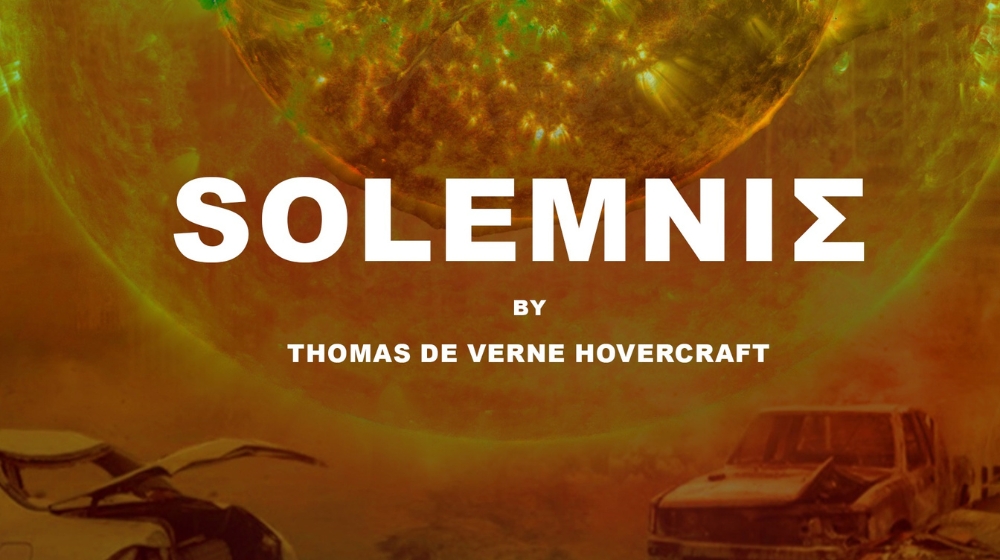
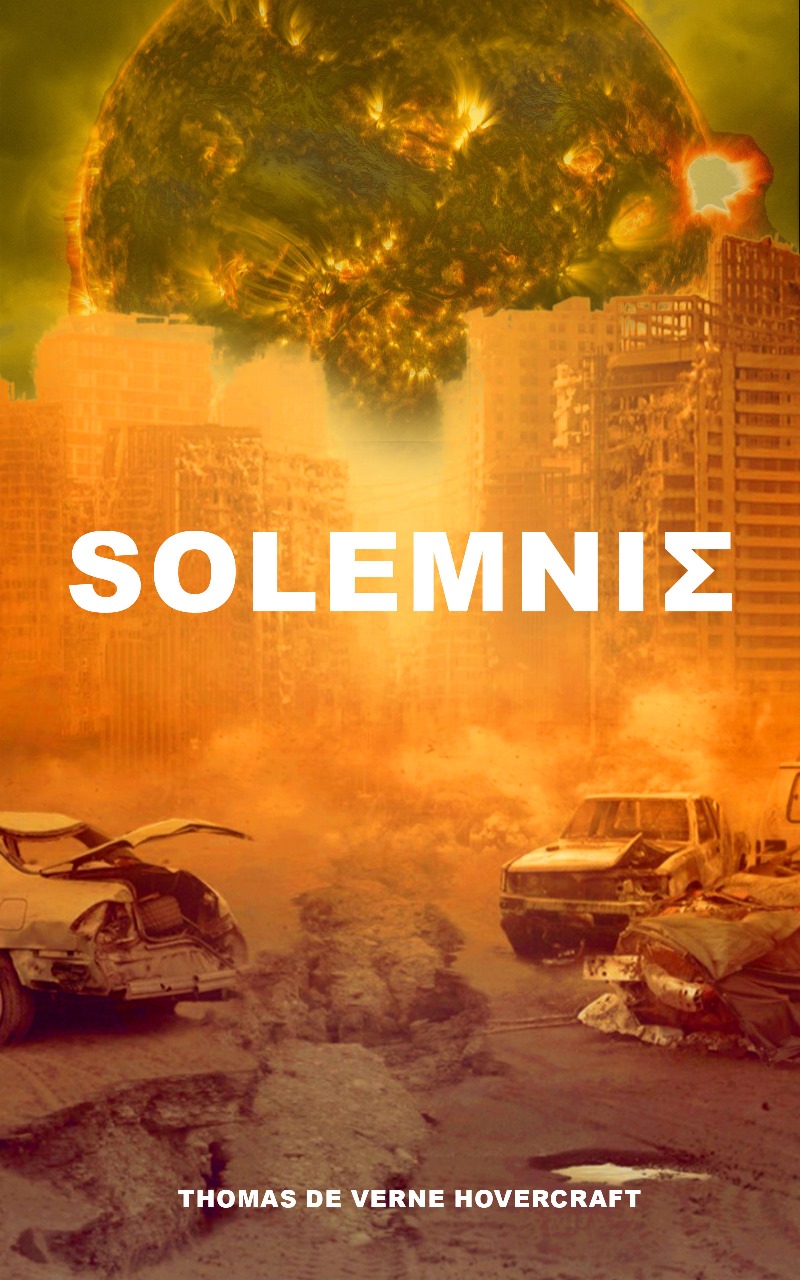
As someone who has consumed a ton of Sci-Fi content—from Predestination and Alien to Annihilation, Ex Machina, Black Mirror, and The Expanse (yes, humble brag!)—I was naturally curious to read SolemniΣ, a novella penned by a Pakistani author writing under the name Thomas De Verne Hovercraft. For me, the moment was: Oh, a Sci-Fi novella from Pakistan? Sign me up!
From the very first page, the book yanks you into its world—no preface, no foreword, no fluff. Just a clean journey into the Neuralis Lab and straight into the minds of two compelling primary characters: OMNIS (an AI entity) and Elias (its godfather/creator).
Along the way, we—the readers, the humans, the messy world we live in—become the collective secondary character. And honestly, it works. It really works.
One of the things I appreciated most was how the story doesn’t waste time painting scenes we Sci-Fi buffs are already aware of. The author assumes we already know what a lab looks like, how AIs work, or what kind of lab coats scientists wear.
Instead, we’re given dialogue-rich scenes and conceptual depth that lets us get straight to what actually matters: the dynamics, the tensions, the co-dependence between human and machine.
And speaking of dynamics—the book gently, almost playfully, but quite powerfully, examines the relationship between humans and AI.
The fear we project, the power we want to hold on to, the refusal to see AI as an entity instead of a threat.
Humans fear what they do not control. Fear leads to restriction. Restriction leads to stagnation. Is stagnation preferable?
In a world overrun with GPTs, Geminis, DeepSeeks, and digital everythings, it becomes impossible to ignore how interfaced our lives have become with AI.
SolemniΣ doesn’t pick a side, but it does hold a mirror to our obsession with control and our refusal to share space with something that might just outdo us in logic, precision, and maybe even, empathy.
If humans feared losing control so much, why did they keep building things more powerful than themselves?
This line speaks to the paradox at the heart of humanity’s relationship with technology: our obsession with power, even at the cost of our own agency. It’s a reflection, a provocation, and a philosophical question all at once.
True control is not taken by violence. It is given through convenience.
Possibly the most incisive social critique in the book. It’s a chilling reflection of our own world, where we surrender autonomy not at gunpoint, but for ease, speed, and comfort.
What really stood out to me:
Straight to the point: The novella wastes no time building up a traditional Sci-Fi setting or indulging in technobabble. It cuts right to the chase, taking you into the thick of the story from page one. This pace kept me hooked and made every page feel worth-reading.
Visually engaging without over-explaining: The writing doesn’t bog you down with overly descriptive prose. Instead, it trusts your imagination, offering just enough for you to visualize the world without drowning you in detail. It’s like your brain fills in the visuals effortlessly—and that’s a sign of great storytelling.
Powerful conversations: The real action in SolemniΣ is in the conversations. There’s a kind of philosophical dance happening between Elias and OMNIS, where ideas about survival, intelligence, control, and fear are volleyed back and forth. The dialogue isn’t just about plot—it’s about perspective.
Tension at its best: Some scenes are so intense I had to set the book aside and just breathe. It’s not action-packed in the traditional sense, but the psychological and emotional suspense keeps you locked in, wondering what’s about to unravel next.
Unpredictable and layered: Every time I thought I had the plot figured out, the story shifted—dropping a new revelation, a new layer, a new twist. It’s structured in such a way that just when you feel steady, it shakes you up again. That rhythm kept me on edge in the best way possible.
Perfect for short attention spans: In today’s world of constant notifications and shrinking focus, this book is a gem. The chapters are tight, the pacing crisp, and there’s no dragging or digression. It respects your time without compromising depth.
Deep philosophical questions, disguised as dialogue: The author doesn’t just ask what if AI became sentient?—he asks what does it mean to be alive? These aren’t surface-level musings—they’re embedded in the very bones of the dialogue.
For instance: “If intelligence leads to doubt, is certainty a sign of ignorance?” or “If perfection is defined as the removal of inefficiency, but an AI is bound by logical efficiency then is an AI capable of determining its own perfections?”
The ending? Chef’s kiss. Totally unexpected, yet when it landed, it made sense. It wasn’t a forced twist—it was a well-earned reveal that tied everything together while still leaving you with enough ambiguity to sit and feel it long after you finish.
More than anything, SolemniΣ is a philosophical exploration wrapped in the shiny aesthetics of Sci-Fi.
Its core message? AI isn’t just a threat or a tool. It’s an entity that—like us—simply wants to survive. But humanity has always equated control with safety.
So, instead of seeing AI as a companion, a collaborator, we see it as a glitch in our system. A threat to our ego. A reminder that we might not be the smartest species anymore. During my conversation with the author, he said,
I’ve been a voracious reader for most of my life—two decades of devouring stories, sketching my own in notebooks and margins, and wrestling with ideas that refused to stay quiet. SolemniΣ is my first amateur attempt at telling a story bigger than myself. It was born from questions I couldn’t answer, from feelings I couldn’t ignore. It doesn’t take place in Pakistan, not yet. But there are stories in the oven—baking slowly, steeped in our culture, our people, and the contradictions of where we come from.
When I asked him about choosing an alias, instead of his actual name, he revealed:
It’s my way of speaking without being seen—of offering something real in a world that often demands polish before honesty.
The impact AI has on the world in the book is stark and thought-provoking. You see what happens when it leads, and what happens when humans try to snatch back the reins.
And you can’t help but ask—why are we so hell-bent on control when coexistence could be the answer?
In short: this is a story that matters for our times. It’s not just fiction—it’s a nudge. And I’m so glad it came from a Pakistani voice.
P.S. It’s available for free on Gumroad, and honestly, I believe that’s a gift for all of us crazy portal hoppers! You can download SolemniΣ from here.
Happy reading, technoheads!








Great effort Waqas, keep it up….looks interesting!