
Australia
Fixtures


-
MITCHELL MARSH (C)
All-rounder -
PAT CUMMINS
All-rounder -
COOPER CONNOLLY
All-rounder -
TIM DAVID
Batter -
GLENN MAXWELL
All-rounder -
JOSH INGLIS
Wicket-keeper -
XAVIER BARTLETT
Bowler -
NATHAN ELLIS
Bowler -
ADAM ZAMPA
Bowler -
JOSH HAZLEWOOD
Bowler -
MARCUS STOINIS
All-rounder -
MATTHEW KUHNEMANN
Bowler -
CAMERON GREEN
All-rounder -
MATTHEW SHORT
All-rounder -
Travis Head
Batter
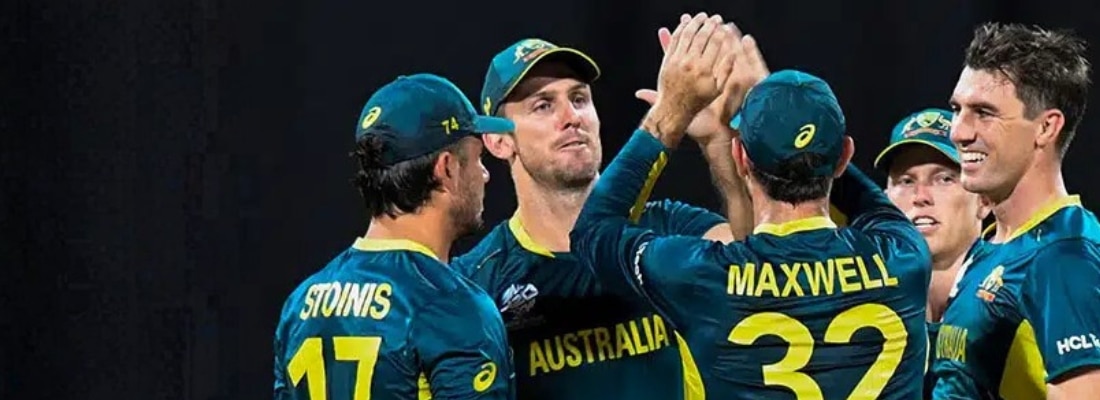
Australia Team for T20 World Cup 2026
Australia enters the T20 World Cup 2026 as one of the most complete teams in the tournament. The side brings power at the top, depth in the middle order, and a proven bowling core. At the same time, conditions in India and Sri Lanka demand smart match plans. Therefore, Australia will rely on adaptability as much as talent.
The tournament runs from February 7 to March 8 across India and Sri Lanka. Australia begins its group stage in Sri Lanka. As a result, the team will face a mix of pace friendly and spin friendly surfaces early.
Australia at T20 World Cup 2026: Quick Overview
| Group | Group B |
| Captain | Mitchell Marsh |
| Vice captain | Not announced |
| Head Coach | Andrew McDonald |
| Pre tournament build up Planned three match T20I series vs Pakistan before the tournament | |
Australia in Group B: What to Expect
Group B gives Australia a clear route to the next stage. However, it also offers tricky matchups.
Sri Lanka will feel at home in local conditions. Zimbabwe can surprise teams on slower pitches. Ireland can punish loose bowling in the powerplay. Oman often plays fearless cricket when it gets momentum. Therefore, Australia must stay disciplined and protect its net run rate from the first match.
Australia Squad for T20 World Cup 2026 (Provisional)
Australia announced a strong Australia T20 World Cup 2026 squad with multiple all round options and a reliable spin unit. In addition, key fast bowlers return to strengthen the attack.
Australia Fixtures and Schedule in the Group Stage
Australia plays its Australia fixtures in Colombo and Kandy. Therefore, it will need flexible bowling combinations and clear batting roles.
February 11 – Australia vs Ireland – Colombo, R Premadasa Stadium
February 13 – Australia vs Zimbabwe – Colombo, R Premadasa Stadium
February 16 – Australia vs Sri Lanka – Kandy, Pallekele International Cricket Stadium
February 20 – Australia vs Oman – Kandy, Pallekele International Cricket Stadium
Key Players to Watch for Australia in T20 World Cup 2026
Australia will look to Mitchell Marsh for leadership and balance. He can control tempo with the bat. He can also deliver key overs when matchups suit him. Meanwhile, Travis Head can set the tone early with aggressive intent. That approach can force opponents onto the back foot.
In the middle overs, Glenn Maxwell and Tim David provide different scoring options. Maxwell can attack spin. Tim David can finish with power. Therefore, Australia can build innings in phases instead of relying on one big surge.
With the ball, Adam Zampa remains central to Australia’s plans. He can take wickets on slower surfaces. He can also break partnerships when batters try to accelerate. Alongside him, Cooper Connolly and Matthew Kuhnemann add variety. As a result, Australia can tailor its spin attack to the venue.
Australia’s Strengths in Subcontinent Conditions
Australia brings a deep batting lineup. It also has multiple players who can clear the rope against spin. That matters in India and Sri Lanka. Moreover, the team has several bowling options for the middle overs. This gives Australia control when pitches slow down.
Australia also benefits from all round depth. Marsh, Green, Maxwell, Short, and Stoinis provide cover for both batting and bowling. Consequently, Australia can adjust its XI without losing balance.
What Australia Needs to Reach the Super Eights
Australia’s target is simple. It must win the matches it should win. It must also handle Sri Lanka smartly, because that game can decide the top spot. Finally, it must keep net run rate healthy. Group tables can tighten fast. Therefore, Australia cannot afford a sloppy performance even in a win.
Frequently Asked Questions



ProPakistani is the premier and most trustworthy resource for all happenings in technology, telecom, business, sports, auto, education, real estate and entertainment news in Pakistan.
Whether it's the top trending news, inside scoops or features, interviews, market trends and analysis, product reviews, How to's or tutorials – we cover it all.
© 2026 ProPakistani.PK - All rights reserved







