ISOC Asia-Pacific Bureau in partnership with BytesforAll Pakistan recently organized a half-day workshop on “web accessibility” in Islamabad, inviting persons with disabilities to share their accessibility requirements, identify issues / challenges and highlight the barriers that limits them from interacting with the Internet and the World Wide Web.
The workshop hosted 22 persons with visual, 4 with hearing and 3 with physical impairment, all affirming one common demand of ‘inclusivity’.
They all emphasized the opportunities the Internet can provide for them to be independent and to contribute to society and to their socio-economic development. They were Journalist, Teachers, Website developers, Mobile Application developers, Scholars and Professionals.
Some 19 million people in Pakistan have some form of disability – roughly 10% of the whole population.
During the workshop, Mr. Muhammad Shabbir, a PhD student and a visually impaired person presented his issue paper on ‘The state and potential of web accessibility for persons with disabilities in Pakistan’. The paper was prepared as part of this workshop, and details the current status and the gaps in web accessibility in Pakistan.
The paper also features an ‘accessibility’ audit of the top 12 visited websites in Pakistan (as per alexa.com). A large proportion of websites by the Government, Telecommunication Industry, Universities and Media are not accessible to people with visual and hearing disability. Muhammad Shabbir stressed on implementing standards, policies and regulations to promote web accessibility in Pakistan.
Ms. Saima Awan, a web developer and a visually impaired person delivered a practical demonstration on www.beyondourvision.com; a website that is run and managed by her. She shared essential consideration for web developers while coding their websites, and different tools, techniques and features that would escalate ‘accessibility’ of their website content for people with special needs.
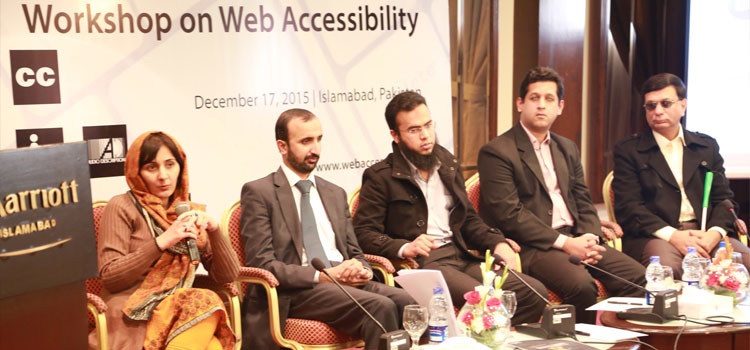
Round-table panelists included four persons with visual and one with hearing impairment, replying to questions on web accessibility, challenges they face and actions required to break the barriers.
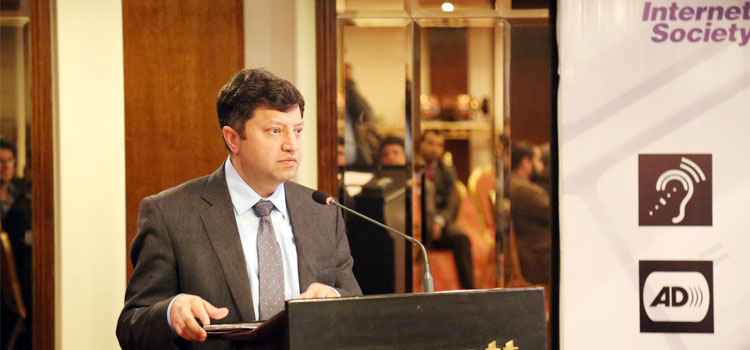
In his closing remarks, Dr Shah, the Chairman of Pakistan Telecommunication Authority (PTA), appreciated the efforts of the organizers for highlighting the subject of web accessibility, which he said appeared to be rarely taken into consideration locally.
“I am honored to be part of this because it taught me several things that will be worked on in the near future. I believe learning never stops and PTA is going to try its best to play a role in software development and work with telecoms to make websites more accessible,” said Mr. Ismail Shah.
Stay Connected with ProPakistani
Get the latest news, tech updates, telecom insights, and business stories wherever you prefer.
Add ProPakistani to Preferred Sources and see more of our stories in Google Search and Top Stories.





















Well done ISOC-APB Pakistan with Bytes for All I would reiterate on greater emphasis be laid on physical impairment ratio to 19 million disabled. The ratio of physical disabled are more geriatric (old) ageing population, with Alzheimer, Dementia, Cognition etc. As I’m focused on Cognition which is physical ability to execute, understand, for ageing population. Mr. Mohd. Shabbir rightly stated standards, policies, regulation are the main areas. We should follow international ratings on Mobile Apps., endorsed by the international authorities today. Dr. Ismail Shah the Icon of the ICT sector’s vision and instant acceptance is a major inducement to the developers. Please keep up to make Pakistan better liveable for our generations to come.