By Laila Waqar
A tiny house is a mindset, if not an article of faith. The tiny house movement is heralded as a gamechanger and a beacon of hope for the ballooning housing crisis. It is cut from the same cloth as the tidying up craze of the Marie Kondo and the more current “hygge” living.
All these work in a similar vein to promote a simpler and sustainable lifestyle. In real estate, “cozy” is the new mantra and the tiny houses provide just the answer for the dilemma by going back to the essentials.
What does it mean to live tiny?
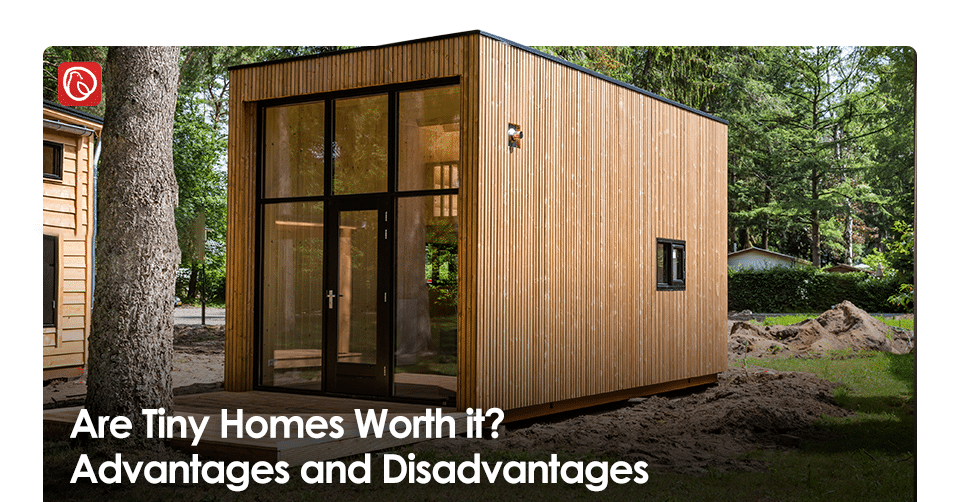
There is no specific definition of a tiny house. However, the general understanding is that any house less than 600 square feet can be categorized under the umbrella term. Sometimes the house has a solid foundation but it can also be a mobile home built on a trailer. The latter is usually referred to as THOW (tiny house on wheels).
Living tiny does not mean that the residents are deprived of basic facilities. These houses are small but have the full amenities of a conventional home. In most cases, these tiny homes have full kitchens, full bathrooms, and king-sized beds. Sometimes, they even have sizable outdoor spaces in the form of a terrace or porch.
The Origin
The origin of the tiny house movement can be linked to the “back to the land” movement of the 1970s where people advocated for a rudimentary lifestyle by moving closer to nature.
Then in 1999, Jay Shafer built an impressive house on wheels that sparked interest in the micro way of living. The architects of the time facilitated the movement by providing smart solutions that maximized space utility through multifunctional furniture and minimized consumerism and expenditure.
Then came the economic recession of 2008 where the housing market crashed and it became increasingly expensive to find lodging. The alternative was easier – to go tiny.
Growth Prospects
The words “tiny house” have gained currency over time. On Instagram, the hashtag “#tinyhouse” has been tagged in around 2 million posts. In 2014, the FYI channel launched a show called “Tiny House Nation” that gave the movement much-needed recognition.
It is not a surprise that the number of people living in these homes globally has soared up. This has become a lifestyle in many areas in the west such as the United States and Australia but yet have to be experimented with within Pakistan.
The Pros
Proponents of shrunken living arrangements campaign for greater economic and environmental benefits. These include the following:
- Financial freedom
The tiny house movement is often heralded by protagonists as a gateway to financial independence. Since the property is smaller in size, it takes considerably less financial resources to construct it. However, since the materials used to construct the house are the same as the ones used for the larger property, the quality is at par with the bigger build. While the size diminishes, the quality remains similar and therefore, the lifespan is congruent to the conventional home.
However, the savings do not stop with that. The smaller build makes it easier to maintain it. While some of the costs remain fixed such as the internet or TV cable charges, significant cuts are made when it comes to gas or electricity bills.
- Simplification
The Journal of Happiness presented a study that concluded that “moving for larger accommodation has no positive impact on subjective well-being.” This is an eyeopener. While owning a bigger house may seem like a dream come true, it does not necessarily guarantee happiness. Less is surely more.
With tiny living, it’s less stuff to buy, less stuff to worry and less stuff to look after. It is an invisible weight that lies on the subconscious self and only when it is lifted that one feels its presence.
- Mobility
The tiny house movement is not only a movement. It is a philosophy! A lifestyle! A mindset! These tiny houses can be compared to the trailers where both are essential on wheels, yet the difference lies in their central function. The trailers may be decorated with amenities to provide a comfortable stay but tiny houses on wheels have all the facilities of a fully functioning house with the added option of mobility.
In most cases, these tiny houses are situated in rural or suburban areas closer to nature. The option of mobility enables them to be adaptable in their choice of residence. Moreover, it also assists them in professions that require frequent traveling.
The Cons
It is without saying that the opponents hold certain reservations about the initiative. These include:
- Size restrictions on wheels
Since the house on wheels is to be driven along the road, there are certain restrictions in place on the dimensions. These restrictions differ depending on location, local laws, and the type of build. For example, in Pakistan, the maximum length permitted is 65 feet (ft) while the permissible width and length are 8.3 ft and 15.97 ft respectively.
These limitations are in place for security reasons in order to avoid accidents and also to ensure the vehicles drive smoothly. With the restrictions in place, the tiny house owners find it difficult to construct bigger houses on wheels, while the ones deciding to have solid foundations have more flexibility.
- Off the grid logistics
Living tiny comes with a price. Some of these tiny houses get the usual facilities like water and power from the local grid if the community allows it. However, those living off-grid have to find alternative means. In these cases, the power usually comes from solar panels while the water is supplied by collecting rainwater or living close to a water source.
As far as the disposal of waste is concerned, the solutions are manifold. Some of the mobile houses make use of composting toilets that utilize the natural process of decomposition and evaporation to dispose of solid waste. Other options include using incinerator toilets that burn the waste instead of flushing them out.
Tiny houses are the talk of the town. The tiny life allows one to enjoy enormous financial benefits and offers a life full of adventure. Not only do these micro homes provide elegant stays, but they also echo minimalism and modernism.
Although it is in its nascent stages, it has momentous potential to alleviate the housing crisis and instigate a shift in lifestyle that is both luxurious and sustainable. But only time will tell when Pakistan will jump on the bandwagon to harvest the fruits of this pivotal opportunity.
Graana.com, Pakistan’s first online real estate marketplace, will allow one to post the pictures of these tiny homes to buy, rent or sell and will provide the platform to materialize this revolutionary idea.
Laila Waqar is a Content Specialist at Graana.com.
Stay Connected with ProPakistani
Get the latest news, tech updates, telecom insights, and business stories wherever you prefer.
Add ProPakistani to Preferred Sources and see more of our stories in Google Search and Top Stories.