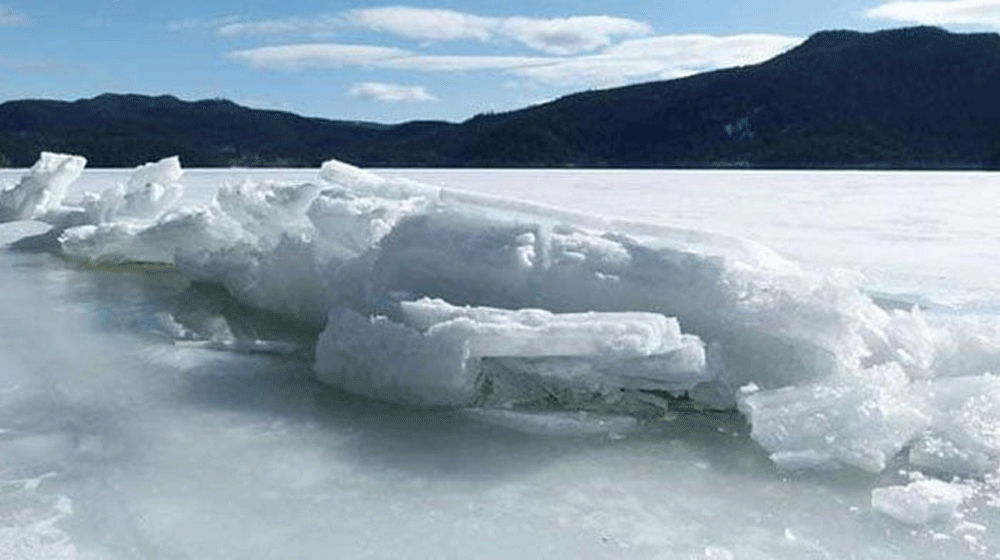
A recent report by the International Centre for Integrated Mountain Development (ICIMOD) has expressed concerns over the accelerated melting of Himalayan glaciers due to climate change.
These glaciers are critical water sources for nearly two billion people and have been disappearing rapidly. Between 2011 and 2020, the rate of melting increased by 65 percent compared to the previous decade.
The report focuses on the Hindu Kush Himalaya (HKH) glaciers, which provide water to around 240 million people in mountainous areas and another 1.65 billion people in the valleys below. It covers Afghanistan, Bangladesh, Bhutan, China, India, Myanmar, Nepal, and Pakistan. The report warns that if greenhouse gas emissions continue unchecked, up to 80 percent of the glaciers could vanish by the end of the century.
These glaciers contribute to ten major river systems, including the Ganges, Indus, Yellow, Mekong, and Irrawaddy, supporting billions of people with essential resources like food, energy, clean air, and income.
ICIMOD’s deputy chief Izabella Koziell highlighted the far-reaching consequences of losing this frozen zone for the two billion people in Asia who depend on its water.
Even if global warming is limited to the targets set by the Paris climate agreement, the report predicts a significant loss of glaciers by 2100. Lead author Philippus Wester called for urgent action to mitigate climate change, emphasizing the profound impacts that incremental changes can have.
The report also notes the advancements in technology and high-resolution satellite imagery that have enabled more accurate predictions. It further highlights the link between global warming and extreme weather events, such as heatwaves, droughts, and intensified storms caused by rising sea levels.
Despite having minimal responsibility for fossil fuel emissions, vulnerable populations, and poor countries are disproportionately affected by these changes. Amina Maharjan from ICIMOD stressed the need for proactive efforts to anticipate and address future changes, citing the lack of support available to these communities.
Stay Connected with ProPakistani
Get the latest international news and global stories wherever you prefer.
Add ProPakistani to Preferred Sources and see more of our stories in Google Search and Top Stories.