Intel has released new Wi-Fi and Bluetooth drivers that begin adopting Microsoft’s Driver Quality Initiative, an industry-wide project intended to make Windows 11 drivers more stable, secure and predictable.
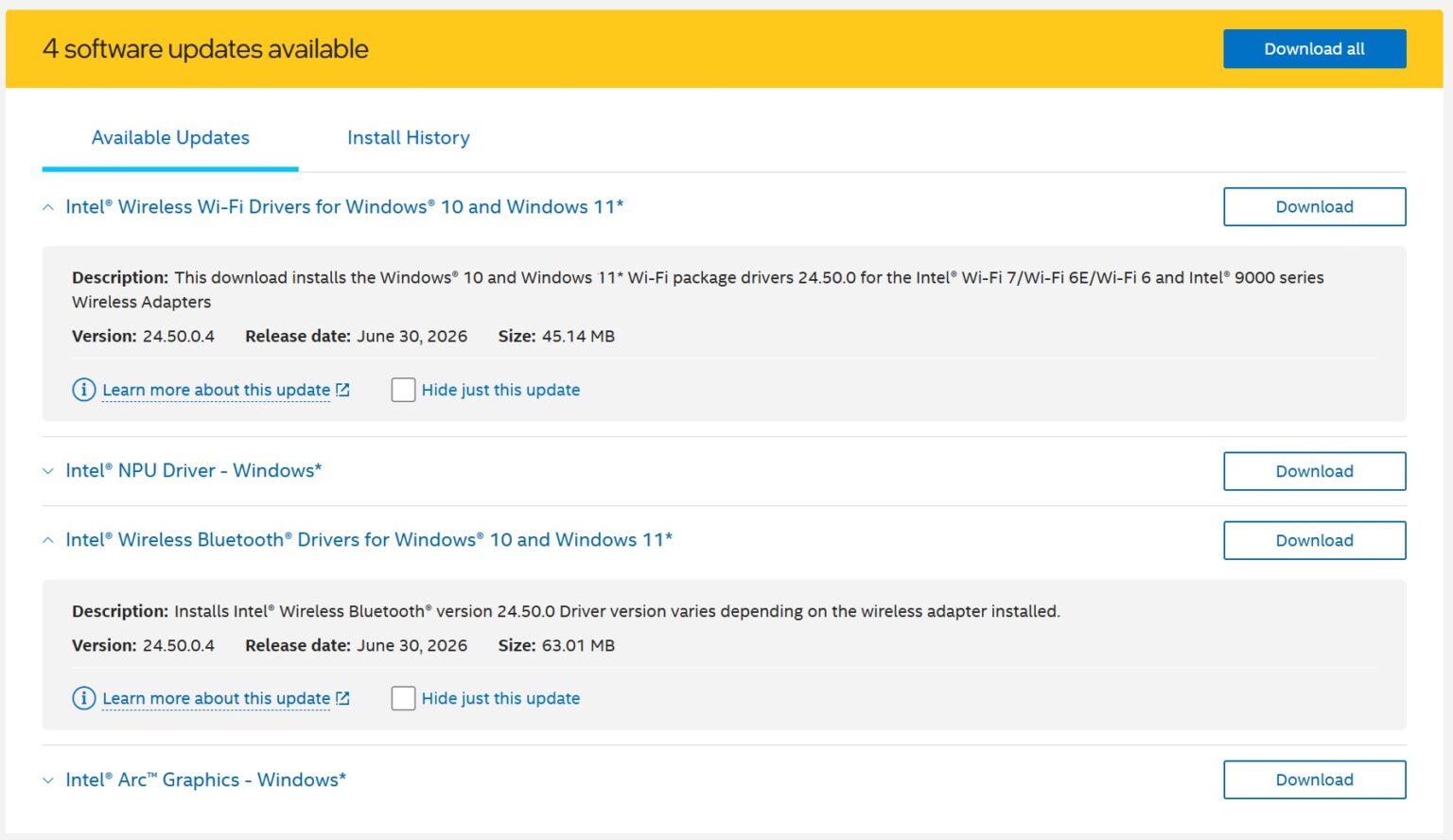
The updates arrived on June 30 under package version 24.50.0. Intel’s Wi-Fi release also improves 6GHz performance, Wi-Fi and Bluetooth coexistence, regional regulatory support and Bluetooth stability. The Bluetooth package includes functional and security updates.
Intel’s release notes state that its latest wireless drivers include improvements aligned with Microsoft’s Windows ecosystem quality initiative to improve performance and user experience.
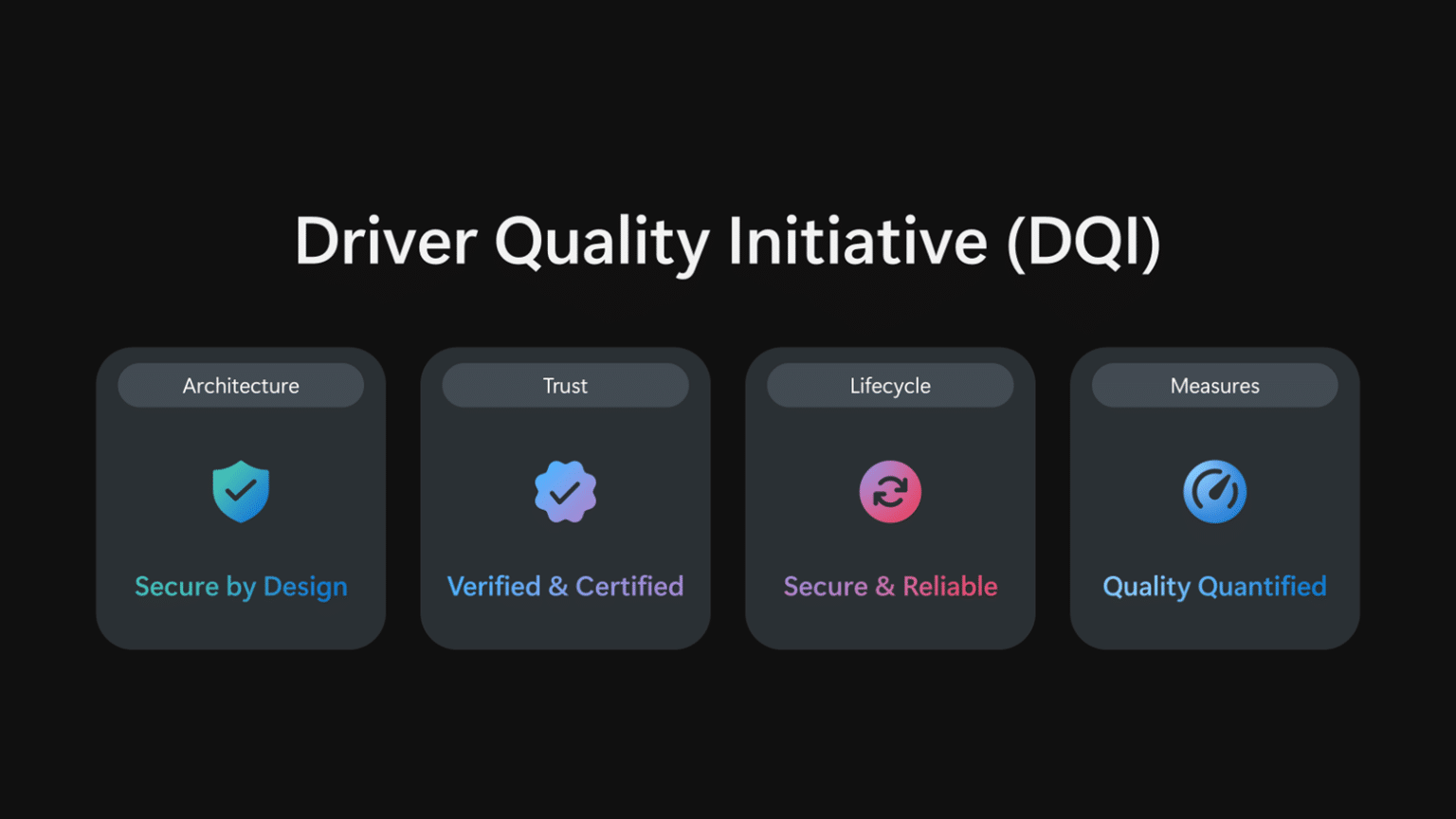
The changelog provides few technical details about those changes, but the wording refers to Microsoft’s Driver Quality Initiative, or DQI, which the company introduced at WinHEC 2026 in May. Intel’s wireless drivers are among the first releases linked to the new requirements, and its graphics drivers are also expected to adopt them later.
The Wi-Fi package supports Windows 10 and Windows 11 across several Intel Wi-Fi 7, Wi-Fi 6E, Wi-Fi 6 and Wireless-AC adapters. Intel has also added support for the Wi-Fi 6 AX231, while its Wi-Fi 7 features require Windows 11 version 24H2 or later.
Drivers connect Windows with processors, graphics hardware, wireless adapters, cameras, audio devices and other components. Problems in these drivers can cause crashes, slow performance, overheating, battery drain and failed hardware connections.
Windows Latest said its testing across hundreds of computers frequently found disorganized driver installations. A high-end Asus ZenBook Duo, for example, had to install dozens of drivers during its initial setup but had enough processing power to handle the workload.
Lower-cost hardware can have more difficulty. The publication observed cheaper HP laptops with AMD processors repeatedly attempting and failing to install drivers through Windows Update. The drivers eventually installed, but the repeated attempts created a frustrating setup process on new computers.
Hardware manufacturers have also released updates that caused serious problems. Recent examples included HP software linked to system crashes and Dell software that sent some computers to the BitLocker recovery screen. These failures are often blamed on Windows because users see a blue or black error screen, even when the underlying problem comes from an OEM driver or application.
Microsoft introduced DQI during its first Windows Hardware Engineering Conference since 2018. The conference brought Microsoft engineers together with processor companies, hardware manufacturers and other partners, including Intel, AMD, Qualcomm, Dell, HP, Acer and Asus.
Microsoft described DQI as a coordinated effort to improve driver quality, reliability and security across the Windows ecosystem. Thousands of partners currently maintain tens of thousands of active driver families for Windows devices, meaning Microsoft cannot address every driver problem by changing Windows alone.
DQI builds on the Windows Resiliency Initiative and covers four main areas: architecture, trust, driver lifecycle management and expanded quality testing.
Microsoft is strengthening security around kernel-mode drivers, which operate with deep access to Windows and can cause serious system failures when they malfunction.
The company wants more third-party drivers to move from kernel mode to safer user-mode designs or Microsoft-authored class drivers where possible. User-mode drivers have less control over the operating system, reducing the damage a faulty driver can cause.
Microsoft is also preparing performance improvements for user-mode drivers used by PCIe devices with direct memory access and for the Windows Wi-Fi stack.
Its class-driver work includes SoundWire Device Class for Audio, an I3C class driver, an NCM USB Ethernet class driver and continued updates to existing first-party Windows 11 drivers.
These architectural changes are intended to reduce kernel interference and improve system performance, security and reliability, including reducing the likelihood of blue-screen crashes.
Microsoft will introduce stronger verification for trusted hardware partners and drivers. It will also expand automated analysis and update the requirements of the Windows Hardware Compatibility Program.
The company is expanding driver evaluation beyond crashes. Drivers will also be assessed for stability, functionality, minimum performance levels, power consumption and thermal impact. This means a driver could fail Microsoft’s quality standards even if it does not directly crash the computer.
The added checks are intended to catch drivers that cause poor battery life, overheating or reduced performance without producing an obvious error.
DQI also changes how Microsoft manages drivers throughout their operating life.
Microsoft plans to improve the Windows Update catalogue by removing outdated or low-quality drivers, improving software bill of materials alignment and using driver symbols to investigate problems more quickly.
Removing older drivers could address cases where Windows Update replaces a newer driver installed by the user or computer manufacturer with an outdated version.
Microsoft has also introduced Cloud-Initiated Driver Recovery, which can help devices return to a previously working driver when a newly released version fails quality checks. The company says earlier detection, more precise delivery and automatic recovery should reduce disruption for users.
Intel is an early adopter, but Microsoft intends to apply DQI across the wider Windows hardware industry.
AMD has also committed to working with Microsoft on driver quality. David Harmon, AMD’s director of software engineering, said reliable drivers and resilient platforms require shared responsibility rather than action from a single company.
Microsoft wants hardware companies to adopt the new quality standards more broadly by the end of the year. Intel’s wireless update represents an early step, while future releases from Intel and other manufacturers are expected to follow the same approach.
Get the latest tech news, telecom insights, and product launches wherever you prefer.
Add ProPakistani to Preferred Sources and see more of our stories in Google Search and Top Stories.