Global smartphone shipments fell 4% year-on-year in the second quarter of 2026 as the ongoing memory shortage pushed up component costs, according to a new report by Omdia.
The decline shows how rising memory and storage prices are affecting the smartphone industry, especially in lower-price segments where margins are already thin.
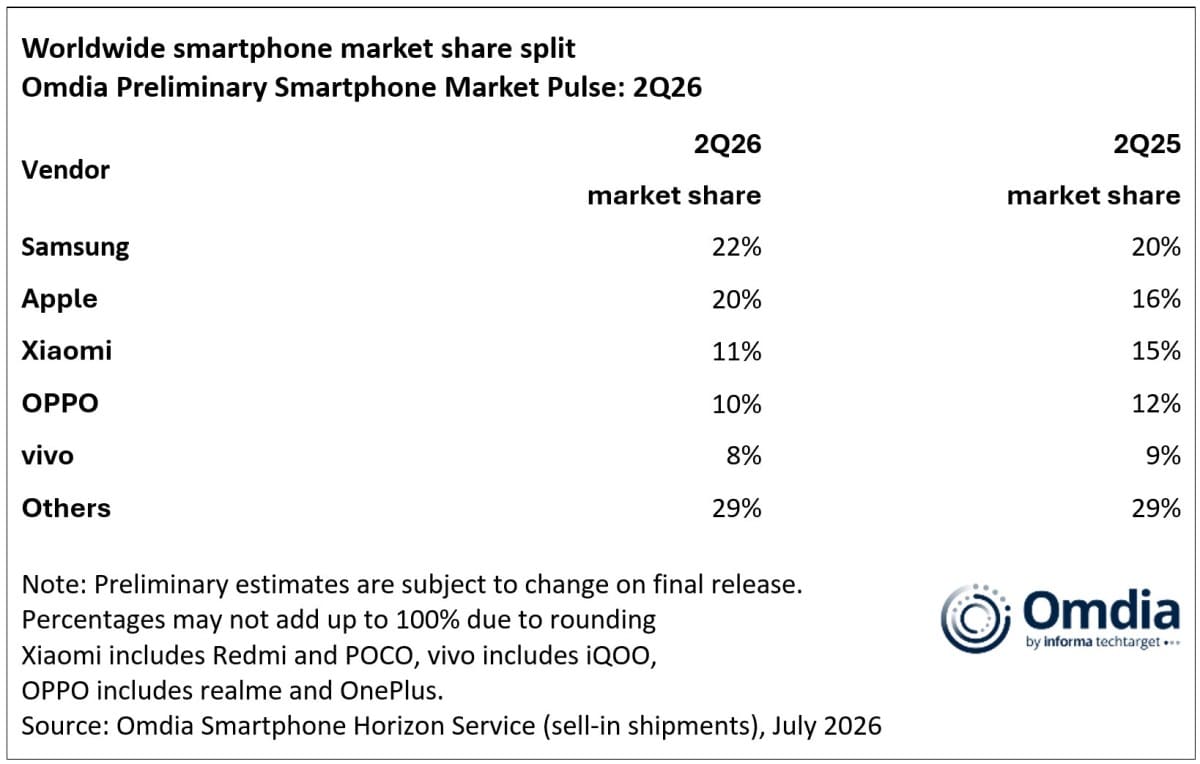
Despite the global market dip, Samsung remained the world’s largest smartphone brand in the second quarter with a 22% market share, up from 20% in the same period last year.
Omdia said Samsung benefited from stronger supply availability and stable demand. The company also gained ground in the budget segment as some Chinese rivals reduced product lines and raised prices.
Apple also improved its position, increasing its market share from 16% to 20%.
According to Omdia, this was Apple’s best second quarter ever. The iPhone 17 series helped drive one of the company’s strongest upgrade cycles, while stable iPhone pricing also supported demand at a time when several rivals were raising prices.
Xiaomi remained in third place but saw its market share fall from 15% to 11%.
Oppo held fourth place with a 10% share, down from 12% a year earlier. Vivo completed the top five with an 8% share, compared to 9% in the second quarter of 2025.
The pressure was strongest in the mass-market segment, where brands rely heavily on affordable devices and large shipment volumes.
Omdia Principal Analyst Runar Bjorhovde said the steepest shipment declines came in the sub-$400 smartphone segment.
He said this category has been hit hardest because supply constraints are tighter, profit margins are smaller, and buyers are more sensitive to price increases.
Memory and storage now account for more than 60% of the bill of materials for budget smartphones, according to Omdia. For high-end phones, they account for more than 30%.
This has made it harder for manufacturers to keep prices low, especially on entry-level and mid-range models.
Omdia said memory prices are not expected to start declining before the second half of 2027.
Even then, prices are unlikely to return to pre-2025 levels. This means smartphone makers may continue shifting their focus from volume to value by selling more expensive models and reducing exposure to lower-margin phones.
The research firm expects the sharpest shipment declines to come in the third and fourth quarters of 2026, when seasonal demand from new launches, holidays, and shopping festivals will clash with limited memory supply.
As a result, budget-conscious buyers could face fewer choices. Many may delay purchases, lower their expectations, use financing options or move toward refurbished smartphones instead.
Get the latest tech news, telecom insights, and product launches wherever you prefer.
Add ProPakistani to Preferred Sources and see more of our stories in Google Search and Top Stories.