




The cover of the holy Kaaba was ceremoniously changed on Wednesday. The auspicious occasion coincided with the first day of the month of Muharram, 1445 Hijri in the Islamic calendar.
The process of replacing the old cloth with a new handmade Kiswa involved the collective effort of 130 skilled technicians and manufacturers. With precision and reverence, they undertook the ten-step intricate procedure.
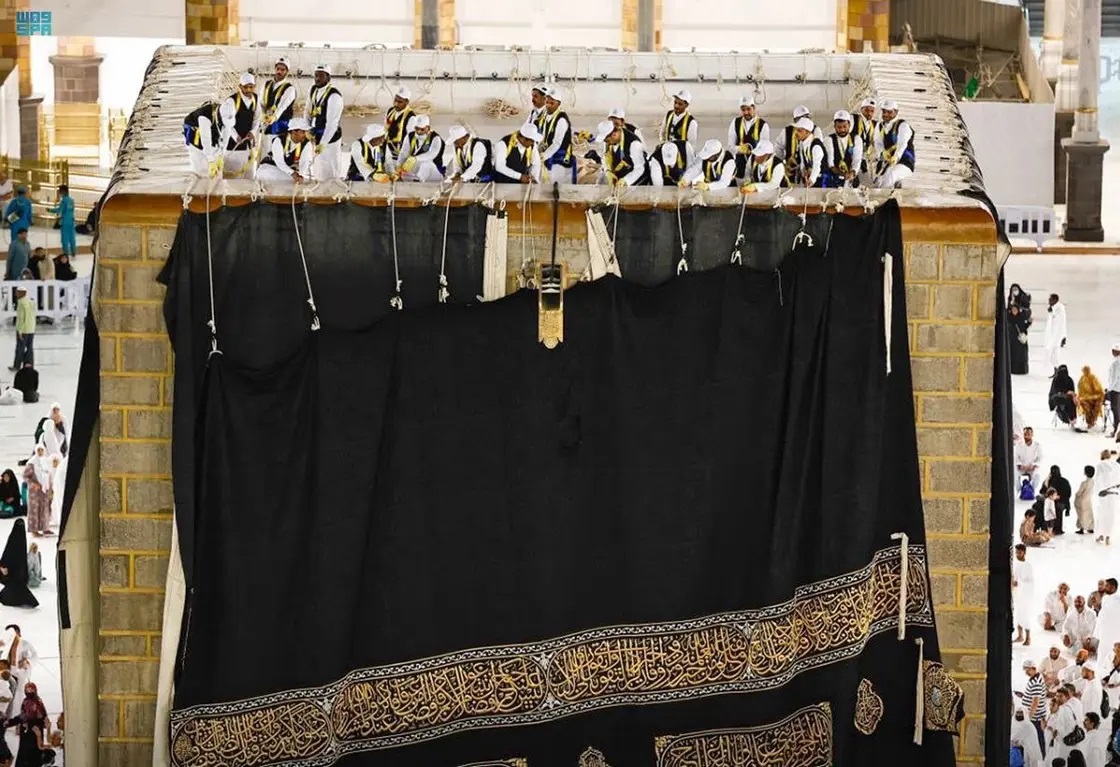
Crafted with utmost care and attention to detail, the cloth that adorns the Kaaba is made from raw silk, intricately woven with 120 kilograms of gold wires and 100 kilograms of silver wires. These precious materials were meticulously processed in an assembly line equipped with the world’s largest sewing machine, ensuring the utmost precision in every stitch.
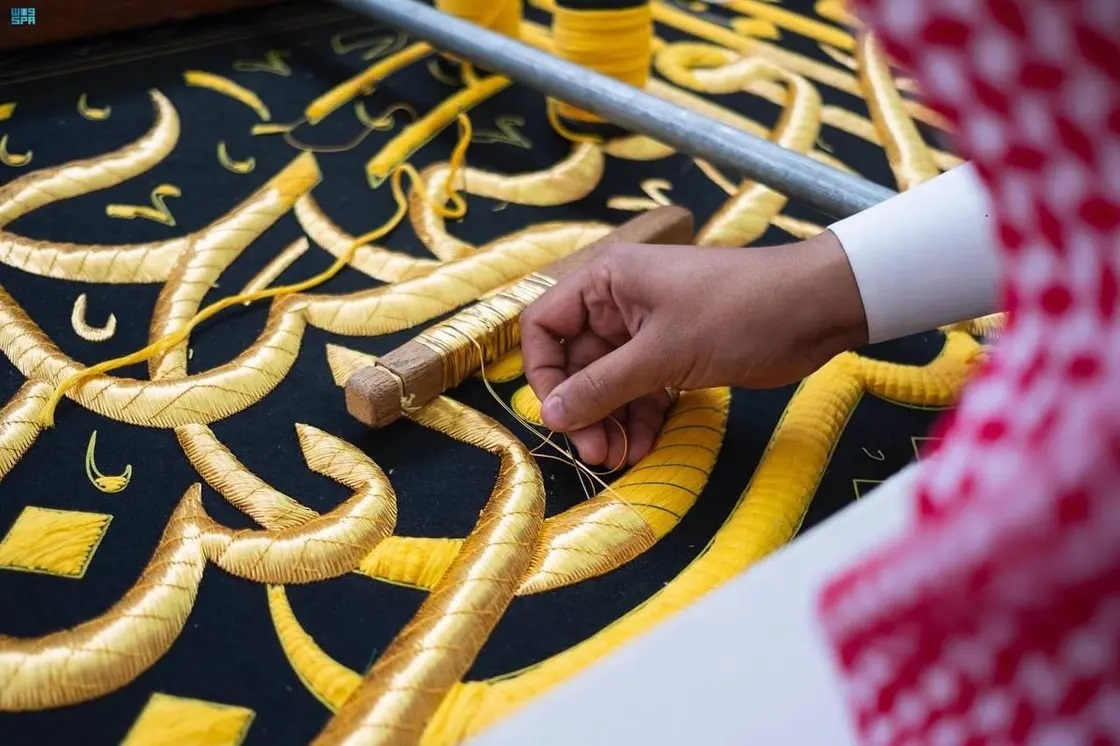
Sections of the black-dyed silk cloth were delicately hand-embroidered with verses from the Quran using fine gold wires. This meticulous craftsmanship adds a touch of grandeur and sacredness to the Kiswa, honoring the sanctity of the Kaaba.
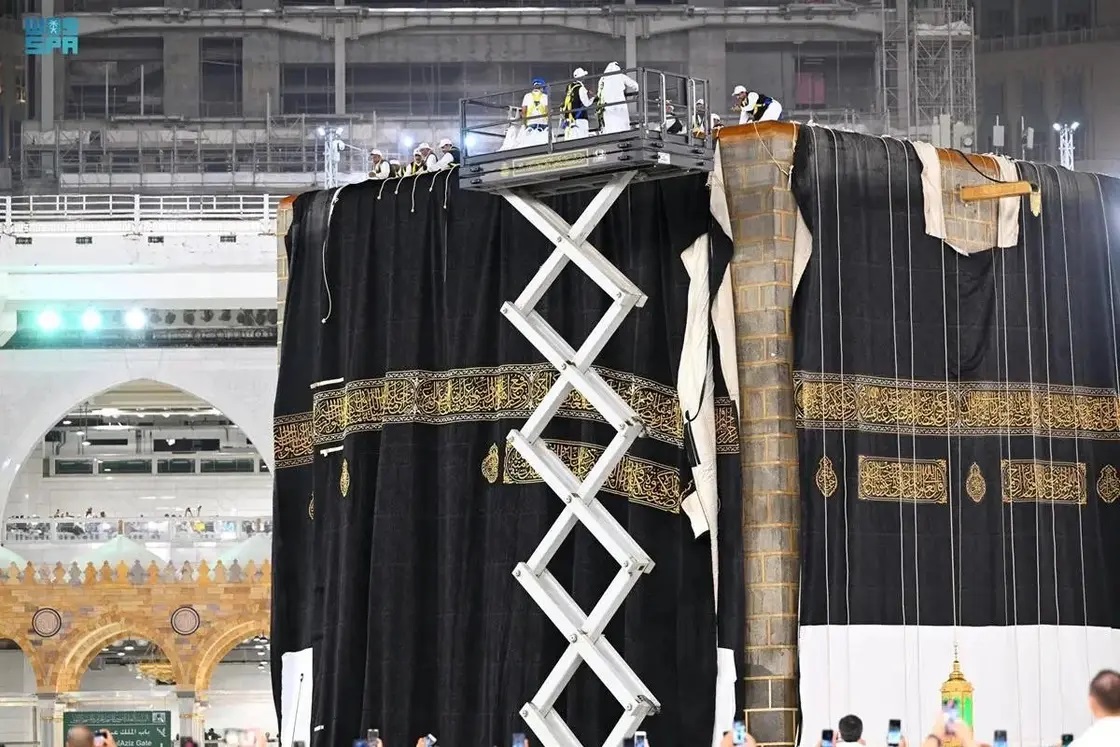
A dedicated and specialized team closely supervised the entire process of replacing the Kiswa. This team ensured that each of the 56 gold-embroidered pieces, which make up the complete Kiswa, were meticulously crafted and aligned.
It takes an average of 60 to 120 days to complete each piece, underscoring the immense skill and patience required to create this intricate masterpiece.

The annual change of the Kiswa holds profound significance worldwide. It represents the commitment to renewing the spiritual connection with the sacred site and signifies the continuous devotion and reverence towards the Kaaba, a focal point of the Islamic faith.

This revered ceremony serves as a reminder of the historical and religious significance attached to the Kaaba, drawing millions of faithful pilgrims to the holy city of Mecca each year. The replacement of the Kiswa stands as a testament to the enduring traditions and deep-rooted customs that have been upheld for centuries, further enriching the spiritual journey of the Muslim community.