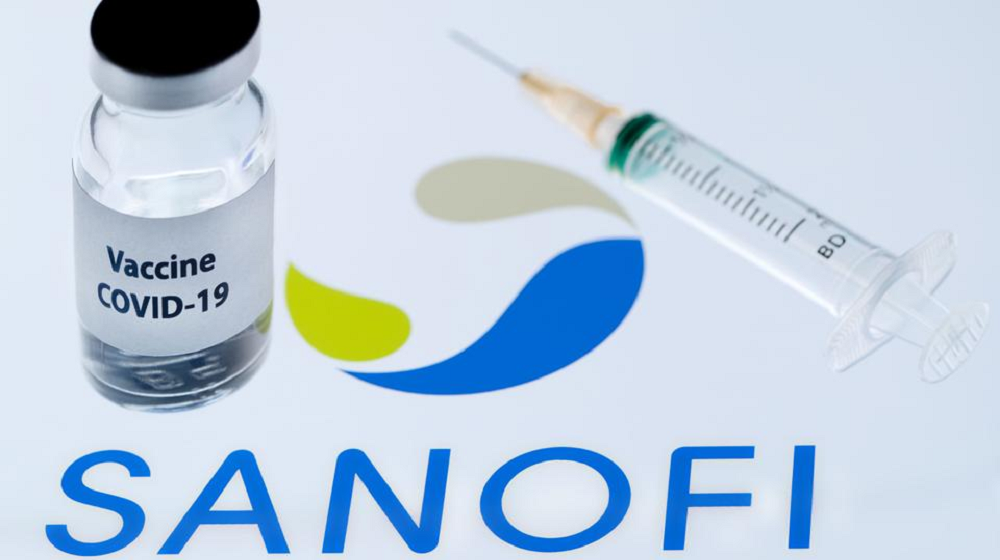
Sanofi and GlaxoSmithKline (GSK) announced on Friday that their coronavirus vaccine will be delayed until the end of next year after interim trials displayed a low immune response in people aged over 50 which is the age group that is most vulnerable to severe COVID-19 infections.
Earlier, the drug companies had hoped to receive regulatory approval for their vaccine in the first half of 2021. However, due to “low immune response likely due to an insufficient concentration of the antigen” in the elderly population, the vaccine’s potential availability has been pushed to Q4 2021.
ALSO READ
Here’s Why Flu Vaccines Are Not Available in Pakistan
Sanofi and GSK will redevelop the vaccine and launch phase 2 of its trial in February while aiming to produce approved shots in the last quarter of 2021. This setback is a reminder that developing effective vaccines is no easy task.
Sanofi had replicated the technology that is used to produce seasonal influenza vaccines, and GSK had developed immunological agents to produce the Sanofi-GSK vaccine.
Their statement said, “Phase 1/2 study interim results showed an immune response comparable to patients who recovered from COVID-19 in adults aged 18 to 49 years, but a low immune response in older adults”.
Roger Connor, the President of GSK Vaccines, stated that the results of the study were “not as we hoped,” adding, “it is also clear that multiple vaccines will be needed to contain the pandemic”.
ALSO READ
Here’s Why Some People Are More Severely Affected by the Coronavirus
“Our aim now is to work closely with our partner Sanofi to develop this vaccine with an improved antigen formulation for it to make a meaningful contribution to preventing COVID-19,” he added.
Stephen Evans, a Professor of Pharmacoepidemiology at the London School of Hygiene & Tropical Medicine, said, “The first few vaccines to get to an interim analysis in phase 3 trials were unusual to have gotten that far without notable problems. This shows what we know – that it is not always easy to develop a new vaccine to the point of being used to prevent the disease. Getting a vaccine that shows efficacy in the relevant age and other groups is not a straightforward path; many uncertainties can persist”.
Stay Connected with ProPakistani
Get the latest news and stories wherever you prefer.
Add ProPakistani to Preferred Sources and see more of our stories in Google Search and Top Stories.