As the world’s 17th largest city by population, Karachi juggles its reputation as a major port and economic hub with mounting civic challenges. Official estimates place its population at 21 million, though some unofficial counts exceed 30 million, straining infrastructure and municipal services at every turn.
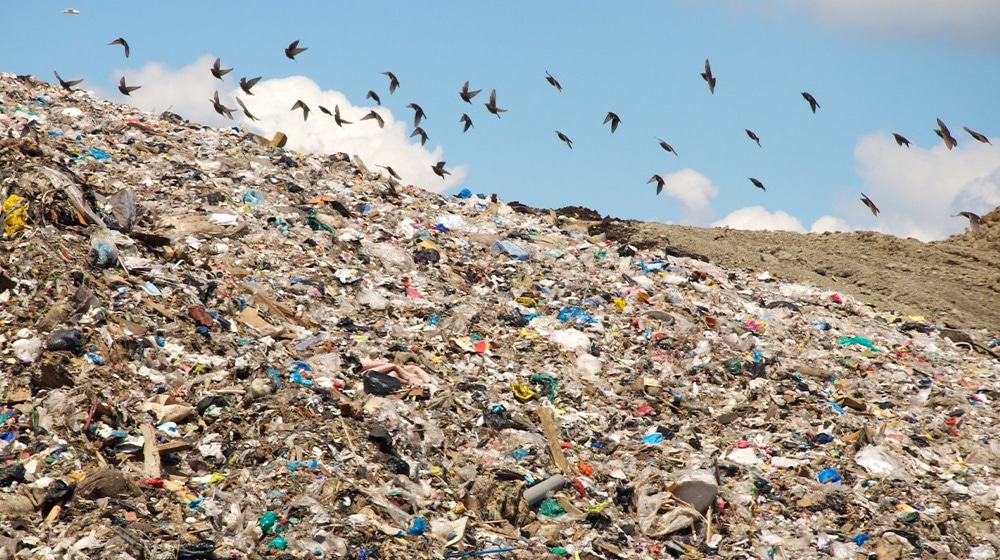
One of the city’s most acute dilemmas is solid waste management. Karachi generates approximately 16,500 tons of municipal waste daily, overwhelming landfills and informal dumping sites on its outskirts. Streets, canals and low-lying neighborhoods shoulder the fallout, as scavengers pick through refuse and residents contend with noxious smells and blocked drainage during monsoon rains.
“Karachi’s sheer scale means traditional reduce-reuse-recycle programs alone won’t suffice,” says Faisal Majeed, an Environmental, Health and Safety strategist with two decades of global experience across major multinational companies. “We must integrate treatment and disposal technologies that neutralize waste volumes, rather than just divert them.”
Pakistan as a whole generates nearly 49.6 million tons of solid waste annually, growing at more than 2.4 percent per year. Yet only 60–70 percent of urban refuse is formally collected; the rest is burned, buried or dumped, contributing to air, soil and water pollution and public-health hazards. Karachi’s three sanitary landfills are rapidly reaching capacity, forcing municipal authorities to lease additional dumping grounds far from city limits.
In search of scalable answers, Majeed points to Addis Ababa’s Reppie waste-to-energy plant, the first of its kind in Africa. Launched in 2018, Reppie incinerates municipal waste to produce electricity, operating under stringent European Union emissions standards. The facility processes up to 1,400 tons of refuse per day, powering 30,000 homes and alleviating landfill pressures.
“Replicating a similar waste-to-energy model in Karachi could convert thousands of tons of daily waste into megawatts of clean power,” Majeed explains. “It also solves landfill overuse, generates revenue, and aligns with Pakistan’s shift toward renewable energy.”
Local regulators are already laying groundwork. In late 2023, Pakistan’s National Electric Power Regulatory Authority announced a competitive upfront tariff of $0.10007 per kilowatt-hour for waste-to-energy projects over a 25-year operational period, signaling investor interest in the sector. Analysts estimate that processing just half of Karachi’s daily waste through combustion could yield upwards of 100 MW of continuous power generation.
Implementing waste-to-energy at scale will require cross-sector coordination. Majeed recommends a phased approach:
- First, upgrade primary collection fleets and sorting facilities to concentrate combustible fractions.
- Second, pilot a 200-ton-per-day incineration module on an existing landfill site.
- Third, deploy emissions-control systems and continuous monitoring to meet EU benchmarks.
He adds that public awareness and regulatory consistency are equally vital. “Karachi’s municipality must enforce source-separation rules and embed private-sector partners through transparent, performance-based contracts,” Majeed says. “Without clear policies and monitoring, even the best technology will falter.”
While Pakistan’s waste-to-energy potential remains largely untapped, the appetite for sustainable solutions is growing. Recent studies forecast that waste management projects could attract $500 million in foreign direct investment over the next decade, provided policymakers streamline procurement and enforce environmental safeguards.
For Karachi’s beleaguered neighborhoods, a shift toward waste-to-energy offers hope: lower landfill reliance, cleaner air and new revenue for city services. As Faisal Majeed concludes, “This city has proven it can fuel national growth. Now it must turn its own waste into power and set an example for South Asia.”
Stay Connected with ProPakistani
Get the latest news, tech updates, telecom insights, and business stories wherever you prefer.
Add ProPakistani to Preferred Sources and see more of our stories in Google Search and Top Stories.