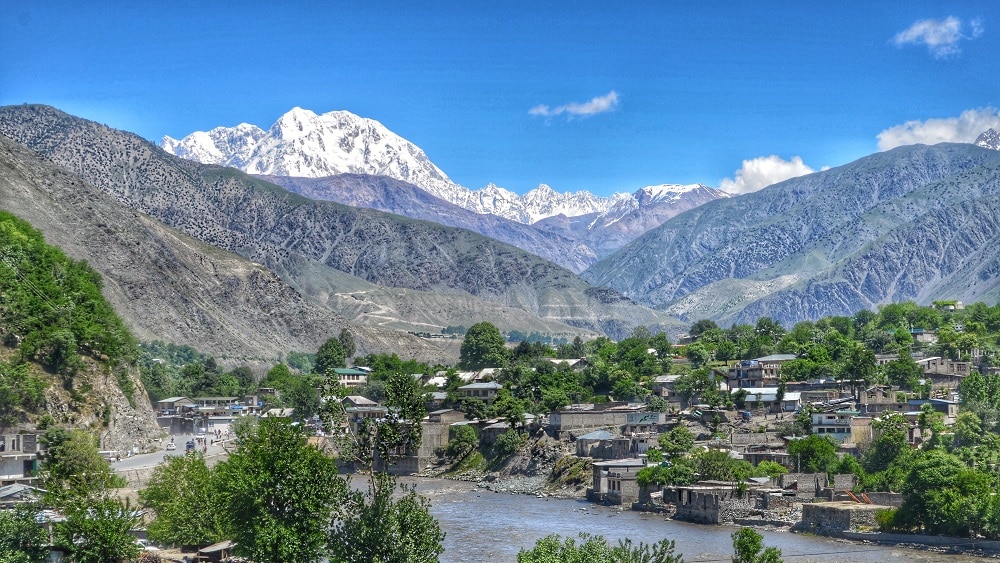
Residents and experts in Chitral have called for the urgent construction of a continuous chain of bulwarks along the Chitral River as fears grow over another destructive flood season.
With summer approaching, communities across the valley say large parts of Chitral remain exposed to annual flooding, which has intensified over the past two decades from Broghil Valley in the north to Arandu near the Pak-Afghan border.
Locals say the river has become far more destructive due to rising temperatures and rapid glacial melt, eating away at vulnerable settlements and agricultural land. In Ayun alone, nearly one-third of the already limited cultivable land has reportedly been lost to erosion.
The damage has been widespread. Villages in Yarkhun Valley, including Dubarger, Pawer and Kargin, have suffered heavily, while Reshun and Green Lasht in the Biyar region, and Shoghor in Lot Koh Valley, continue to face serious flood risk.
In Lower Chitral, residents of Ayun, Khairabad, Drosh, Shoghor, Upper Broze and Naghar also remain under constant threat of displacement during the summer months.
Former MPA Syed Sardar Hussain Shah said the region has long needed a large-scale river protection plan, but successive governments failed to act on proposals aimed at building bulwarks in vulnerable areas.
He said cultivable land makes up only around four percent of Chitral’s total area, making its continued loss especially alarming. According to him, several villages, including Ayun, Green Lasht, Kargin and Junali Koch, could have been protected through timely construction of safety walls.
Shah pointed to a few areas in Upper Chitral and Kalash Valley Rumbur where large-scale bulwarks helped shield villages from repeated flood damage.
Environmental experts have also warned that the threat is likely to worsen. Chitral-based ecologist Hamid Mir said the region is home to more than 500 glaciers, many of which are melting rapidly due to climate change.
He warned that high floods are expected to become more frequent, adding that with several glaciers already considered vulnerable to outburst events, permanent protection structures may be the only realistic way to protect settlements across the valley.
Residents fear that without immediate action, repeated flooding could erase several historic villages from the map.
Stay Connected with ProPakistani
Get the latest news and stories wherever you prefer.
Add ProPakistani to Preferred Sources and see more of our stories in Google Search and Top Stories.












