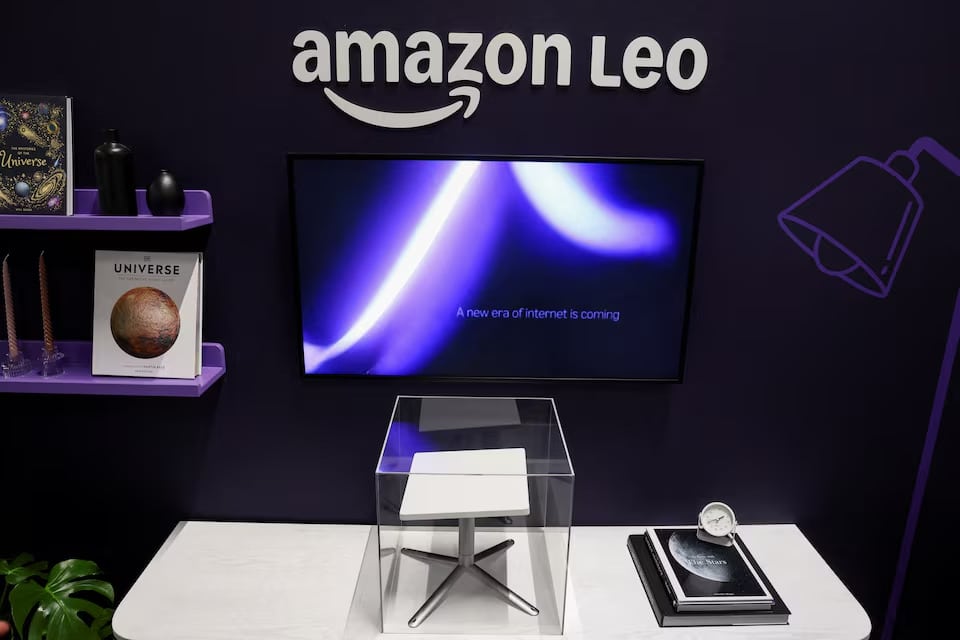
Amazon is planning a new satellite network with up to 5,105 satellites that could provide voice calls, messaging, mobile data, and emergency services directly to smartphones outside traditional cellular coverage.
Amazon Leo filed an application with the US Federal Communications Commission seeking approval for the direct-to-device network, with deployment expected to begin in 2028. The FCC had not immediately commented on the application.
The service would work with mobile network operators around the world, allowing existing cellular providers to extend coverage into areas where towers and other ground-based networks are unavailable.
The planned system is designed to connect mobile phones and other cellular devices directly to satellites.
This means users in remote areas could potentially access voice calls, messages, mobile data, and emergency communications without relying on a nearby cellular tower.
Amazon plans to use mobile satellite spectrum from Globalstar, which the company agreed to acquire earlier this year. Amazon said at the time that its next-generation direct-to-device system would begin deployment in 2028.
Globalstar already provides satellite connectivity for millions of Apple device users, supporting features such as emergency messaging, location sharing and roadside assistance when terrestrial networks are unavailable.
The plan would significantly expand Amazon Leo beyond its current focus on satellite broadband internet.
Amazon will enter an increasingly competitive direct-to-device market alongside SpaceX, AST SpaceMobile and Lynk Global, which are developing their own systems to connect regular phones directly to satellites.
One major challenge will be getting thousands of satellites into orbit. Growing demand for rocket launches has created limited launch capacity as several companies work to deploy large satellite networks.
Amazon is currently building out its first-generation Leo broadband network.
As of its July 2 launch, Amazon had deployed 396 satellites into low Earth orbit. The company plans to begin its initial broadband service rollout later this year.
Amazon Leo has already announced agreements with companies including Vodafone, DirecTV, South African internet provider Herotel and Australia’s National Broadband Network.
The broadband network and the proposed direct-to-device constellation would serve different purposes. The existing system is focused on providing fixed broadband connections, while the new network would connect directly to mobile devices.
The proposal comes months after FCC Chairman Brendan Carr criticized Amazon while discussing SpaceX’s plans for a much larger satellite constellation.
In March, Carr dismissed Amazon’s criticism of SpaceX’s proposal to launch as many as one million satellites.
Carr said Amazon should focus on getting its own satellite deployment in order rather than criticizing a company already launching satellites at SpaceX’s pace.
Amazon has since been accelerating its deployment. Earlier this year, the company said it planned more than 20 launches during its second year of full-scale deployment, including missions using Vulcan Centaur and New Glenn rockets.
If approved, the new 5,105-satellite network would give Amazon a second major satellite system and put it more directly into competition over the emerging market for cellular connectivity from space.
Get the latest tech news, telecom insights, and product launches wherever you prefer.
Add ProPakistani to Preferred Sources and see more of our stories in Google Search and Top Stories.