





Pakistani actress Aymen Saleem has taken a bold stand against the troubling depiction of love in the popular drama serial Mann Mast Malang, sparking a much-needed conversation about media responsibility. The show, featuring Danish Taimoor as Kabir and Sahar Hashmi as Riya, has drawn criticism for romanticizing abusive behavior, with scenes that include Kabir tying up Riya’s feet and justifying it as an expression of love.

In the drama, Kabir’s actions—such as grabbing Riya, dipping her into his arms, and spinning her around, often accompanied by romantic background music—present a disturbing narrative. He refers to Riya as “Mere Jaan” (my love) and declares he will go to extreme lengths to keep her by his side, framing these acts as passionate devotion. However, these scenes have raised alarm for normalizing toxic dynamics under the guise of romance.
Taking to social media, Aymen Saleem expressed her dismay, writing, “Enough is enough. I’m deeply disturbed by the way a recent drama is portraying abuse — tying up a woman with ropes, showing it in a romantic or bold light, and then normalising it as part of a love story. This isn’t entertainment. It’s dangerous storytelling.” She highlighted the broader implications of such portrayals in a society already grappling with patriarchal norms, emotional and physical abuse, and societal pressures on women.
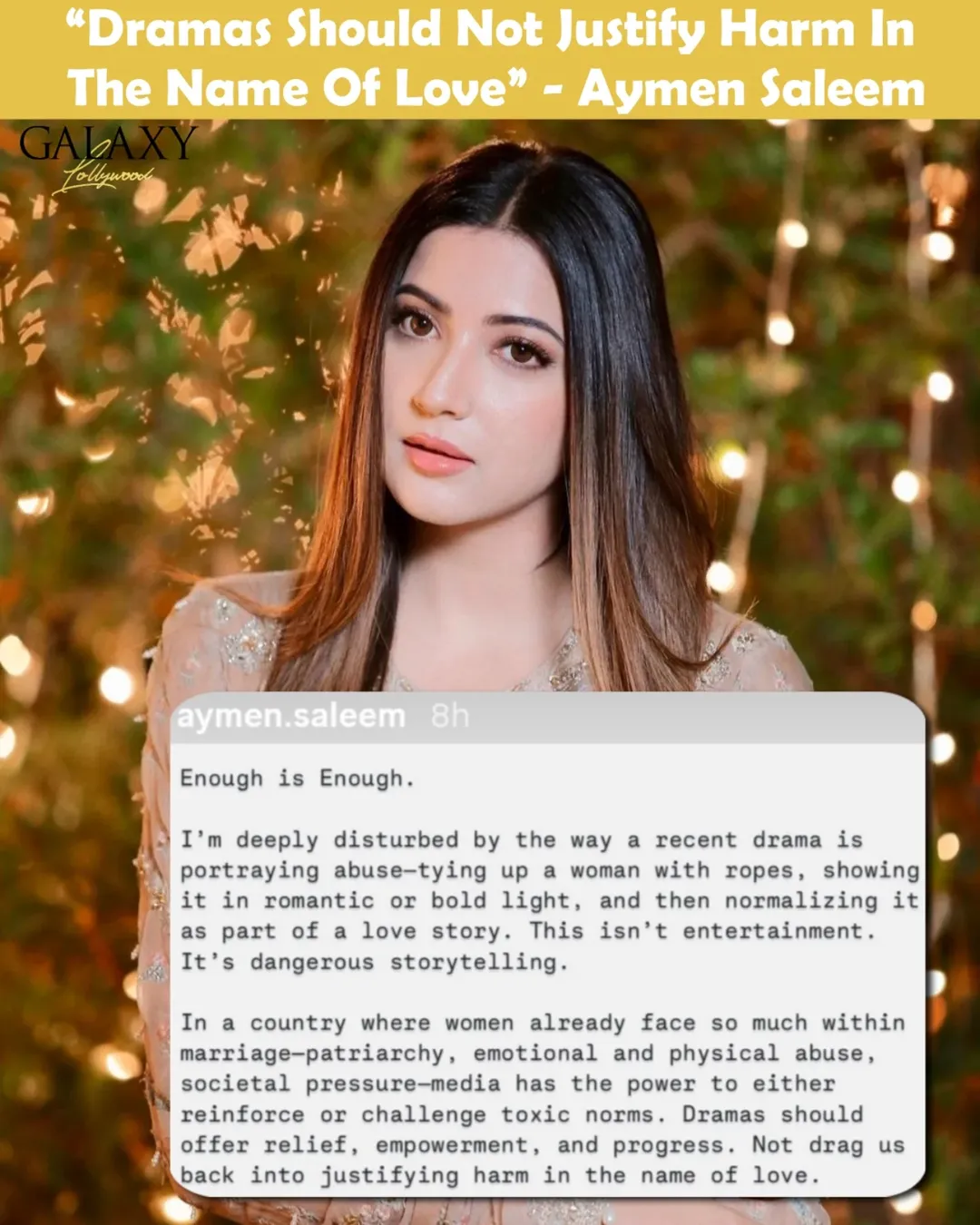
Saleem emphasized the media’s role in shaping cultural narratives, stating, “In a country where women already face so much within marriage patriarchy, emotional and physical abuse, societal pressure, the media has the power to either reinforce or challenge toxic norms.” She urged writers, producers, channels, and actors to choose their scripts responsibly, noting their influence on audiences. “Drama should offer relief, empowerment, and power. Not drag us into justifying harm in the name of love,” she added.
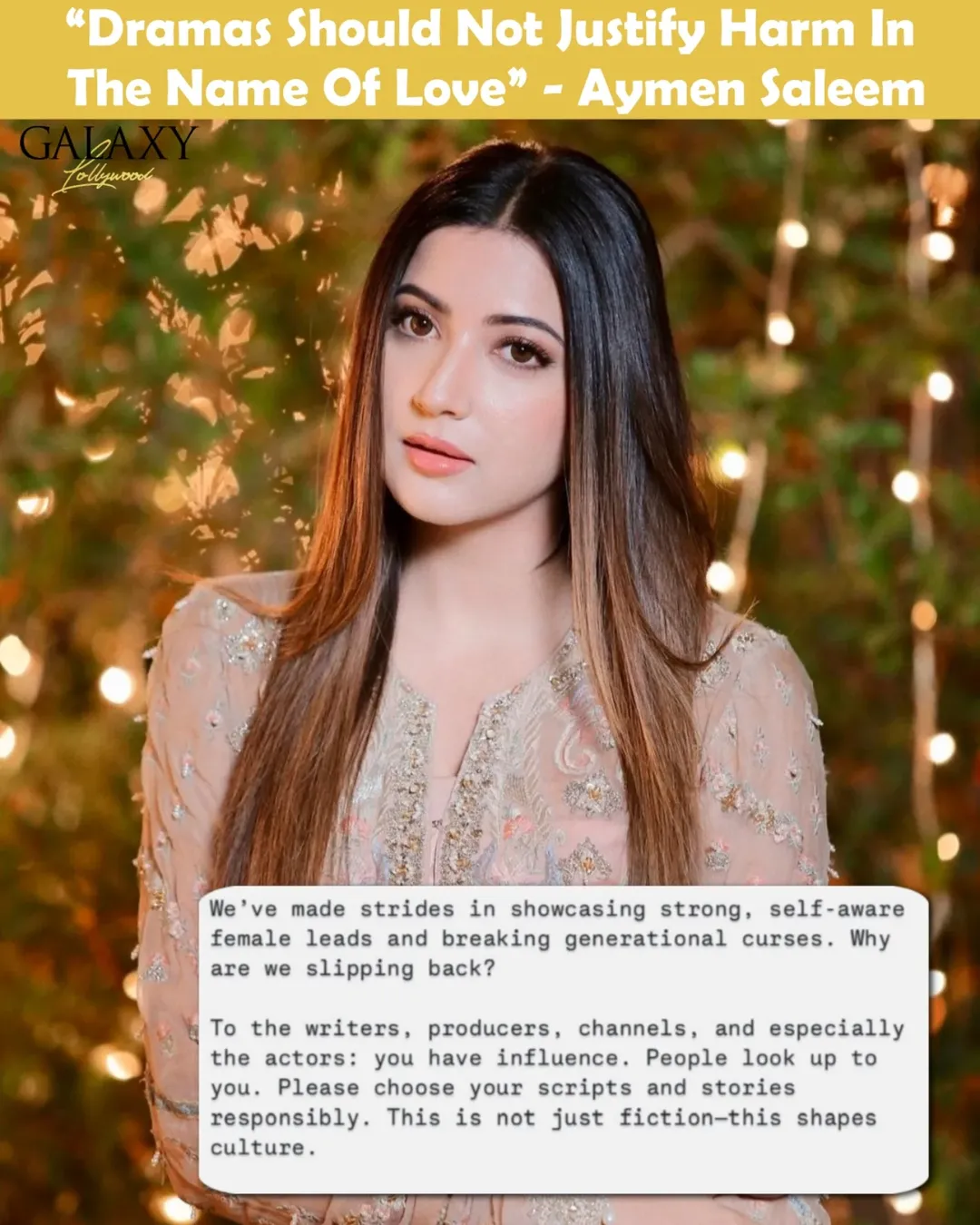
The actress also reflected on the industry’s progress, noting that Pakistani dramas have made significant strides in showcasing strong, self-aware female leads and breaking generational curses. “Why are we slipping back?” she questioned, calling for accountability in storytelling that shapes cultural perceptions.

Saleem’s outspoken critique has resonated with fans and industry peers alike, igniting discussions about the responsibility of entertainment media. As audiences continue to demand narratives that uplift rather than harm, her message serves as a powerful reminder of the impact of storytelling in shaping societal values.