




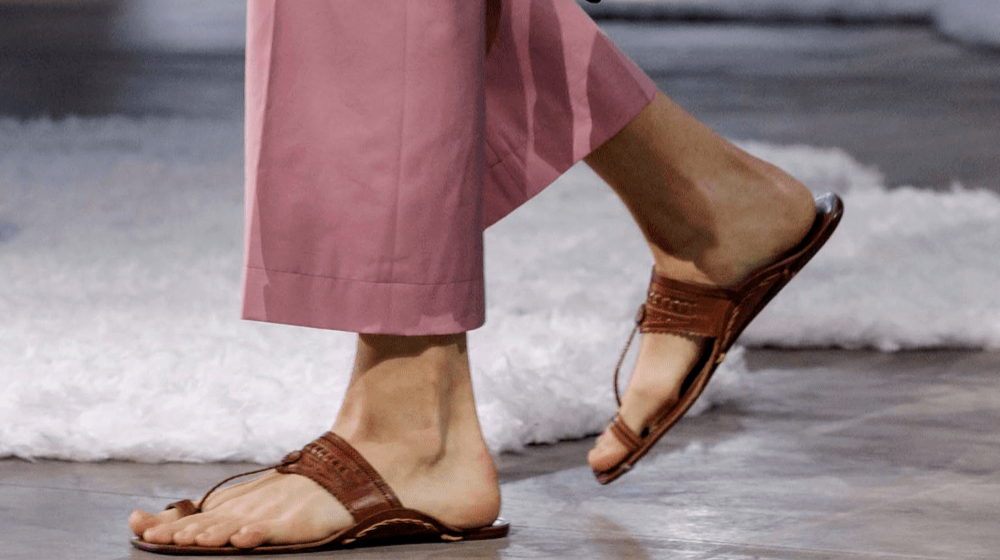
In the bustling shoe shops of Lahore’s Liberty Market, stacks of kolhapuris—traditional South Asian sandals—line the shelves, their intricate designs a testament to centuries-old craftsmanship.
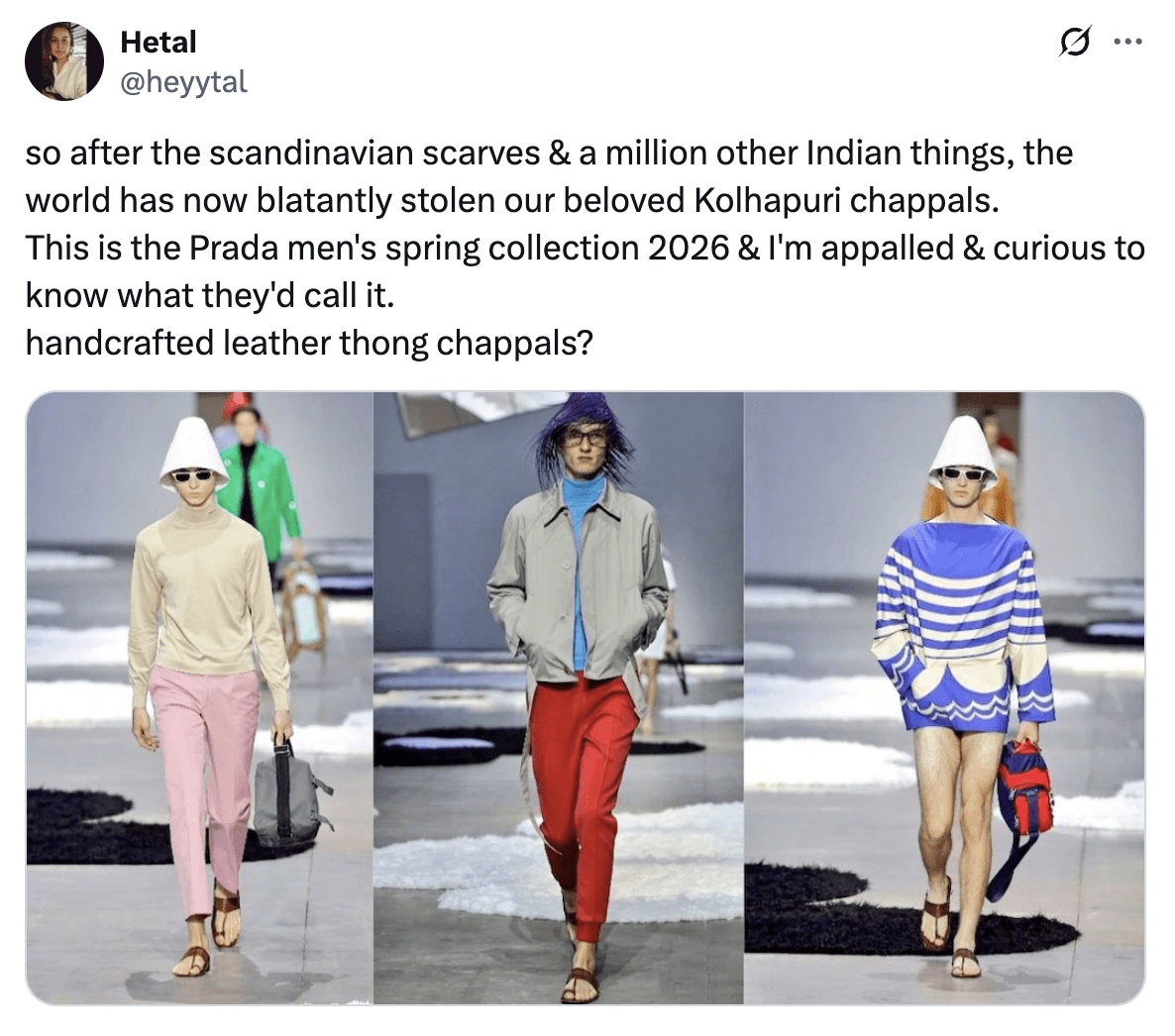
These same sandals, rooted in the heritage of Kolhapur, India, dating back to the 13th century under King Bijjala, recently strutted down the runway at Prada’s Spring/Summer 2026 Menswear Show in Milan. But instead of celebration, the debut sparked outrage across the South Asian fashion world, reigniting a heated debate about cultural appropriation versus appreciation.

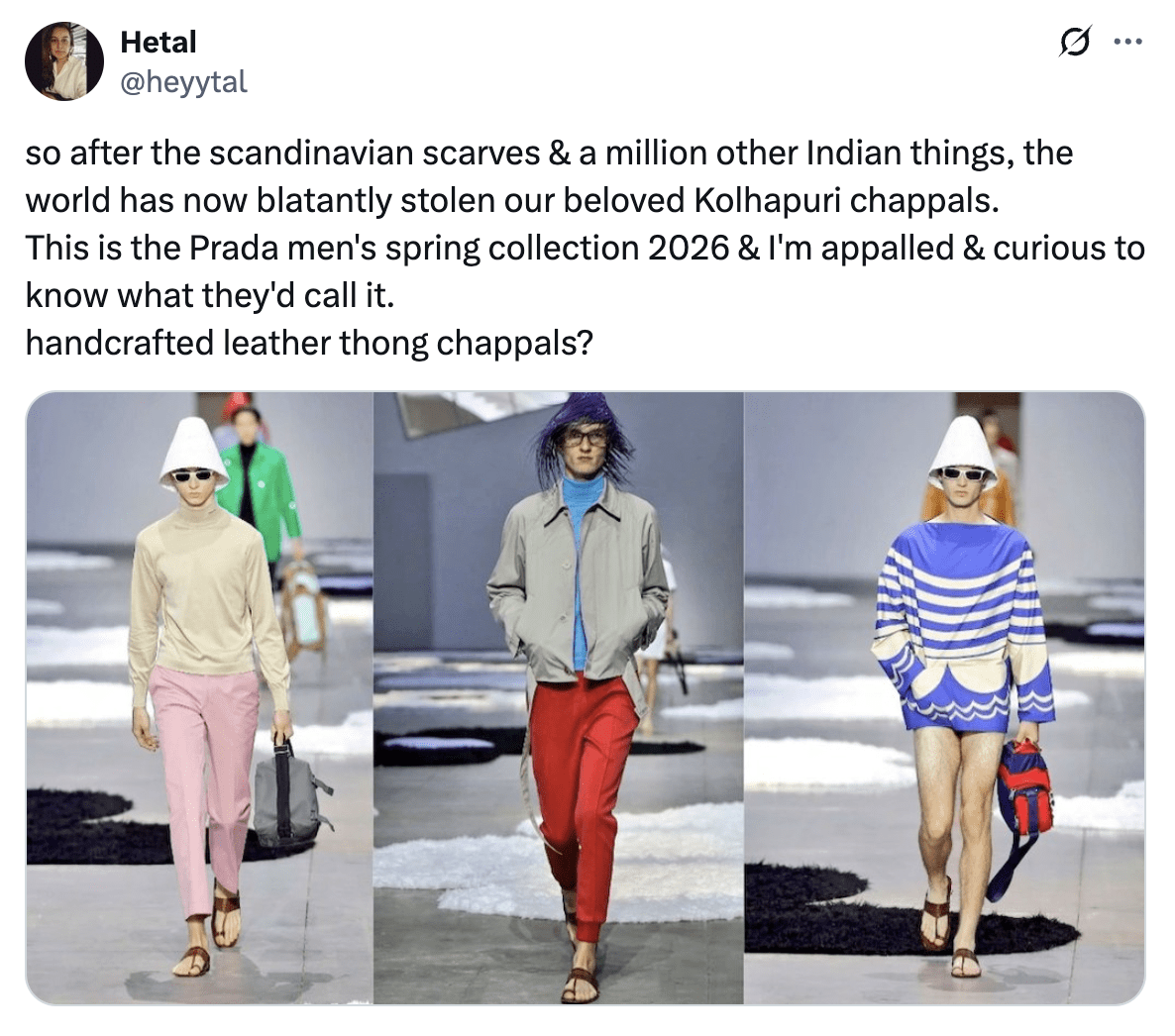
The Kolhapuri, a beloved staple worn by men and women from Mumbai to Lahore, was showcased without any nod to its rich origins, prompting swift backlash on X. One user quipped, echoing the frustration of many who likened it to the infamous “Scandinavian scarf” rebranding of dupattas.
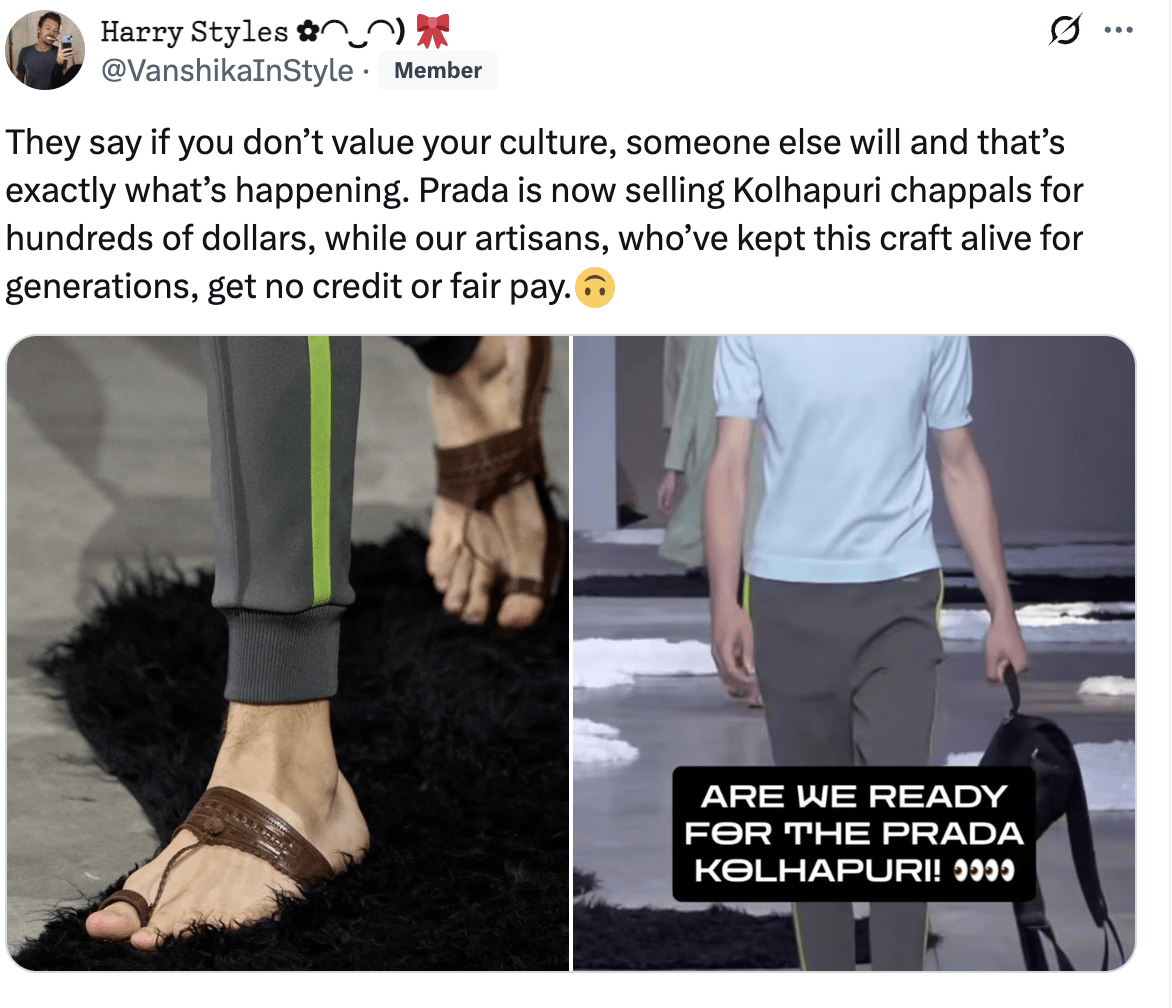
The outrage runs deeper than mere labeling. Critics argue that while luxury houses like Prada profit handsomely from these designs, the local artisans who hand-stitch kolhapuris from pure tanned leather struggle to survive. These craftsmen, who have honed their skills over decades, are often underpaid, their labor devalued by mass-produced knockoffs that flood global markets.


Yet, amid the fury, some voices celebrated the moment as a win for South Asian fashion. A few fans hailed Prada’s showcase as a fusion of tradition and couture, proud to see the kolhapuri displayed unchanged on a global stage, sparking a divide between those who see pride in visibility and those who demand accountability.



This isn’t Prada’s first brush with controversy, nor is it an isolated incident. The fashion world has a long history of appropriating South Asian designs without credit. Peshawari chappals have been rebranded by Paul Smith and Christian Louboutin, ajrak prints sold by Urban Outfitters and Forever 35 without acknowledging their Sindhi roots, and kurtas peddled as “dresses” by British thrift stores. Zara even marketed lungis as skirts, cementing a pattern that feels all too familiar to South Asians.
As the dust settles, Prada’s Kolhapuri saga underscores a broader truth: fashion doesn’t exist in a vacuum. It’s woven with history, labor, and identity. Until brands learn to honor that, the line between appreciation and appropriation will remain a battleground—and South Asians won’t stay silent.








Nice