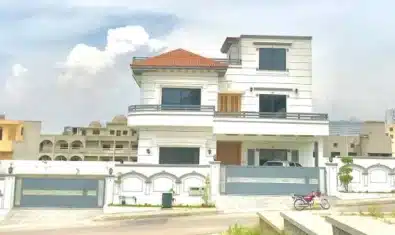
The rising demand for housing units in urban areas has become a new challenge for many governments. According to the World Bank (WB) data, population growth in Pakistan was observed at 1.978%, evidence that the demand for housing units will grow annually.
Similarly, in 2011 Pakistan witnessed a housing shortfall of 10mn units in the country, and almost a decade later, the numbers would have increased.
Amidst the growing population and to meet the rising demand for housing units, Graana.com, through this blog, makes compact apartments a case of meeting the increasing housing demand.
Managing the Housing Supply and Demand
The foremost reason for putting up the case of compact apartments is bridging the existing gap between the housing supply and demand. The data was driven keeping in view the population census of the years 1998 and 2017.
According to the Punjab Spatial Strategy 2047, the housing demand in the rural areas of Punjab alone stood at 10.7mn housing units, while the demand in urban areas was recorded at 6.4mn units.
Furthermore, by 2047, the housing demand in only Punjab province will reach 37mn, which indicates that the shortage has to be tackled in a unique and comprehensive manner.
Increasing Population Density
The population density of a city or any area can be calculated by people living in an sq. km (people per sq. km of land area). Compact apartments can be a suitable tool for increasing the population density in a city.
According to the World Bank Data, the population density of Pakistan in 2020 was recorded at 286.5 per sq. km, whereas the population density of Islamabad city was recorded at 2,089 people per sq. km.
Furthermore, the total area of Islamabad is calculated at 906.5 sq. km, and considering the ratio of population density and Islamabad’s land, and then population density is low in the city.
A Case for Vertical Buildings
Compact apartments can build a strong case for vertical buildings. Over time, town development in Pakistan has observed a horizontal phenomenon that has led to the reduced population density in Pakistan.
According to the Ministry of Planning, Development, and Reform, only 6,000 people reside in an sq. km in Pakistan, whereas Dubai accommodates 200,000 people in the same area. As per the paper ‘Pakistan 2025’ published by the Planning Commission development of vertical housing societies is one of the primary objectives under the vision till 2025.
Therefore, it is a recognized fact that compact apartments can become a tool of vertical development in cities that can cater to the needs of many.
A Substitute for Housing Societies
Compact apartments can build a strong case as a substitution for housing societies. The provision of services in the housing societies is easy compared to the people living in housing societies.
Research on commuting time between workplace and a home found that providing security in vertical buildings is easy compared to the other housing schemes. Similarly, the residents of Compact apartments can get similar services without any biases.
Imarat Residences – defining compact apartments
Imarat Residences is the upcoming project of IMARAT Group which is a characteristic of compact apartments in Islamabad. The project revolves around smart living, which aims to redefine the living standards of the residents of Islamabad while promoting the trend of vertical buildings in the city.
The project will be located on the Islamabad Expressway, one of the city’s prime locations. The compact apartments are designed to suit the needs of individuals and small families who want to start a new living in the city.
Stay Connected with ProPakistani
Get the latest news and stories wherever you prefer.
Add ProPakistani to Preferred Sources and see more of our stories in Google Search and Top Stories.