
PewDiePie has released Odysseus, a free and open-source AI workspace that runs on a user’s own computer.
The project is not a new AI model. Instead, Odysseus works as a self-hosted interface for using language models, similar to the apps people use for ChatGPT or Claude.
The main difference is control. Instead of sending prompts, files, and conversations through company servers, Odysseus lets users run AI tools on their own machines or connect their own model and API providers.
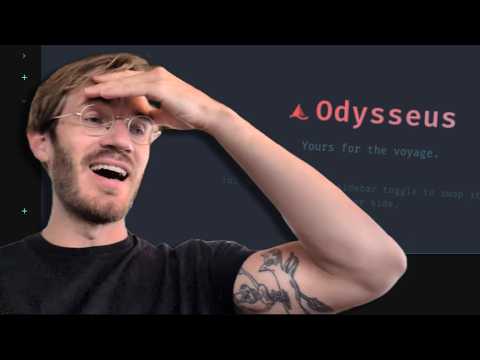
Local First, Privacy First
Odysseus supports local models and external providers. Its GitHub page lists support for vLLM, llama.cpp, Ollama, OpenRouter, OpenAI, and GitHub Copilot.
This means users can run open-source models locally or connect to cloud-based APIs if they prefer. The project’s landing page describes the workspace as local-first, privacy-first, and without telemetry.
Odysseus is aimed at users who want more control over their AI setup, especially those who do not want all their data to pass through third-party AI platforms.
Main Features
Odysseus includes more than basic chat. The workspace supports multi-turn chat, autonomous agents, built-in tools, model serving, document handling, email tools, calendar features, memory, and deep research.
The agent feature can use tools such as web access, files, shell commands, skills, and memory to work through tasks. It also supports MCP servers, allowing users to connect additional tools.
The platform also includes a Cookbook feature that scans a user’s hardware and recommends models based on available resources. It supports model formats and serving options linked to GGUF, FP8, AWQ, vLLM, and llama.cpp.
Research and Documents
Odysseus includes a deep research mode that can gather, read, and summarize sources into a written report.
It also has a document editor with support for Markdown, HTML, CSV, syntax highlighting, AI edits, and suggestions. The workspace also supports file uploads, including vision and PDF-related features.
Optional dependencies can add more document tools, including PDF page rendering, form filling, and Office document extraction.
Email and Calendar
The project also includes email and calendar features.
Its email tools work with IMAP and SMTP and can help with summaries, draft replies, auto-tagging, urgency reminders, and spam triage.
The calendar feature supports CalDAV sync, with listed support for services such as Radicale, Nextcloud, Apple, and Fastmail. It also supports .ics import and export.
Memory and Data
Odysseus includes persistent memory and skills, allowing the assistant to recall information across conversations and improve its workflow over time.
According to the GitHub repository, user data is stored locally in the project’s data/ folder. This includes sessions, messages, documents, memory files, uploads, personal documents, presets, ChromaDB data, and settings.
This local storage approach is a key part of the project’s appeal for users who want more control over their data.
Setup Requirements
Odysseus is not built for users who want a one-click consumer app. It requires a technical setup.
The project supports Docker, native Linux and macOS setup, Apple Silicon setup, and Windows setup. For native installations, it requires Python 3.11 or newer.
The GitHub page recommends Docker for setup, while native installation requires creating a virtual environment, installing requirements, running the setup script, and starting the app through Uvicorn.
The core app can run natively, but local model serving depends on hardware, model size, runtime, GPU, and VRAM. Smaller systems can still connect to APIs or remote model servers instead of running large models locally.
Security Notes
The project’s own documentation warns users to treat Odysseus like an admin console because it can handle shell access, file uploads, model downloads, web research, email and calendar integrations, and API tokens.
The documentation advises users to keep authentication enabled for network-accessible deployments and not expose the app directly to the public internet without HTTPS and a trusted reverse proxy or private access layer.
Public Response
Odysseus has drawn strong attention on GitHub. At the time of writing, the repository showed more than 62,000 stars and 7,600 forks.
The project is listed under an MIT license, and the GitHub page shows no formal releases published yet.
Why It Matters
Odysseus reflects a growing demand for AI tools that users can control directly.
Cloud-based AI apps remain easier to use, but they require users to trust external platforms with prompts, files, and workflows. Odysseus takes the opposite approach by giving users a local workspace that can run on their own hardware.
That tradeoff is clear. Odysseus offers more control and privacy, but it also requires more technical knowledge than mainstream AI chat apps.
The project is available through PewDiePie’s GitHub repository under the handle pewdiepie-archdaemon/odysseus.
The original post also directed readers to the project’s GitHub page and promoted a free AI newsletter for people who want to follow AI news and updates.
Stay Connected with ProPakistani
Get the latest tech news, telecom insights, and product launches wherever you prefer.
Add ProPakistani to Preferred Sources and see more of our stories in Google Search and Top Stories.













Already done by chinese models. This is a less developed version of it