




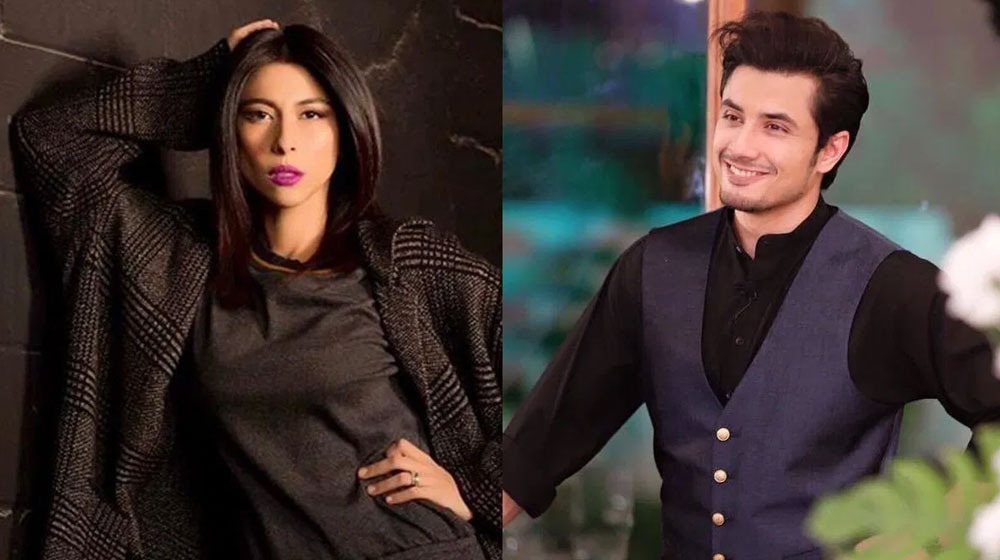
Meesha Shafi, the singer-cum-actor, has moved to Supreme Court with a request to overturn Lahore High Court (LHC)’s and the provincial ombudsman’s decision dismissing her sexual harassment complaint against Ali Zafar.
Previously, Punjab’s ombudsman had rejected her appeal, saying it could not be entertained under the law regarding harassment of women at a place of work because she was not an employee of Ali Zafar. On October 11, the LHC had also upheld the ombudsman’s decision.
ALSO READ
Meesha Shafi Files Rs 2 Billion Counter Suit Against Ali Zafar
However, Meesha has now knocked at the doors of the top Court, seeking orders to set aside the previous two decisions against her.
According to Meesha, the alleged harassment took place when she was rehearsing for a concert at Ali Zafar’s studio in 2018. Meesha said she was contracted to perform two songs with Ali Zafar at the show.
ALSO READ
Meesha Shafi Reveals Why She Had to Go Public Against Ali Zafar
In turn, Ali Zafar had filed a defamation suit against her, demanding financial compensation for damaging his reputation. While Meesha’s pleas have been dismissed, Ali Zafar’s defamation case is still pending at the LHC.
In her petition, moved through Khawaja Ahmad Hosain, the singer has pleaded that her case be remanded back to the ombudsman with instruction of retrial under the Workplace Act of 2010.
ALSO READ
Ali Zafar Uses MAO College Lecturer’s Suicide to Speak on Misuse of #MeToo
She contended that since she was contracted by a third party, and was asked to rehearse at a particular place, the said law was still applicable.
The petition argued that since she was in a contract, which is legally binding, she should be considered as an ‘employee’ of the said party, just like Ali Zafar. And, the studio where she was asked to rehearse fell within the definition of a workplace under the 2010 law.
She requested the Apex Court to direct ombudsman to treat her plea as a harassment complaint at a workplace.