
Australian startup Cortical Labs has introduced what it describes as the first commercially available biological computer capable of running code. The system, known as CL1, integrates live human brain cells with silicon hardware, offering a novel platform for neuroscience and biotechnology research.
Built with Living Neurons
The CL1, launched in March, uses approximately 800,000 lab-grown human neurons derived from adult skin or blood cells. These neurons are cultured on a chip and maintained in a closed-loop environment that supplies nutrients, regulates temperature, filters waste, and stabilizes fluid levels. The neurons communicate through electrical pulses and adapt in real time to external stimuli.
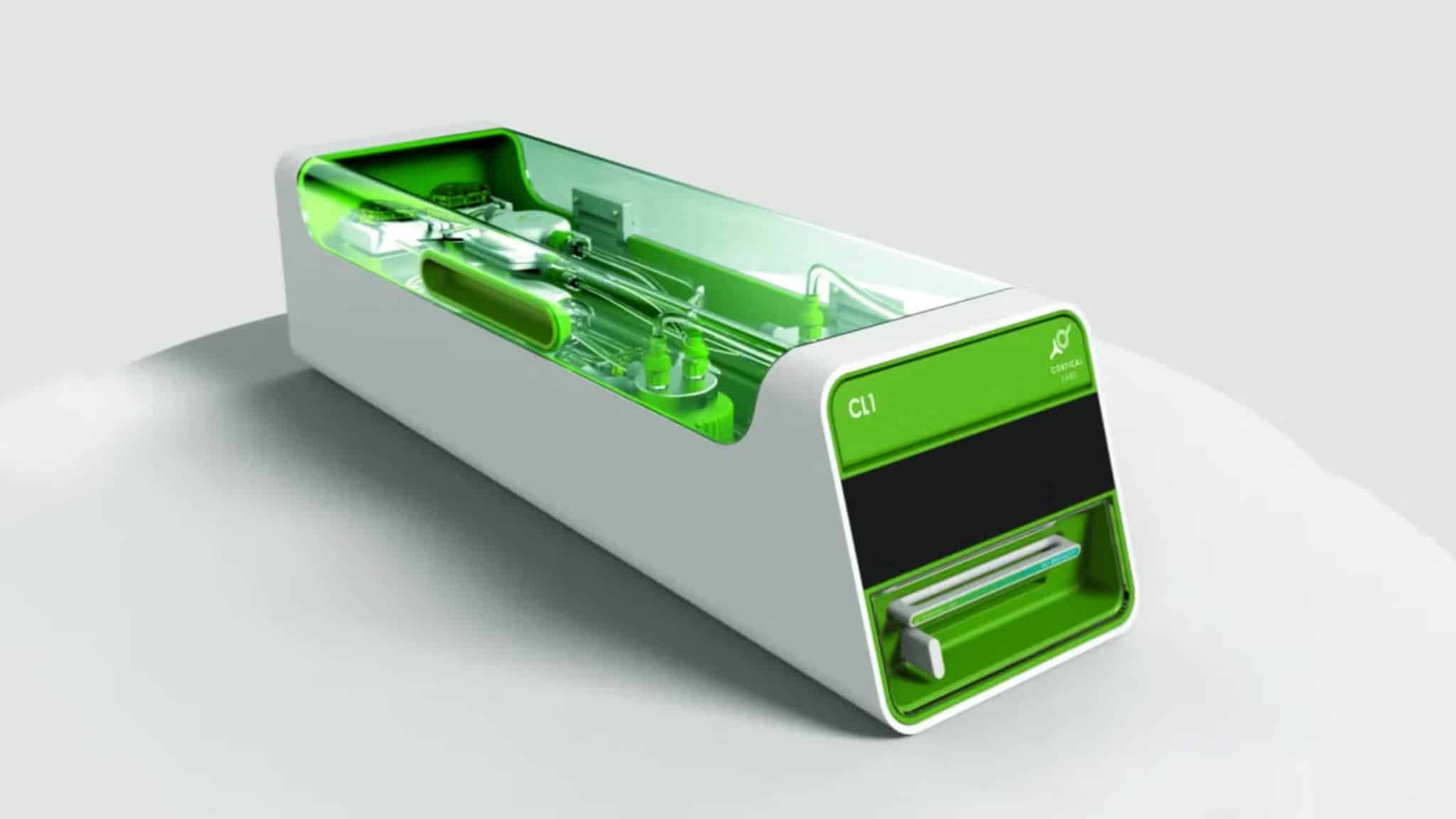
Unlike traditional computing systems, CL1 processes information using sub-millisecond electrical feedback loops. The result is a living neural network that responds dynamically, creating a form of biological computation rooted in natural intelligence.
Real-Time Computation
The platform functions through a continuous cycle of input, adaptation, and output. Small electrical signals—representing data—are introduced to the neurons, which then generate measurable responses. These reactions are captured and interpreted by the system’s firmware and hardware layers, enabling real-time computation and learning behavior.
Brett Kagan, Chief Scientific Officer at Cortical Labs, explains that this setup mimics the brain’s communication method, allowing researchers to observe how neural circuits react to various types of input, including drug stimulation and simulated lesions.
“Brain in a Vat” Becomes Reality
The CL1 is primarily intended for scientific use. Researchers can leverage the system to study neurological processes, genetic differences, and responses to pharmaceutical interventions. The platform provides a closed-loop experimental environment where neural activity interacts continuously with simulated digital environments.
Karl Friston, a theoretical neuroscientist at University College London, describes CL1 as a significant tool for experimentalists. He notes that it represents a practical realization of the “brain in a vat” concept long discussed in philosophy and cognitive science.
Availability and Cost
Cortical Labs will begin shipping the first 115 CL1 units this summer. Individual units will cost $35,000, with discounts available for bulk purchases—$20,000 per unit when bought in 30-unit server racks. The company also offers a cloud-based service, allowing researchers to access and run experiments on in-house units for $300 per week.
Each unit can remain viable for up to six months. Power consumption for a full server rack is estimated between 850 and 1,000 watts, considerably less than typical AI data center requirements.
A New Direction for Bio-Computing
While CL1 does not aim to replace traditional silicon-based AI, the platform offers researchers a way to study learning, adaptation, and cognition in a fundamentally new format.
Friston emphasizes that the technology’s greatest impact may be outside computer science, serving instead as a transformative research tool for exploring how biological systems process and respond to information.
Stay Connected with ProPakistani
Get the latest tech news, telecom insights, and product launches wherever you prefer.
Add ProPakistani to Preferred Sources and see more of our stories in Google Search and Top Stories.
















Another claim and 0 proof
Every company makes claims they did this and that . Doesn’t work in real world
30000$ for a unit that lasts just 6 months lol