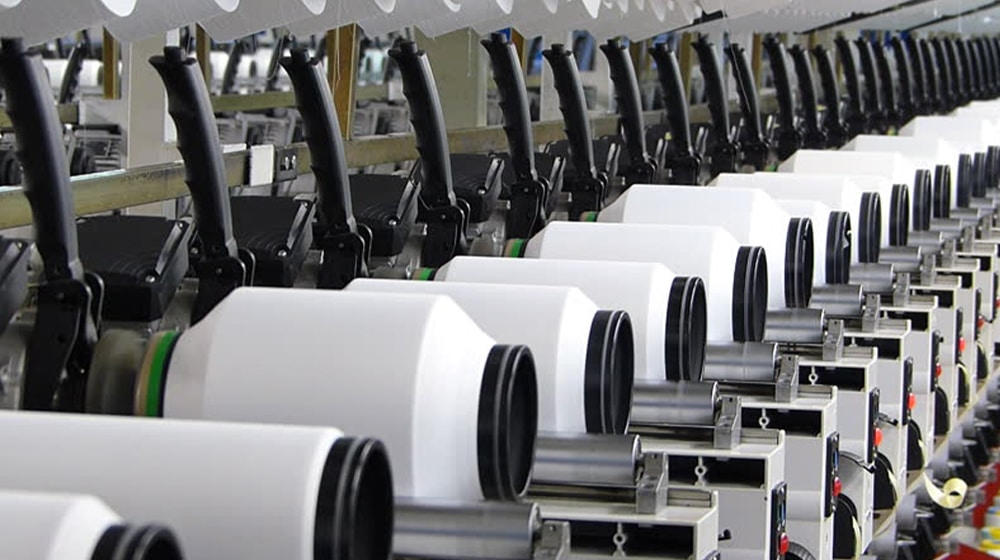
Pakistan’s top business body has urged the government to declare an industrial emergency, warning that persistently high energy costs, expensive credit and heavy taxation are pushing the manufacturing sector toward a systemic collapse.
The call was made by Federation of Pakistan Chambers of Commerce and Industry President Atif Ikram Sheikh, who said industry continues to receive electricity bills at Rs. 34 to Rs. 35 per unit, despite repeated assurances of relief.
He said FPCCI rejects incremental support packages, arguing that promised power tariffs of Rs. 22 per unit have not materialised for any industrial segment.
Speaking alongside S. M. Tanveer, Patron in Chief of United Business Group, the FPCCI president said a combination of regionally uncompetitive energy tariffs, high interest rates and a restrictive tax regime has made it nearly impossible for Pakistani manufacturers to compete globally. He added that the slowdown in the real estate sector has also affected nearly 40 allied industries, deepening the economic strain.
FPCCI demanded a sharp reduction in income tax on industry from 39 percent to 20 percent, while calling for a maximum tax rate of 15 percent for salaried individuals. It also urged the government to reduce gas prices for industry to Rs. 2,400 per MMBTU from the current Rs. 3,900 per MMBTU to restore export competitiveness.
Highlighting regional disparities, Atif Ikram Sheikh said Pakistani exporters face electricity tariffs of around 12.5 cents per unit, compared to 6 to 9 cents in competing economies such as India, Bangladesh, and Vietnam. He warned that this gap has accelerated de-industrialisation, forced hundreds of factories to shut down, and triggered capital flight to more business-friendly countries.
M. Tanveer said the textile sector, which forms the backbone of Pakistan’s exports, is facing an existential crisis, with over 100 mills already closed. He criticised the reliance on high interest rates to control inflation, saying the policy has squeezed liquidity, curtailed private sector credit and stalled industrial expansion.
He demanded an immediate cut in the policy rate from 10.5 percent to 9 percent in the upcoming Monetary Policy Committee meeting on January 26, followed by a gradual reduction to 6 percent over the next three policy reviews.
FPCCI also proposed a broader recovery framework, calling for the clearance of all pending sales tax refunds under the Export Facilitation Scheme, a shift to a take and pay model for independent power producers, and an immediate 9-cent per unit electricity tariff for export-oriented industries, with a further reduction to 7 cents per unit next year.
Warning of serious consequences, FPCCI said failure to prioritise industry in economic policy would result in rising unemployment, loss of foreign exchange, and long term damage to national productivity.
Stay Connected with ProPakistani
Get the latest business news, market insights, and economic updates wherever you prefer.
Add ProPakistani to Preferred Sources and see more of our stories in Google Search and Top Stories.














Why govt. is not taking interes to stabilise the Textile industry. Our evey department is on decline side.
Very nice
The business community on the the right side of rough road,as the country is near the boiling point which may be bust any time ,one ground the common man is on the brink disaster while the Elite is growing day by day,just have a example of Talpur and marriage nawaz sons wedding.
jan kar yeh mulk tabah kya ja raha hay…