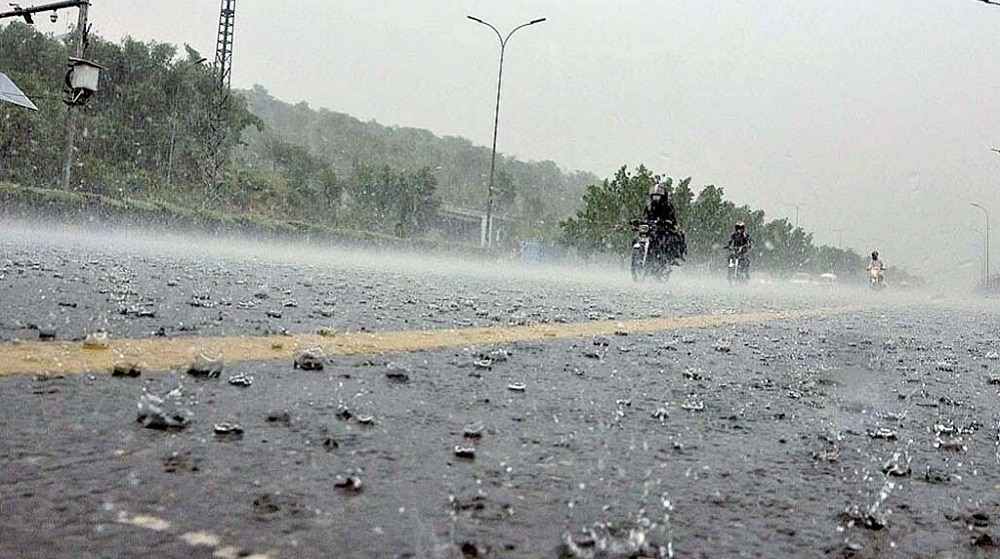
Chairman of the National Disaster Management Authority (NDMA), Lieutenant General Inam Haider Malik, has stated that above-average rainfall is expected during this year’s monsoon season, which may arrive earlier than usual, potentially around June 26 or 27. While the monsoon typically spans from July to mid-September, this year it is forecasted to begin three to four days earlier.
These insights were shared during a meeting of the Senate Standing Committee on Climate Change, chaired by Senator Sherry Rehman, and held at the NDMA headquarters.

During the briefing, NDMA officials indicated that Northern and Eastern Punjab are likely to receive the heaviest rainfall, which could lead to localized flooding due to melting glaciers and overflowing streams. Areas such as Rajanpur and Dera Ghazi Khan are also expected to experience significant downpours.
Officials further noted that while the average annual rainfall in Punjab is 344 millimeters, this year it could rise to 388 millimeters. In Northeastern Punjab, rainfall is expected to increase by 50%, with Southern Punjab also forecasted to see elevated levels.
In Khyber Pakhtunkhwa (KP), lower rainfall is expected in the north, whereas the southern parts may receive normal or above-normal precipitation. In glacier-heavy regions like Chitral, rainfall may remain below average.
Typically, KP receives 243 millimeters of rain, but this year, it could rise to 300 millimeters. Similarly, Azad Kashmir is forecasted to experience above-normal rainfall, while Balochistan may face reduced rainfall and higher temperatures.
Officials also warned that the monsoon season could bring more frequent cloudbursts, intensifying the risk of flash floods in vulnerable areas.
The NDMA highlighted that it had issued a heatwave advisory six months in advance, reflecting the authority’s proactive approach to ongoing and upcoming weather-related challenges.
Stay Connected with ProPakistani
Get the latest news and stories wherever you prefer.
Add ProPakistani to Preferred Sources and see more of our stories in Google Search and Top Stories.













My Allah for gives us
Give him a good reason
This is a very important topic, especially for farmers across Punjab. The agriculture sector has long needed structured support, and I recently read a detailed article about the CM Punjab Wheat Support Program which clearly explains how the government is helping small and medium-scale farmers. It includes everything from registration steps to benefits, eligibility, and how farmers can receive subsidies directly. For anyone who wants to understand the full scope of the program and stay updated with the latest news on it, I highly recommend reading this article on WSP 2025 Punjab – it’s well-explained and very informative.